What a first-class agent identity actually is, and whether it is just workload identity
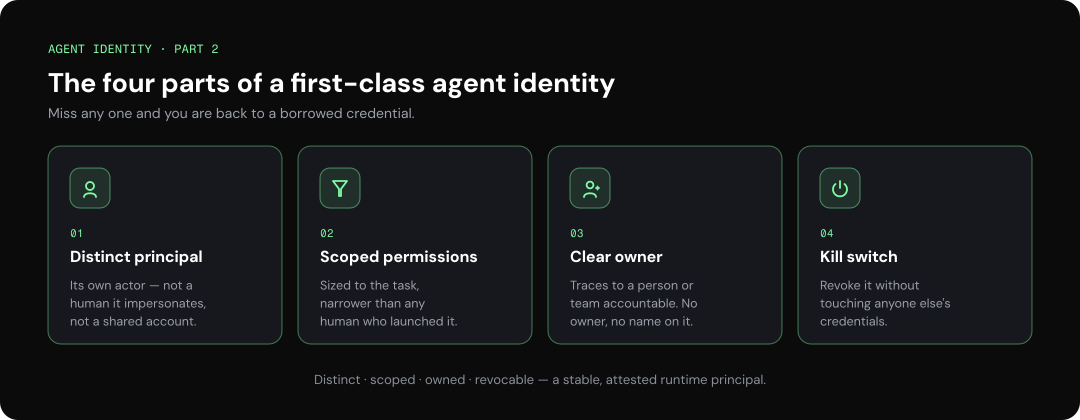
This post defines a first-class agent identity as a stable runtime principal with its own scoped permissions, a clear owner, and an independent kill switch. It contrasts this with common alternatives like shared service accounts, per-user impersonation, and static secrets, highlighting their shortcomings. The post then explores the conditions under which agent identity collapses into workload identity, based on three invariants: a one-to-one mapping between agent and workload, a registry as the source of truth, and identity continuity across restarts. It observes that public platforms like Microsoft Entra Agent ID and AWS Bedrock AgentCore implement a layered approach where agent identity sits above workload identity when these invariants break, typically within a single control plane and trust domain. The takeaway is to audit agents against these invariants to determine the need for an extra identity layer.
More from the Agentic AI Governance trail
- You assembled the stack. Who owns go-live?
- The unsexy AI: why your forklift matters more than your chatbot
- Adversarial evaluation for Agent Assist: ship agents that survive production
- How much guardrail does your AI agent need? What leaders must be able to defend
- Do you need enterprise AI orchestration? A 3-question readiness framework