Your identity stack was built for two kinds of actor. Agents are a third.
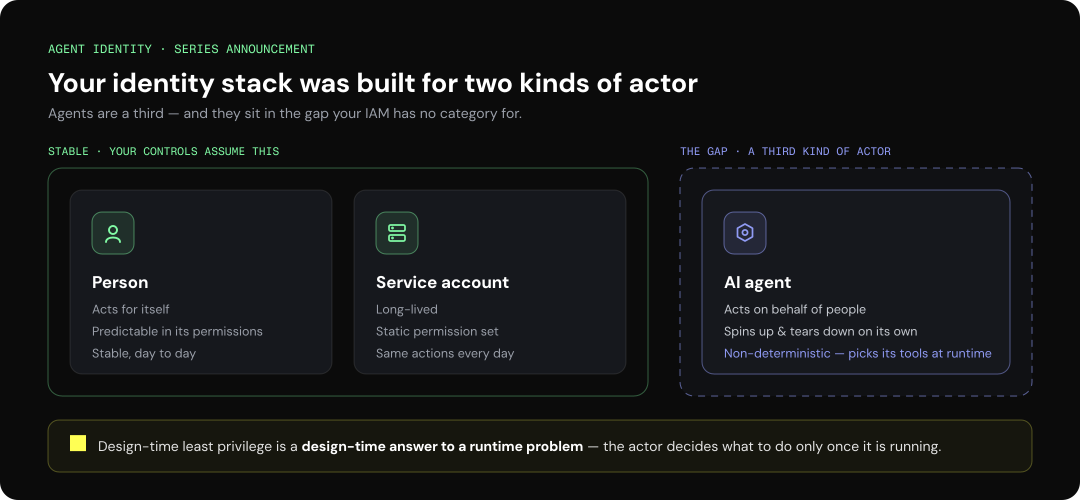
This post introduces the concept of agents as a third type of actor in identity and access management (IAM) systems, distinct from human users and service accounts. It highlights the structural gap in existing IAM stacks that leads to borrowed credentials and privilege escalation. The core problem identified is the non-determinism of agents, making design-time least privilege insufficient. The post proposes a solution centered on giving each agent a stable, verifiable runtime principal with scoped identity, enabling runtime authorization, auditable delegation chains, and independent revocation. It outlines a roadmap for addressing agent identity, including keeping credentials out of the model, governing authorization natively, and treating identity as a lifecycle with just-in-time, task-scoped credentials.
More from the Agentic AI Governance trail
- You assembled the stack. Who owns go-live?
- The unsexy AI: why your forklift matters more than your chatbot
- Adversarial evaluation for Agent Assist: ship agents that survive production
- How much guardrail does your AI agent need? What leaders must be able to defend
- Do you need enterprise AI orchestration? A 3-question readiness framework