May I ask who’s calling? How Decagon handles the challenge of voice authentication | Decagon
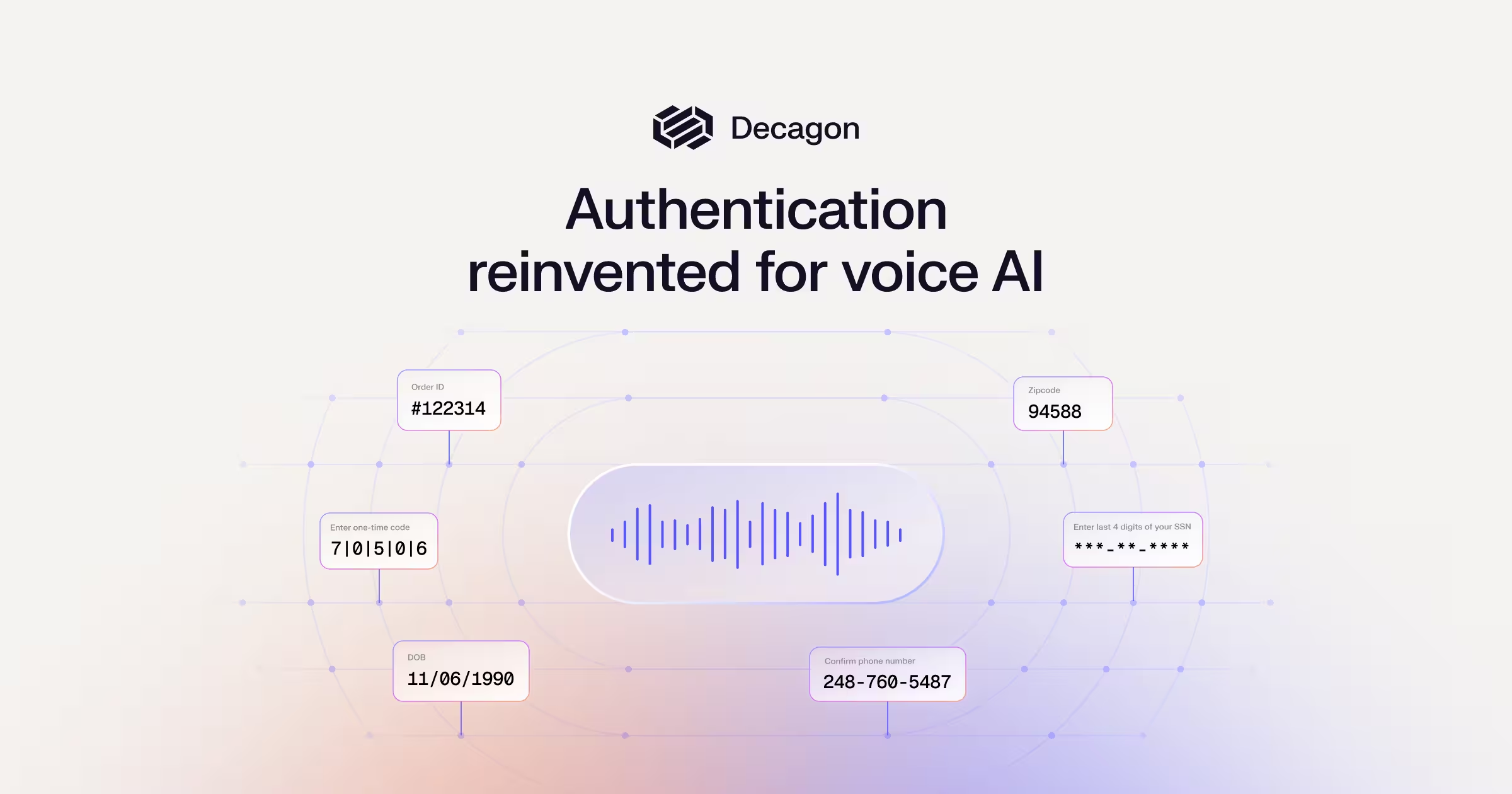
This post details Decagon's approach to voice authentication, highlighting the inherent difficulties of transcribing identifiers over voice, users multitasking, and the unreliability of phone numbers. It outlines two primary authentication models: pre-authenticated users (via web/app-gated calls, callbacks, or SIP/metadata transfer) and mid-conversation authentication. For mid-conversation, it compares various methods like mobile app notifications, multi-part identifiers, OTPs, and knowledge-based tests, emphasizing tradeoffs between security and user friction. The post also discusses the selection of appropriate identifiers based on ease of retrieval, security, and reliable voice capture, and details information collection methods such as SMS, DTMF, and voice transcription. A key contribution is the concept of 'incremental agent authentication,' where an agent's access strengthens over the call based on user verification, adhering to least privilege and Zero Trust principles. The post also mentions investment in fine-tuning STT models for authentication-specific utterances.