Data Mesh at Grab (Part III): Operationalizing data reliability with automated DPIs
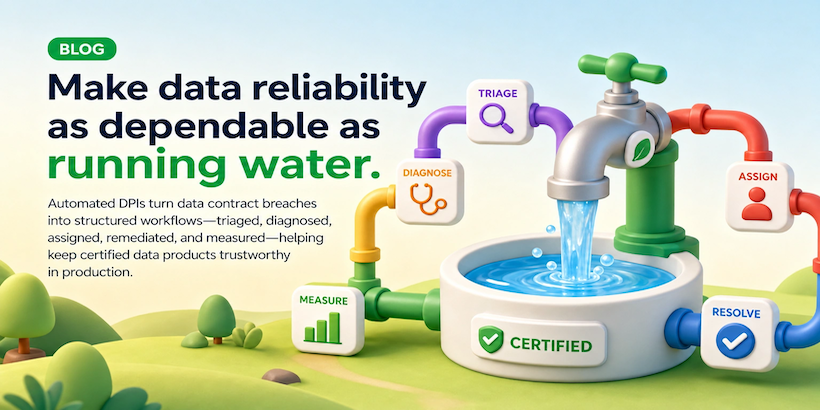
This post details the operationalization of Data Production Issues (DPIs) within Grab's data mesh. It introduces Kinabalu as the incident orchestrator that detects contract breaches via Genchi's data quality tests. The DPI lifecycle includes automated triage, diagnosis with a standardized error taxonomy (UPSTREAM_ERROR, PLATFORM_ERROR, JOB_ERROR, DATA_ERROR), and auto-resolution workflows. Hugo, the ingestion platform, is highlighted for its three-layered diagnosis architecture (signal collection, alert diagnosis, diagnosis result) that consolidates signals for root cause analysis and recommends pipeline remediations. The auto-resolution architecture automates recovery for transient failures and escalates complex issues. The post emphasizes the importance of diagnostic accuracy and consistent operational workflows for maintaining data reliability.
More from the Data Production Issue (DPI) Operationalization trail
- The Hugo evolution: Engineering Grab's unified, one-click data ingestion platform with Apache Flink
- Data Mesh at Grab (Part II): The foundational tools behind certification
- Real-time data quality monitoring: Kafka stream contracts with syntactic and semantic test
- Data mesh at Grab part I: Building trust through certification
- The complete stream processing journey on FlinkSQL