Opening designs for 6-pack and Wedge 100
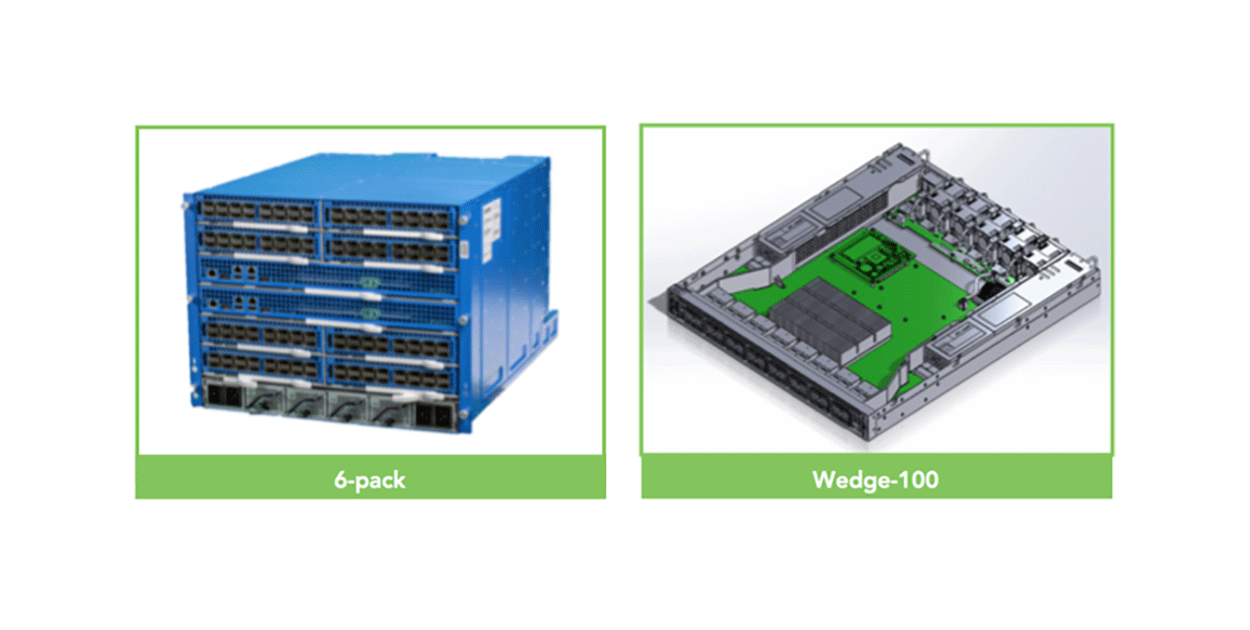
This post details the opening of designs for the 6-pack modular switch and the Wedge 100 TOR switch, a critical step towards supporting 100G connectivity in Meta's data centers. It describes the hardware specifications of Wedge 100 (Broadcom Tomahawk ASIC, OpenRack v2, COM-E, QSFP28 DAC/CWDM4 optics) and its extensive testing for various connectivity modes. It also elaborates on the 6-pack's architecture, its role as a fabric switch (FSW) in the data center fabric, and the significant increase in scalability and performance requirements compared to top-of-rack switches. The post details the rigorous network-level testing performed on 6-pack, including functionality validation (BGP peerings, route policy, ECMP) and failure condition testing (link failures, card insertions/removals, process restarts), demonstrating sub-2ms failure recovery. It also discusses the software architecture of FBOSS on 6-pack, highlighting the decision to avoid a central supervisor module and instead treat the chassis as a collection of connected Wedges.