Lab Management Evolution
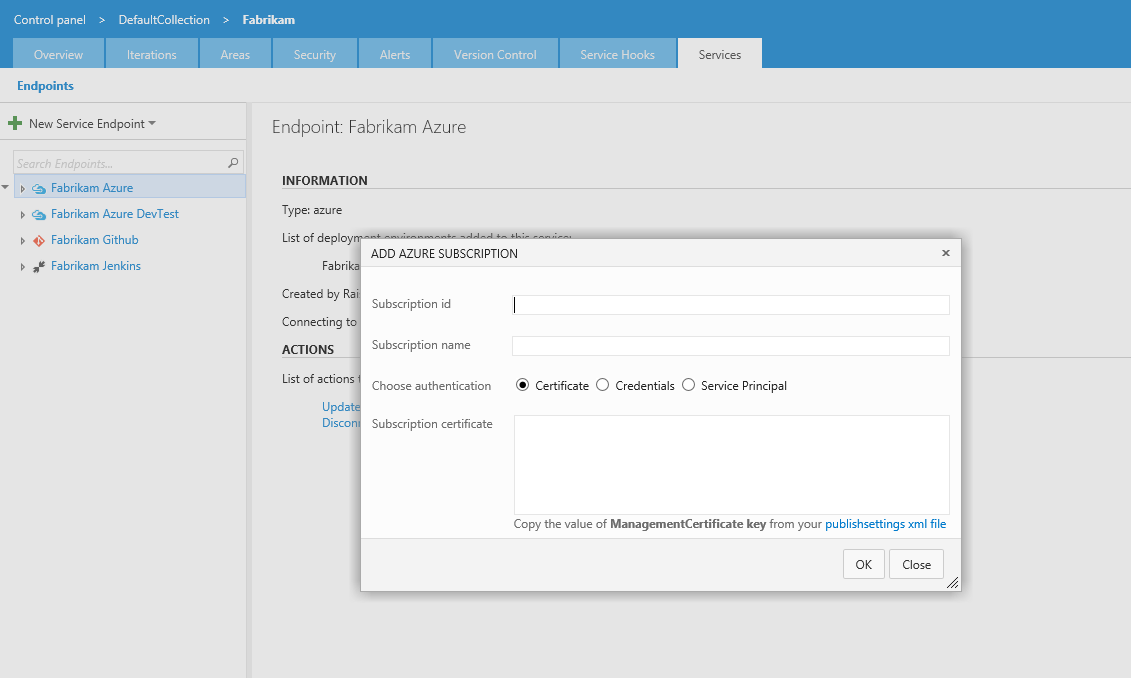
This post announces a significant shift in Azure DevOps Lab Management strategy. Instead of building platform-specific features within TFS/VSO, the focus is moving towards integration with external platforms like Azure, VMware, and Docker. Key changes include: 1. Dynamic provisioning of Azure resources (websites, cloud services, resource groups) via Build and Release Management tasks, supporting various authentication methods (certificates, user credentials, service principals) and leveraging Azure's infrastructure-as-code. 2. A service endpoint extensibility model allowing customers and partners to define new endpoint types for different platforms and run provisioning/deployment tasks. 3. Planned integrations with VMware and Docker. 4. Introduction of 'Machine Groups' as a catch-all for addressable machines, replacing the older 'Standard environments' concept. 5. Enhanced deployment capabilities for .NET/Windows applications (IIS, SQL Server, Windows services) and Java/Linux applications (Tomcat, shell scripts, Maven/Ant scripts), with integrations for third-party systems. 6. Evolution of 'Environments' within Release Management to model formal pipelines and support less structured, self-service environments for manual workflows. 7. Improved traceability of release activities. The post explicitly states a move away from building platform-style features within TFS/VSO and a focus on integrating those platforms into ALM workflows.