How do Database Indexes Work?
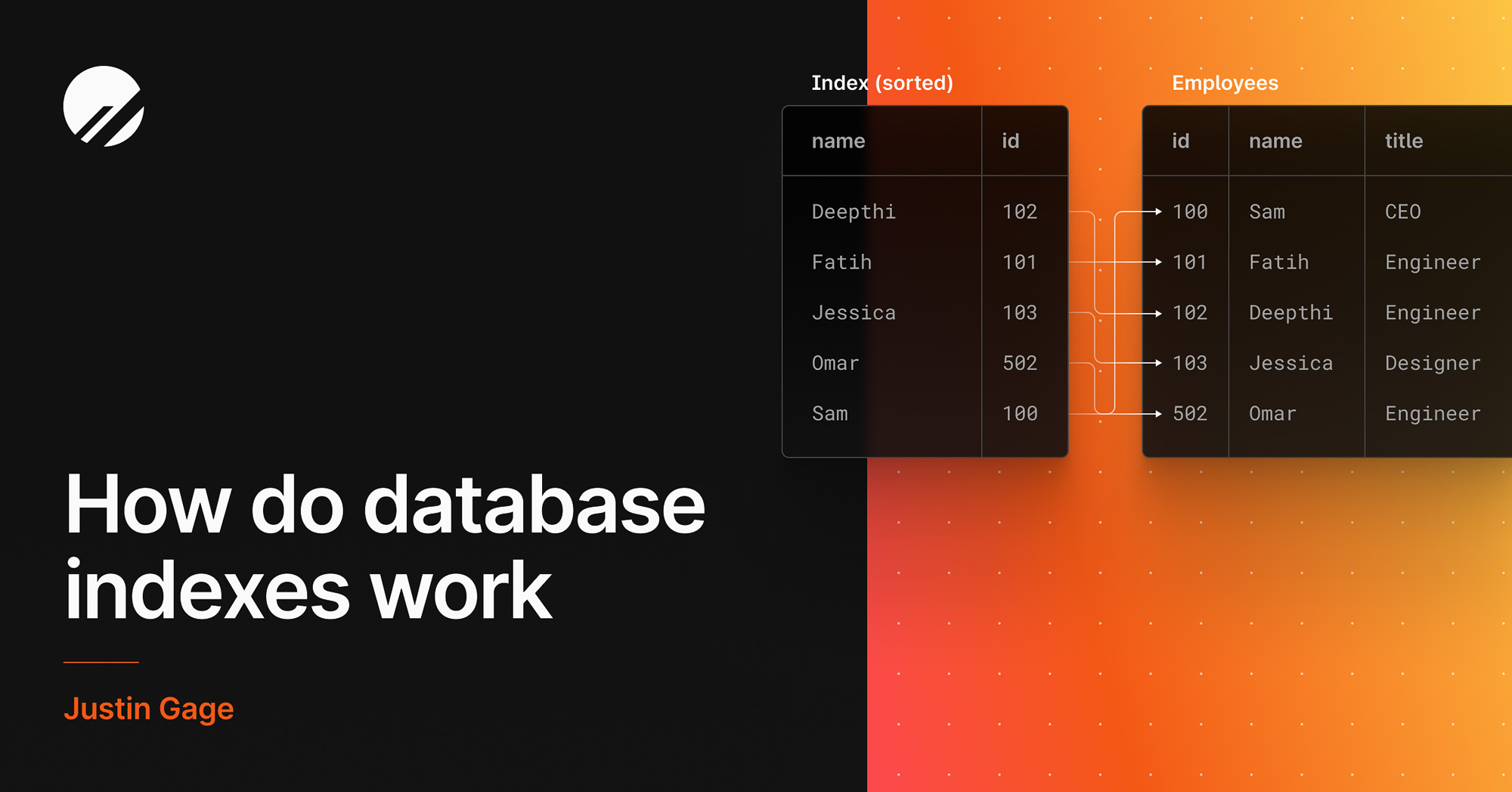
This post explains the fundamental concepts of database indexes, focusing on their role in speeding up read queries. It details how indexes, particularly B-tree structures, reduce query complexity from O(N) to O(log N) by creating ordered data structures with pointers to records. The post covers different index types (keys, unique indexes, text indexes) and their characteristics, including the use of `FULLTEXT` indexes with `MATCH()...AGAINST()` in MySQL. It also touches on index-only scans and the trade-offs of having too many indexes, such as increased storage space and slower INSERT operations. The `EXPLAIN` statement is highlighted as a tool for verifying index usage. The post also provides the syntax for creating indexes in MySQL and discusses various index options and types.