Blogs
Cohere logo

Cohere

Engineering blog · cohere.com/blog

96posts1this week0watchers

Feature trails

25
Feature trailActive

Enterprise AI Translation Model

Cohere's research into LLM training data reveals a 'culture funnel' where cultural diversity significantly narrows from pre-training to post-training datasets. This analysis highlights that scaling multilingual capabilities alone does not guarantee culturally rich representation. The findings emphasize the need for intentional curation of culturally representative content within training data to build more globally inclusive AI systems. This iteration introduces a framework for surfacing and examining cultural representation in training data and develops models capable of in-language reasoning across a wide range of languages, improving accessibility and nuance in AI interactions.

6 posts · 2026

Timeline

Feature trailActive

Agentic Workflow Orchestration

Cohere's North Automations platform enables enterprises to build and orchestrate complex, end-to-end AI agent workflows. This post details the release of North Automations, which provides a centralized layer to coordinate diverse agents across the enterprise, delivering enterprise-grade governance and security at scale. Key features include turning complex workflows into simple outputs with plain language descriptions, scheduled runs, and auditable execution paths with loops and branching. Users can now create reusable agents and automations that can be shared across the organization, eliminating the need to rebuild similar workflows repeatedly. Prototype documents or apps directly in chat, or connect North to your favorite existing tools. North 2 features an advanced agent orchestration system that manages complex, multi-step processes independently. Core features include Skills, Libraries, Memory, Applications, Automations (with a drag-and-drop visual workflow builder), and Connectors to enterprise data sources. North 2 also emphasizes enterprise-first security with flexible deployment options (self-hosted, VPC, hybrid, or on-premises), SOC 2 Type 2, ISO 27001, and ISO 42001 certifications, guardrails, autonomy policies, rigorous security testing, and system observability. North Admin provides granular controls for cost management, rate limits, user quotas, and org-wide caps, with features like detailed analytics, token spend monitoring, and efficient token consumption with NVIDIA hardware. The platform is model-agnostic, allowing users to leverage Cohere's models or bring their own.

26 posts · 2023–2026


Timeline

20232026
Feature trailActive

Enterprise Search Reranking

Cohere Rerank is an advanced retrieval model for enterprise search and RAG applications, focusing on enhancing precision and efficiency. This iteration, Rerank 3.5, represents Cohere's most powerful reranker yet, offering significant improvements in speed and accuracy for enterprise workloads. Notion integrated Cohere Rerank to improve search relevance and speed across large datasets, avoiding traditional embedding models for smaller workspaces and leveraging SageMaker for auto-scaling. The solution introduces RCP-nDCG@10, a new evaluation methodology that grades each retrieved document against explicit relevance criteria using a calibrated AI judge, designed to better reflect real-world enterprise retrieval quality and optimize next-generation search models.

13 posts · 2025–2026

Timeline

20252026
Feature trailActive

RAG Chunking for Knowledge Retrieval

Cohere's Coral platform, a Knowledge Assistant for Enterprises, leverages Retrieval Augmented Generation (RAG) for enterprise knowledge retrieval. This capability is enhanced by advanced chunking strategies for optimized document segmentation, ensuring semantic coherence and contextual relevance for improved model processing and retrieval accuracy. Command R and Command R+ further enhance RAG by providing a more powerful LLM for generation and improved RAG capabilities, including tool use and citations. Compass Cloud offers a managed retrieval platform for developers building AI applications with enterprise data, providing connectors, parsing, embedding, indexing, retrieval, reranking, and governance. It supports both agentic and conventional search applications, consolidating the core retrieval stack into an integrated enterprise platform. Compass API and Model Context Protocol (MCP) server are available for custom RAG and agentic retrieval respectively.

11 posts · 2024–2026

Timeline

20242026
Feature trailActive

LLM Serving Megakernel

Cohere has developed and open-sourced a novel serving engine for LLMs built around a decode megakernel. This system significantly improves inference speed and efficiency, particularly at lower batch sizes and longer context lengths, by consolidating the entire forward pass into a single, persistent kernel. It supports advanced features like continuous batching, paged attention, and ragged sequence lengths, offering an OpenAI-compatible endpoint. Model Vault provides secure, scalable, and efficient LLM serving. This post details the challenges and solutions for running LLMs in production, including considerations for hardware, software, and operational aspects to ensure reliable and performant inference.

1 post · 2025–2026

Timeline

20252026
Feature trailActive

AI Total Cost of Ownership (TCO) Analysis

Cohere's AI Efficiency Paradigm focuses on optimizing AI systems for reduced computational cost and improved performance. This includes strategies for enhancing model inference speed, reducing memory footprint, and minimizing energy consumption through techniques like advanced quantization, efficient attention mechanisms, and hardware-aware design. The goal is to make AI deployments more sustainable and cost-effective. This post specifically highlights the benefits of Small Language Models (SLMs) and provides best practices for deploying language models in production, emphasizing cost-effectiveness and performance.

5 posts · 2025–2026

Timeline

20252026
Feature trailActive

Automated Fork Maintenance with AI Agents

Cohere's North Automations platform enables enterprises to build and orchestrate complex, end-to-end AI agent workflows. This post details the application of AI agents to automate the maintenance of software forks, specifically syncing with upstream releases, resolving merge conflicts, running tests and benchmarks, and fixing regressions. This approach has compressed the time to absorb a new upstream release from weeks to days, with humans only reviewing the outcome. The skills powering this work include AI-assisted debugging and automated testing. The FDE engagement model focuses on building customer capability and operational independence, rather than creating dependency, by co-building systems and transferring knowledge.

3 posts · 2026

Timeline

Feature trailActive

Invoice Entity Extraction

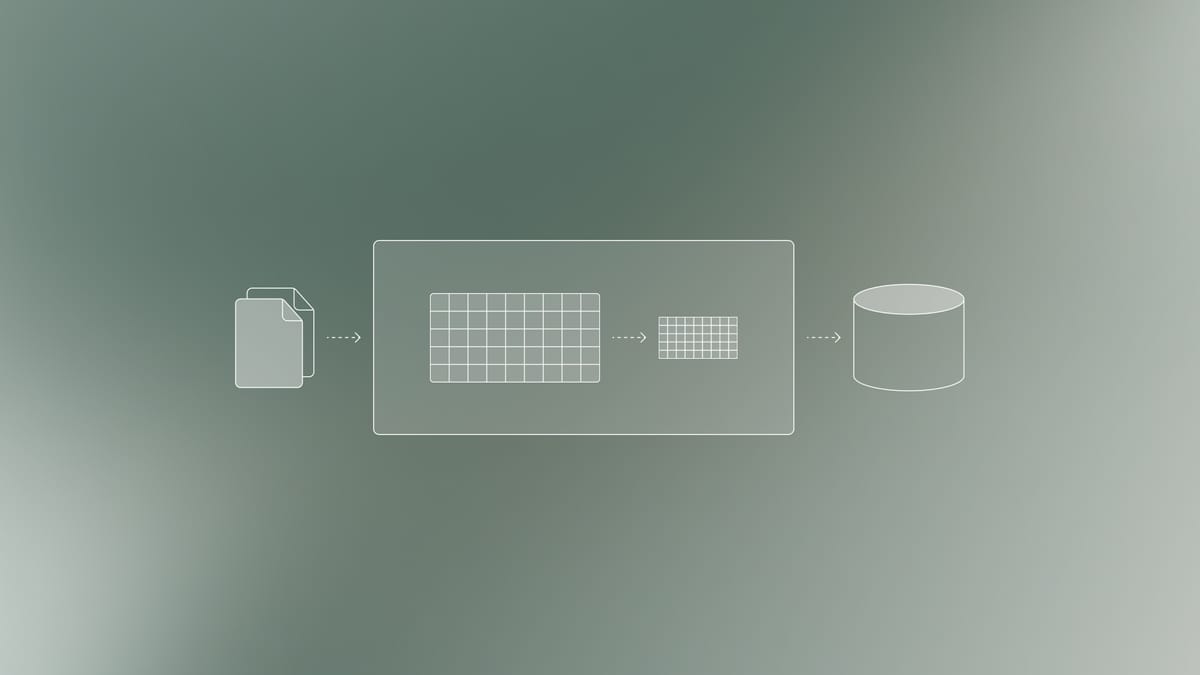
Cohere Parse is a cost-effective vision language model for processing large volumes of enterprise documents, converting complex, multimodal files into structured, machine-readable data. It understands tables, forms, diagrams, and images, returning bounding boxes and clean Markdown for downstream processing. Parse is designed for high-throughput and predictable inference costs at enterprise scale, offering secure deployments in private cloud or on-premises environments. This iteration, Parse v5.0, shows strong price-performance tradeoffs, outperforming leading specialized document parsing solutions and hyperscaler services on ParseBench, with improved throughput and cost savings through Model Vault deployments.

2 posts · 2023–2026
Timeline

20232026
Feature trailActive

LLM Training Data Cultural Representation

Cohere's research into LLM training data reveals a 'culture funnel' where cultural diversity significantly narrows from pre-training to post-training datasets. This analysis highlights that scaling multilingual capabilities alone does not guarantee culturally rich representation. The findings emphasize the need for intentional curation of culturally representative content within training data to build more globally inclusive AI systems. This iteration introduces a framework for surfacing and examining cultural signals at scale within training data, analyzing over 5.6 million training data samples across different stages of the LLM training pipeline and finding a consistent pattern: cultural diversity narrows as data moves from pretraining into post-training. The research also found that while adding more languages increases geographic diversity, it has diminishing returns in increasing the overall percentage of culturally grounded data, and that geographic representation is heavily skewed in cultural data. The analysis also shows that translation, local information requests, and message writing contain the strongest cultural signals, and that cultural awareness appears relevant across a wider range of tasks than current training distributions reflect.

2 posts · 2026

Timeline

Feature trailActive

AI Safety Framework

Cohere's platform now includes Safety Modes for configuring and enforcing AI output guardrails, building upon the existing AI Safety Framework. This provides granular control over content generation to mitigate risks associated with harmful or inappropriate content.

2 posts · 2026

Timeline

Feature trailActive

Dynamic Speculative Decoding

Cohere has developed and contributed Dynamic Speculative Decoding (DSD) to the vLLM inference framework. DSD adaptively controls the number of draft tokens based on hardware constraints (compute vs. memory bandwidth) and model architecture (dense vs. MoE), improving LLM inference speed and efficiency across various batch sizes and workloads, including large-scale RL rollouts. This optimization is compatible with vLLM's asynchronous scheduling and full CUDA Graph features. This post further analyzes the performance gains and compatibility challenges of DSD within vLLM, demonstrating its effectiveness in production systems and RL rollouts.

4 posts · 2025–2026

Timeline

20252026
Feature trailActive

Open-Source Speech Recognition

Cohere has released Transcribe Arabic, an open-source, high-accuracy Automatic Speech Recognition (ASR) model. It is trained from scratch with a focus on minimizing Word Error Rate (WER) and is designed for practical enterprise use, offering manageable inference footprint and efficient serving. The model ranks #1 on HuggingFace's Open ASR Leaderboard and supports 14 languages. It can be downloaded from Hugging Face, accessed via API, or provisioned through Cohere's Model Vault for production deployment.

3 posts · 2026

Timeline

Feature trailActive

LLM Serving Fairness

Cohere's Serving Fairness system manages inference requests fairly across tenants on a multi-tenant SaaS platform, addressing the 'noisy neighbor' problem. It employs a layered approach combining admission control (Rate Limiter) with a series of selectors (Performance Tier, Deficit Round Robin, and Priority) to ensure equitable distribution of GPU resources. The Deficit Round Robin algorithm, with request-based or token-based budgeting, ensures fair sharing of compute resources within tiers, while priority queues handle urgency within a tenant's allocated share.

2 posts · 2026

Timeline

Feature trailCooling

Chat Model Fine-Tuning

Cohere's fine-tuning suite offers a unified interface for customizing models, including advanced techniques for prompt optimization and data preparation, enabling developers to achieve higher performance and efficiency for a wider range of AI applications. This iteration introduces programmatic fine-tuning, allowing for automated and scalable customization of models through APIs and SDKs, enabling users to fine-tune Cohere Command R for specific enterprise workloads and achieve 'super genius' performance.

6 posts · 2023–2025

Timeline

20232026
Feature trailCooling

Topic Modeling with BERTopic

This post introduces topic modeling capabilities using the BERTopic library, enabling users to discover and analyze underlying themes within their data. It details the integration of BERTopic with Cohere's language AI models to enhance the accuracy and relevance of topic extraction, particularly for unstructured text data. The approach leverages advanced embedding techniques and clustering algorithms to group similar documents and identify representative topics. This post specifically applies the technique to analyze 10,000 Hacker News posts.

3 posts · 2024–2025

Timeline

20242026
Feature trailCooling

Cross-Lingual Classification

Cohere's Multilingual Text Understanding Model is now generally available, enabling advanced natural language processing across a wide range of languages. This model builds upon previous advancements in cross-lingual classification and now includes fine-tuning capabilities for both multilabel and multilingual use cases, allowing for more precise and adaptable text understanding applications.

3 posts · 2025

Timeline

20252026
Feature trailCooling

Semantic Search Scaling

This post details how Cohere's semantic search capabilities can be scaled using Pinecone as a vector database. It covers the architectural considerations, performance optimizations, and best practices for integrating Cohere's embedding models with Pinecone for efficient large-scale semantic search applications. The focus is on building robust and scalable solutions for retrieving information based on semantic meaning rather than keyword matching.

2 posts · 2024–2025

Timeline

20242026
Feature trailCooling

Toxicity Detection SMS Bot

Cohere's AI models and Twilio's messaging platform are used to develop a toxicity detection system for SMS messages. This system outlines the architecture, data processing, model integration, and deployment strategies for real-time content moderation in an SMS-based application. The system aims to identify and flag harmful or inappropriate content within user-generated messages, enhancing platform safety and user experience. This iteration focuses on leveraging NLP for content moderation.

4 posts · 2023–2025

Timeline

20232026
Feature trailCooling

AI-Powered Content Generation

Cohere's AI models are being applied to generate creative content, including game assets like Magic the Gathering cards. This involves leveraging LLMs for generating card text, abilities, and potentially even visual elements, demonstrating a new application of generative AI beyond traditional text-based tasks. This post details the technical implementation of an AI-powered Magic the Gathering card generator, focusing on prompt engineering, data preparation, and model fine-tuning to produce game-specific outputs.

1 post · 2025

Timeline

20252026
Feature trailCooling

Structured Output Generation

Cohere's models now support structured output formats, enabling developers to request responses in JSON, facilitating easier integration with downstream systems and automated data processing. This enhances the reliability and usability of AI-generated content for programmatic use cases.

1 post · 2025

Timeline

20252026
Feature trailQuiet since 2024

int8 & Binary Embeddings for Vector Databases

Cohere's Embeddings API now supports int8 and binary embedding formats, enabling significant reductions in vector database storage and query latency. This allows for scaling vector databases to much larger datasets while maintaining performance, making advanced AI search and retrieval more accessible and cost-effective for enterprises.

1 post · 2024

Timeline

20242026
Feature trailQuiet since 2024

Article Recommendation System

Cohere's platform supports building article recommender systems by integrating text embedding, classification, and entity extraction capabilities. This allows for the creation of systems that can understand article content, categorize it, and extract key information to provide personalized recommendations. This post details the technical implementation of an AI-powered Magic the Gathering card generator, focusing on prompt engineering, data preparation, and model fine-tuning to produce game-specific content.

1 post · 2024

Timeline

20242026
Feature trailQuiet since 2023

Command Model Integration with SageMaker

Cohere's Command model is now integrated with Amazon SageMaker Studio, enabling users to leverage Cohere's advanced language models within the familiar SageMaker environment for building and deploying AI applications. This integration simplifies the process of accessing and utilizing powerful LLMs for various enterprise use cases.

1 post · 2023

Timeline

20232026