Blogs
Glean logo

Glean

Engineering blog · glean.com/blog

124posts1this week0watchers

Feature trails

20
Feature trailActive

Security AI Agents

Glean's security AI agents framework has evolved to address the challenges of traditional security architectures by providing a structured approach to evaluating and governing AI agents. This includes the AWARE framework, which offers shared decision criteria for CIOs and CISOs, focusing on intent, context, guardrails, runtime risk, and observability. The framework enables a repeatable process for assessing agent risk, moving from 'risk is too high for now' to approval by establishing clear technical controls for scanning, sandboxing, and credential brokering. This post details the implementation of these controls for skills, ensuring they are safe to use in the enterprise by scanning them before entry, using a credential broker at runtime, and implementing access controls to scale safely.

16 posts · 2025–2026

Timeline

20252026
Feature trailActive

Enterprise Search Engine

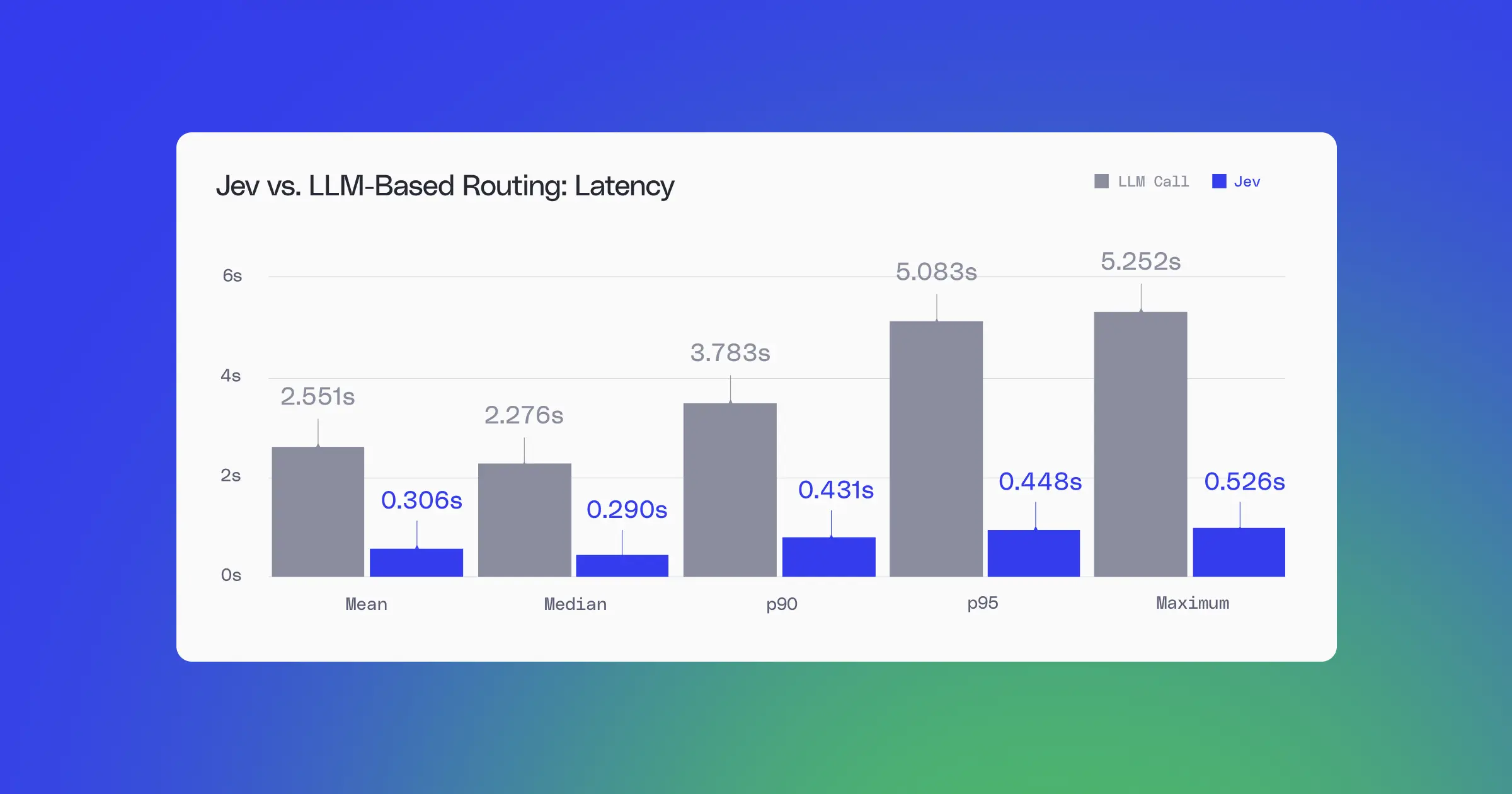
Glean's enterprise search engine continues to evolve, focusing on advanced information retrieval techniques. This includes hybrid search models combining lexical and semantic approaches, robust indexing of diverse data sources, and sophisticated ranking algorithms. The system aims to provide permission-aware, cited results across a wide range of enterprise applications, enhancing user productivity and data discoverability. Emerging trends like semantic search, machine learning integration, and AI-powered classification models like Jev are being integrated to improve query understanding, model routing, and result reranking, offering significant improvements in accuracy, latency, and cost efficiency compared to general-purpose LLMs for bounded decision tasks.

4 posts · 2025–2026

Timeline

20252026
Feature trailActive

Agent Orchestration Platform

Glean's Work AI platform continues to evolve its agent orchestration capabilities, embracing open standards and protocols like Anthropic's Model Context Protocol (MCP), LangChain, and LangGraph. This allows third-party agents to connect to Glean's indexed enterprise data, enabling them to be grounded in relevant, permission-aware context. Glean acts as a host, connecting to external tools via MCP servers, and can also be called from external agent environments like Cursor. This approach breaks down silos and enables a more integrated agentic experience. The platform now includes Glean Agents, a horizontal environment for building, deploying, orchestrating, and governing agents at scale. New capabilities include universal knowledge access (company apps, web, LLM data), structured data analysis (querying live data from Salesforce, Databricks, Jira), and active data and AI governance (scanning and auto-hiding overshared sensitive data). The natural language agent builder allows users to create agents with simple text descriptions, and agents can be saved, scheduled, shared, and recommended. The platform aims to enable enterprises to manage thousands of agents compliantly and securely.

96 posts · 2025–2026

Timeline

20252026
Feature trailActive

Knowledge Graph and Vector Database Integration

Glean's enterprise AI stack continues to evolve, with a focus on integrating its knowledge graph and vector database capabilities with external platforms via the Model Context Protocol (MCP). This integration allows external tools like v0 at Vercel and Langflow to access Glean's permission-aware, grounded context, enabling AI-generated applications to be informed by live company knowledge, including documentation, systems, and decisions. The system ensures consistent, permission-aware answers by leveraging RAG techniques for real-time search and assistive experiences across all company tools, securely, contextually, and at scale.

37 posts · 2025–2026

Timeline

20252026
Feature trailActive

AI Chat Latency Optimization

Glean's AI chat capabilities are being optimized for latency and cost efficiency. This post investigates the impact of input token count and KV caching on Time To First Token (TTFT) and overall chat latency for LLM calls. KV caching significantly reduces latency by reusing computations across LLM calls, especially in multi-turn conversations or workflows with similar prefixes. Experimentation with Azure's KV cache shows a ~0.15ms saving per cached input token, leading to substantial TTFT reduction. The post also discusses RAG vs. fine-tuning, their benefits, use cases, and challenges, including data privacy, potential limitations, and infrastructure complexity. A hybrid approach combining RAG and fine-tuning is also explored.

4 posts · 2025–2026

Timeline

20252026
Feature trailActive

Apache Beam Streaming for MySQL Corpus Processing

Glean is enhancing its data processing capabilities by implementing Apache Beam streaming pipelines to efficiently read and process a large corpus from MySQL. This approach replaces costly and fragile batch jobs, ensuring each document is re-processed at least once daily. The system utilizes a custom UnboundedSource and UnboundedReader within Apache Beam on Google Cloud Dataflow, with a scanner object managing parallel database reads and tracking cache state for infinite data streaming. This enables scalable and cost-effective processing of hundreds of millions of documents daily.

1 post · 2026

Timeline

Feature trailActive

Cloud SQL Migration

Glean has migrated 150 Cloud SQL instances from MySQL 5 to MySQL 8 using GCP DMS. This migration was motivated by MySQL 8's JSON improvements, aiming to speed up operations involving JSON columns. The process involved creating new MySQL 8 instances, copying large datasets (TBs), ensuring source DB availability, and managing service restarts/redeploys. An Asynchronous Upgrade Framework was developed to manage the large scale and duration of these migrations, using a state machine stored in GCS. The framework ensures idempotent operations and allows for state transitions based on replication lag and system load. Early indications show gains in CPU utilization and lower disk I/O with MySQL 8.

1 post · 2026

Timeline

Feature trailActive

CSS Optimization and Migration

Glean has migrated its CSS architecture from inline styles to vanilla-extract, a zero-runtime CSS-in-JS solution. This migration was driven by the need for better performance and developer experience at scale. The process involved surveying CSS frameworks, evaluating tradeoffs between runtime overhead and developer satisfaction, and developing codemods to automate the conversion of existing inline styles to vanilla-extract's style declarations and classNames. The adoption of vanilla-extract has improved debugging with classNames and enabled more efficient CSS management.

1 post · 2026

Timeline

Feature trailActive

Design System Accessibility

Glean's design system has been revamped to prioritize accessibility by default. This includes standardizing components with opinionated APIs and design tokens, ensuring consistent behavior and appearance across the product. The system now leverages Base UI for out-of-the-box screen reader and keyboard accessibility, with components exposing correct roles, states, and relationships. Focus management for dialogs and interactive elements has been improved, reducing the likelihood of accessibility regressions. The company has also completed its VPAT, improving transparency during evaluations.

3 posts · 2026

Timeline

Feature trailActive

Dynamic Ranking Code Deployment

Glean's search engine has evolved to enable dynamic deployment of ranking code without requiring server restarts. This is achieved by leveraging Java's dynamic class loading capabilities, remapping class names with release tags to allow multiple versions to coexist, and uploading JAR archives from Cloud Storage. This significantly reduces deployment times, enables more frequent releases, facilitates developer experimentation, and provides robust versioning and rollback support.

1 post · 2026

Timeline

Feature trailActive

Enterprise Autocomplete System

Glean's enterprise AI stack has been enhanced with an Autocomplete system designed to provide users with faster access to relevant information. This system suggests potential queries, documents, operators, and structured results (people, teams) with near-zero latency. It addresses the challenges of enterprise search by mining queries from indexed documents and developing low-latency models for document prediction, while respecting user permissions. The system aims to significantly reduce the average search time and improve user productivity. This post details the benchmarking of key metrics for evaluating enterprise search tools, focusing on accuracy, speed, user experience, and pricing. It highlights the importance of structured benchmarks for comparing search tool options against business goals, including tool calling accuracy, response times, interface usability, and cost efficiency. Specific metrics for accuracy include tool calling accuracy and context retention, with benchmarks targeting 90% or higher for both. Speed metrics focus on response times under 1.5 to 2.5 seconds and update frequency, emphasizing real-time or near-real-time indexing. User experience is evaluated through interface intuitiveness and reporting quality. The post also compares leading search tools like Glean, Microsoft Search, Elastic Enterprise Search, Coveo, and Sinequa, discussing their trade-offs. Finally, it emphasizes aligning search tool choice with business needs and use cases, considering pricing models and feature sets.

7 posts · 2025–2026

Timeline

20252026
Feature trailActive

Enterprise Data Crawler

Glean's enterprise search solution relies on a robust and scalable crawler as a foundational component. This crawler is designed to be quick, resilient, and flexible, handling various data sources and their unique API nuances. It incorporates sophisticated retry mechanisms for transient errors, tracks partial completions to avoid redundant work, and manages different work types (incremental, full, webhooks) to prevent data staleness. The system also prioritizes crawl tasks against API quotas and user identity schema for permissions-aware indexing. This post details optimizations to the identity crawl process, specifically for complex permission models like Salesforce, by concurrently executing non-API tasks and filtering stale users, leading to significant crawl time improvements.

13 posts · 2026

Timeline

Feature trailActive

Glean Code Search and Code Writer

Glean's engineering productivity tools continue to evolve with enhanced code search and code writer capabilities. Code search provides deep, permission-aware context from all code repositories, enabling engineers to understand code, explain implementations, generate architecture diagrams, and update documentation with sub-second latency. Code writer facilitates the transition from understanding to implementation by generating pull requests that follow existing patterns, reusing code and tests, and running configured checks. The integration with MCP extends code search to external tools like Claude Code and Cursor, while code writer remains available in native Glean integrations. Usage of code search has been observed to double monthly, indicating strong adoption.

3 posts · 2026

Timeline

Feature trailActive

Golang Memory Management in Containers

Glean's enterprise AI stack continues to evolve with a focus on optimizing performance and resource costs. This post details the debugging and resolution of a Golang memory leak issue encountered in an App Engine flexible instance. The problem was identified as an interaction between the Golang runtime's memory management (specifically MADV_FREE) and the containerized environment, where memory was not being returned to the OS efficiently, leading to instance termination. The solution involved setting the GODEBUG environment variable to "madvdontneed=1" to revert to MADV_DONTNEED behavior, which resolved the memory leak and stabilized memory usage.

1 post · 2026

Timeline

Feature trailActive

New Tab Page Performance Optimization

Glean's New Tab Page is optimized for instant loading by leveraging Service Workers with Workbox for offline caching of code and resources, and redux-persist with relaxed durability to cache user preferences locally in IndexedDB. A novel technique inspired by Server Side Rendering is employed: the client-rendered DOM's HTML is snapshotted and persisted to the Service Worker, allowing for immediate display with no JavaScript required for the initial render.

1 post · 2026

Timeline

Feature trailActive

Notification Dispatcher Tool

Glean's monitoring capability in the Cloud has been scaled with the development of the Notification Dispatcher tool. This internal system consolidates alert notifications and application exceptions from multiple GCP projects into a global view. It integrates with Google Cloud Monitoring and Error Reporting as sources, and dispatches notifications to Slack, Jira, and OpsGenie. Key features include Jira integration with customizable components and priorities, robust incident and error deduplication, notification silence, frequency control, auto escalation, and error grouping across projects.

1 post · 2026

Timeline

Feature trailActive

Search Engine Cluster Testing and Deployment

Glean's search engine cluster testing and deployment processes have been significantly enhanced to improve speed, reliability, and safety. This includes developing a fast, in-memory multi-node search engine for local unit testing, enabling engineers to catch bugs earlier in the development cycle. Deployment operations have been overhauled for faster and safer rebuilds, with added unit tests for all operations, verification procedures for sensitive steps like cluster switchovers, and a fast rollback operation.

1 post · 2025–2026

Timeline

20252026
Feature trailActive

Unstructured Data Governance

Glean's enterprise AI stack continues to evolve with enhanced capabilities for identifying and protecting sensitive content within unstructured data. This includes the introduction of active data and AI governance, which continuously scans and remediates overshared sensitive data, data shared beyond its intended scope or retention, across enterprise applications. This builds on existing sensitive content models that leverage AI, trained on enterprise context like document content, activities, and permissions, and now includes automated remediation and a partner program for enhanced security.

8 posts · 2026

Timeline

Feature trailActive

Webhooks

Glean's enterprise AI stack continues to evolve with enhanced capabilities for identifying and protecting sensitive content within unstructured data. This includes the introduction of active data and AI governance, which continuously scans and remediates overshared sensitive data, data shared beyond its intended scope or retention, across enterprise applications. This builds on existing sensitive content models that leverage AI, trained on enterprise context like document content, activities, an

1 post · 2026

Timeline

Feature trailActive

Glean Desktop App

The Glean desktop app has been enhanced to provide a more integrated and frictionless AI-first experience. New features include instant keyboard shortcuts for summoning the AI Assistant, an always-on-top quick chat window for seamless interaction, and a screenshot-to-chat capability that allows users to share visual context for more relevant answers. These enhancements aim to reduce context switching and improve productivity by bringing Glean's capabilities directly into the user's workflow across all applications.

2 posts · 2025

Timeline

20252026