BlogsInstacart Feature Trails

Instacart logo

Instacart Feature Trails

See how major capabilities shipped, upgraded, and evolved across Instacart's engineering blog.

Feature trails

8

On-call Reasoning Harness

Active

Introduced Blueberry, a Slack-native on-call reasoning harness designed to shorten time to first insight (TTFI) and time to test theories (TTTT) for on-call engineers. Blueberry automatically triages alerts within Slack threads, providing grounded explanations by correlating historical data (postmortems, runbooks) with live operational signals and changes. It features a durable, tool-aware architecture with a layered Model Context Protocol (MCP) for shared and team-specific investigators, enabling parallel evidence gathering and focused sub-agent investigations. The system captures reasoning traces and session context for inspectability and future improvement, aiming to transform tribal knowledge into reusable infrastructure and accelerate incident response.

1 post

Timeline

Experimentation Variance Reduction

Active

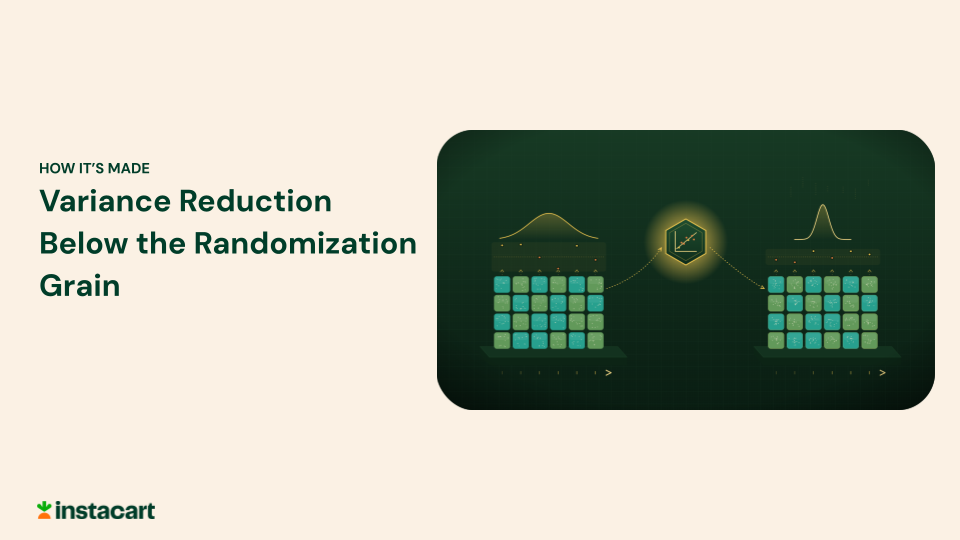
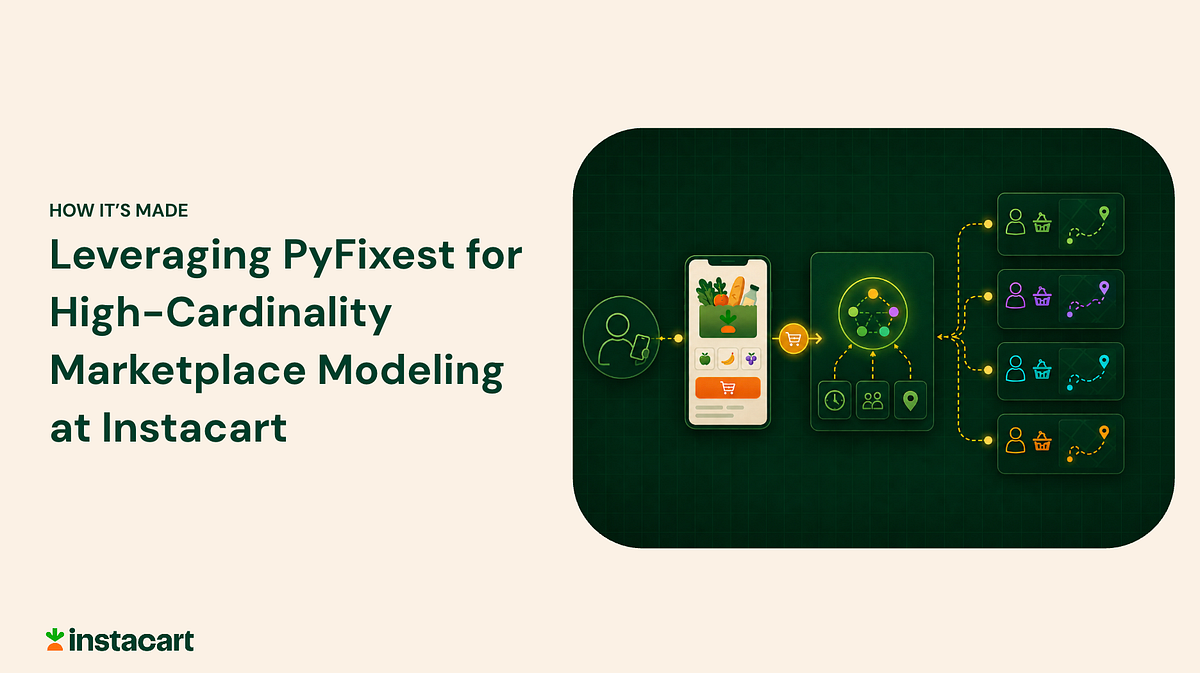
Introduced a novel method for variance reduction in experiments by building predictions at a finer grain (order-level) and aggregating them up, significantly improving statistical power and reducing experimentation time. This approach leverages order-specific covariates to create more accurate pre-treatment predictions, overcoming limitations of traditional region-day CUPED. This post further details the application of fixed effects models, specifically addressing the computational challenges of high-cardinality fixed effects in marketplace modeling using PyFixest and the Frisch-Waugh-Lovell theorem to improve processing speed, memory efficiency, and estimator precision.

2 posts

Timeline

Semantic IDs for Product Understanding

Active

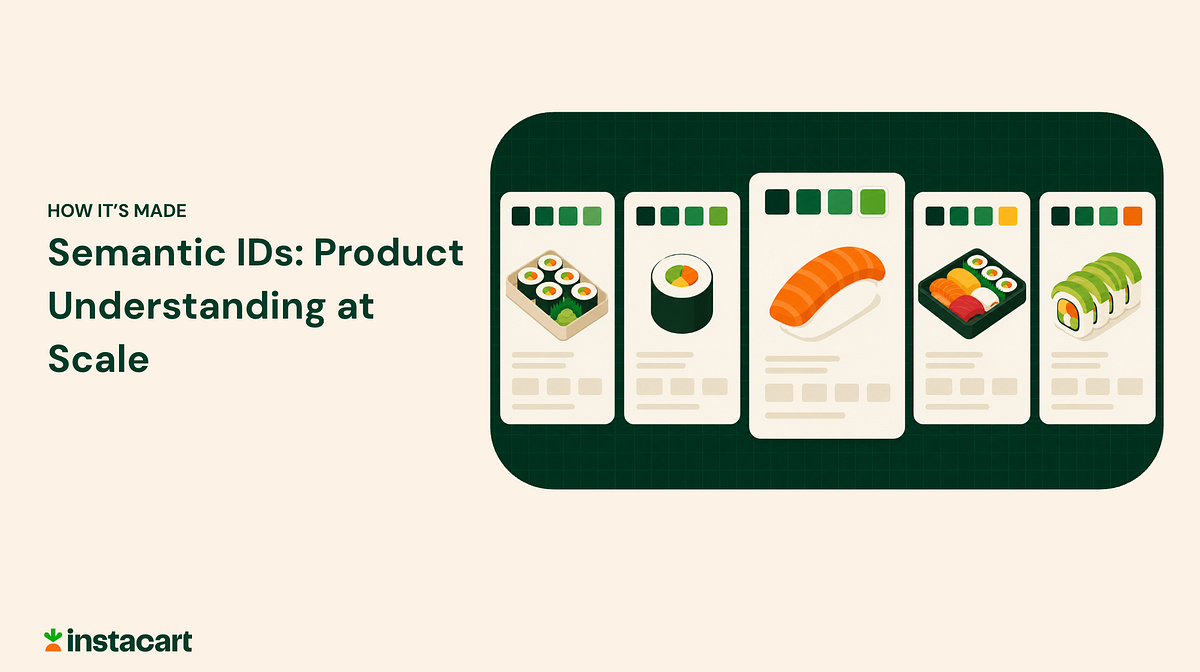
Introduced Semantic IDs (SIDs), a system for compressing product embeddings into discrete codes using an RQ-VAE. This system addresses challenges in managing large grocery catalogs, including cold start problems for new products, improving tail category coverage, and enhancing catalog quality by enabling cross-category product relationships. The new ads retrieval system leverages SIDs, moving from a scoring-based approach to a generative model that spells out product recommendations token by token, enabling a new level of contextual matching and discovery. This generative approach uses a new 'Context Template' training corpus, enriching sessions with context tokens beyond just product IDs.

2 posts

Timeline

AI Impact on Applied Science Roles

Active

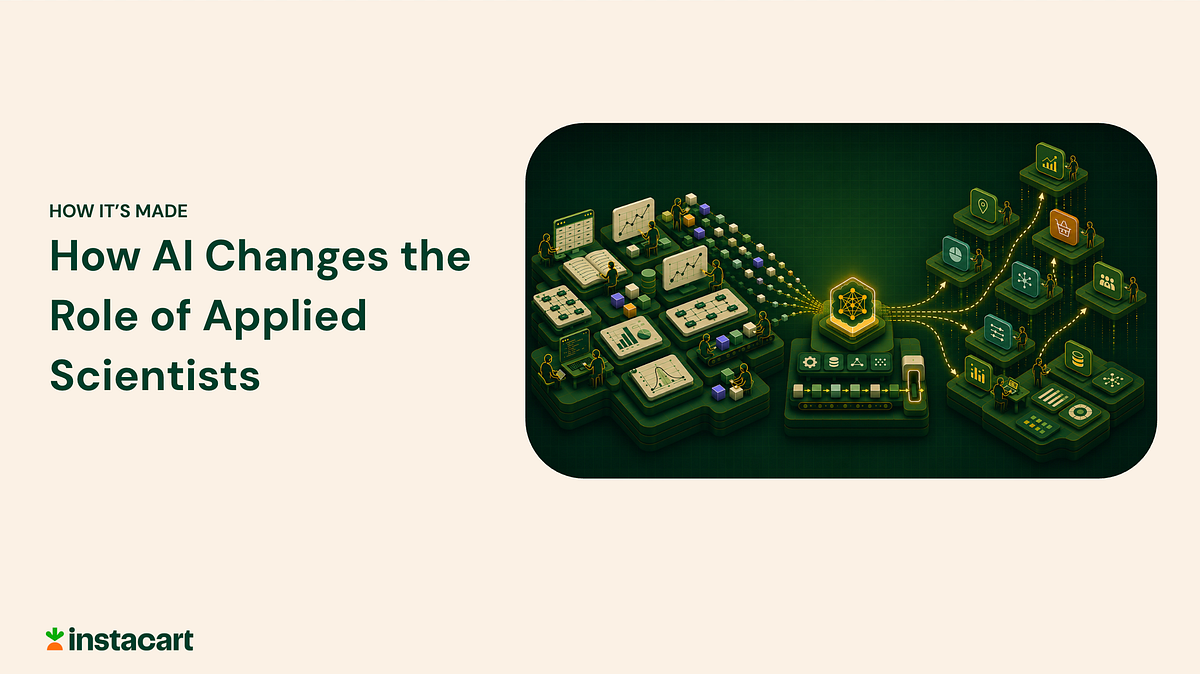
This post analyzes the impact of AI on the role of applied scientists at Instacart, focusing on the redistribution of tasks and the emergence of new capabilities. It details how AI has increased productivity in standardized tasks like ML model development and data pipelines, leading to a decrease in their relative share of work. Simultaneously, AI has lowered the barrier to entry for new task categories such as Platform/Tooling and Frontend/UI development, enabling applied scientists to take on a more diverse set of responsibilities and build full-stack applications. The analysis is based on GitHub contributions and economic theory concerning technological change.

1 post

Timeline

Multi-Tenant Marketing Platform

Active

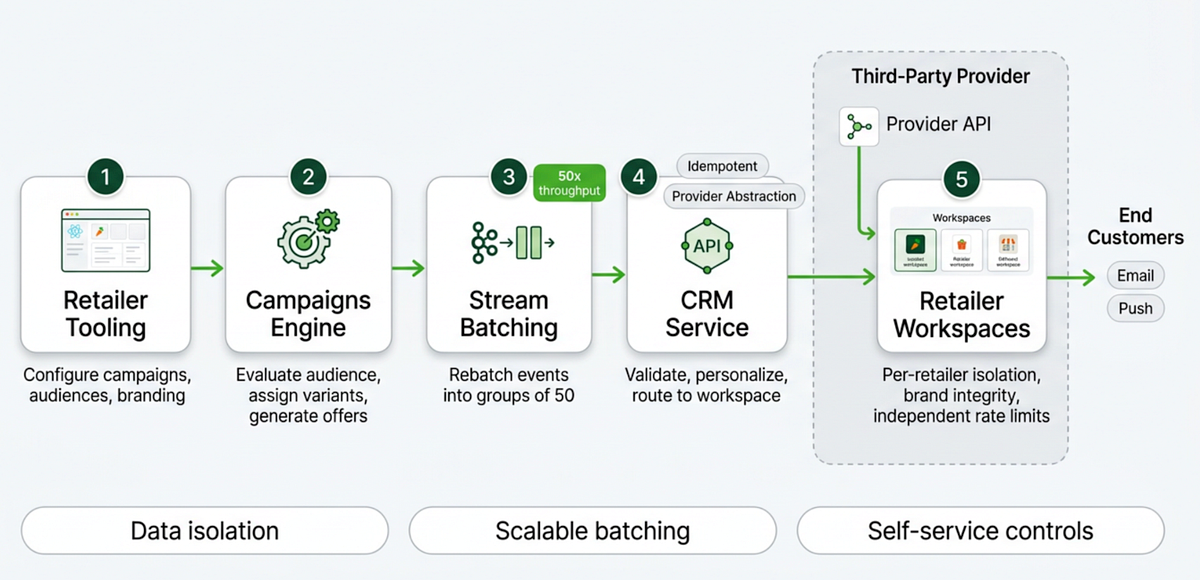
Instacart has developed a multi-tenant marketing platform to enable personalized marketing capabilities for its white-label Storefront Pro retailers. This platform extends existing marketing automation infrastructure by introducing per-retailer workspaces within a third-party vendor, ensuring data isolation and brand integrity. Key components include Instacart tooling for retailers, a Campaigns Engine for audience evaluation and personalization, a stream consumer and batching layer to improve throughput and API efficiency, and the Instacart CRM Service for message preparation and routing. The system addresses scale challenges through batching and horizontal scaling of asynchronous workers, and includes operational considerations for domain configuration and automated IP warming for email deliverability.

1 post

Timeline

Domain Adaptive Learning for Ads

Active

Instacart has developed a Domain Adaptive Learning approach to address the 'cold start' problem for its Carrot Ads platform. This method transfers knowledge from the data-rich Instacart Marketplace (source domain) to new partner websites (target domains), enabling performant ad serving even with limited historical interaction data. The approach involves adapting both the neural network architecture (reusing and fine-tuning embedding layers) and the training data (matching features across domains). This significantly improves CTR, clicks per user, and ad revenue for new partners, eliminating the traditional data ramp-up period. Future work includes building an automated Domain Adaptation Platform to streamline onboarding and detect domain shifts.

1 post

Timeline

LLM-Powered Discovery Recommendations

Active

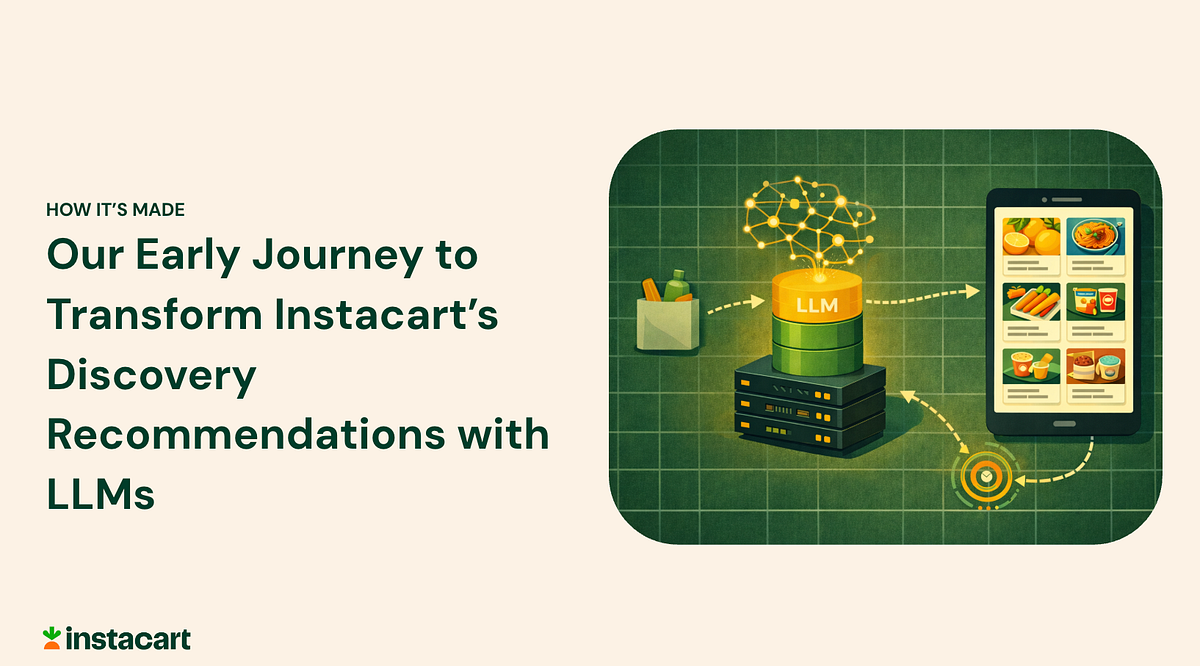
Instacart is transforming its discovery recommendations by leveraging Large Language Models (LLMs). This initiative moves away from static content libraries and human-driven generation towards an AI-native platform for content generation, evaluation, and retrieval. The system employs a top-down, cascaded approach, starting with page design and theme generation personalized to users, followed by retrieval keyword generation, quality and diversity filtering, and finally, product and pagewise ranking. This aims to deliver more delightful personalization, cohesion across the discovery surface, and adaptability to changing business environments.

1 post

Timeline

Caper Data Flywheel and Observability

Active

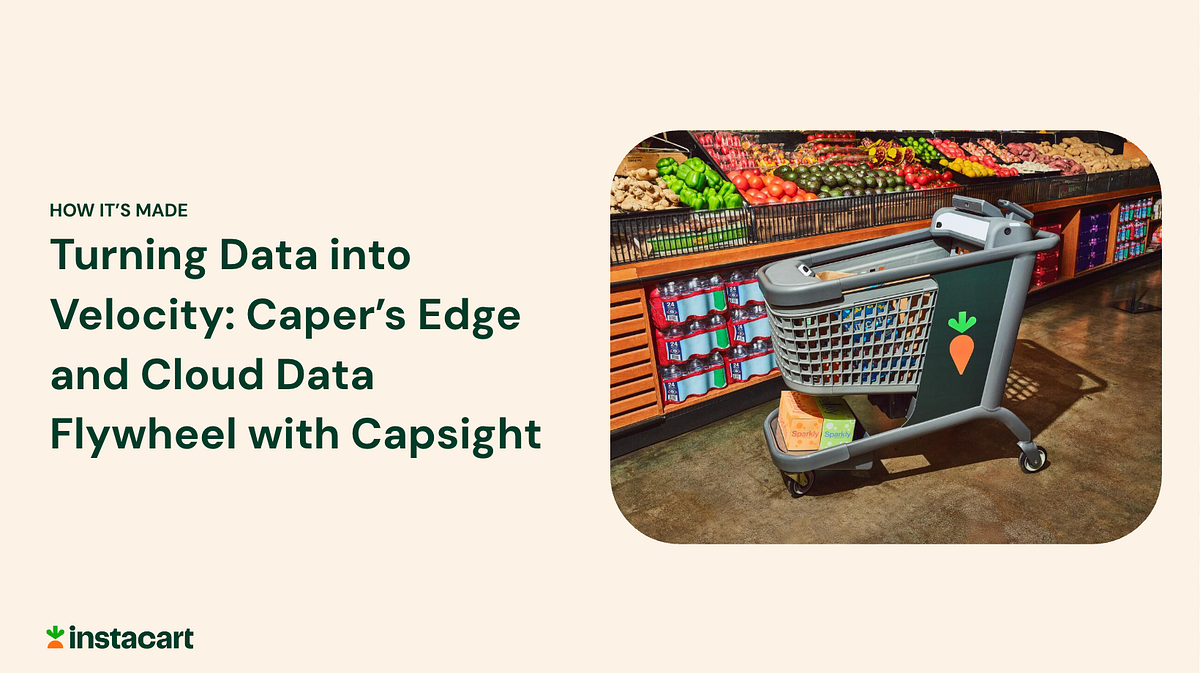
Instacart built Capsight, an end-to-end platform for Caper smart carts. It acts as a distributed data collection and model improvement engine. The system comprises the Capsight Collector (on-device intelligent data capture), Capsight Depot (cloud platform for data management, ingestion, curation, and AI-assisted annotation), and Capsight Learner (distributed training platform). This enables a continuous feedback loop from edge-captured data to ML training, significantly reducing model iteration cycles and improving accuracy by systematically gathering diverse, real-world data. Future work includes expanding to full sensor fusion and developing a foundation model for understanding store environments.

1 post

Timeline