Blogs
Mistral AI logo

Mistral AI

Engineering blog · mistral.ai/news

64posts1this week0watchers

Feature trails

24
Feature trailActive

Mixtral Sparse Mixture of Experts Model

Mistral AI continues to evolve its model offerings with the Mistral 4 family, including a 1 trillion-parameter natively multimodal model with 49 billion active parameters. This model, ML4, demonstrates exceptional performance across coding, agentic workflows, and multimodal understanding, competitive with the strongest open-source models globally and outperforming any open-weight model developed in the US or Europe. It is trained on Mistral's own datacenters in Europe and will be available with open weights. ML4 shows state-of-the-art performance in critical enterprise workloads like cybersecurity, finance, and law, and surpasses frontier closed models in domains like visual grounding. It is also proficient in scientific tasks, math, and knowledge work, with third-party evaluations showing it exceeds GPT-6-Astra in legal and financial benchmarks.

12 posts · 2023–2026

Timeline

20232026
Feature trailActive

Developer Tooling for Agents

Mistral AI enhances its AI coding assistant, Mistral Vibe, by moving coding agents to the cloud. This enables parallel, asynchronous task execution powered by the new Mistral Medium 3.5 (128B open-weight model) optimized for long-horizon coding. New 'Work mode' in Le Chat facilitates complex, multi-step tasks like research and cross-tool workflows, with human oversight for sensitive actions. The system integrates with GitHub, Linear, Jira, and Slack/Teams. Sessions can be initiated from the CLI. This post details an agentic workflow for automating the creation of Product Requirements Documents (PRDs) and engineering tickets from meeting transcripts, leveraging Mistral Large 2 for advanced natural language processing and structured output generation. The workflow integrates with project management tools like Linear and Jira.

2 posts · 2025–2026

Timeline

20252026
Feature trailActive

Search Toolkit

Mistral AI introduces Search Toolkit, a composable framework for building production search pipelines for AI applications. It integrates ingestion, retrieval (BM25 sparse, dense embedding-based, and hybrid), and evaluation (recall, precision, MRR, NDCG) into a single framework with a shared interface. The toolkit supports custom document formats, preprocessing, and advanced retrieval features like LLM query rewriting and reranking. It is battle-tested across various verticals and integrates with LLM-as-a-judge evaluation frameworks, including structured outputs for RAG evaluation.

3 posts · 2025–2026

Timeline

20252026
Feature trailActive

Mistral Compute AI Infrastructure

Mistral AI is expanding its AI infrastructure offerings with a focus on AI sovereignty and model accessibility. This includes the general availability of Mistral Regional Endpoints for choosing inference regions (Europe/US), the public preview of Mistral Priority Tier for committed service levels and SLAs, and the expansion of platform support to include third-party open models. The company is also forming a coalition to secure long-term European AI compute capacity, aiming for 1 GW by 2030, to provide a scalable, sovereign AI infrastructure.

2 posts · 2023–2026

Timeline

20232026
Feature trailActive

Multimodal Safety Classification

Shieldstral introduces a 3B open-weights multimodal safety classifier that outperforms models up to 7x its size by framing content moderation as a policy-adaptive question-answering task. Unlike traditional guardrail models, it accepts plain-language policies at inference time, unifying text and image safety evaluation without retraining. Released under Apache 2.0, it delivers calibrated safety scores across diverse benchmarks while running efficiently on a single 16GB NVIDIA GPU. The Mistral Moderation API is the same API powering Le Chat's moderation service, offering raw text and conversational content classification endpoints. It is natively multilingual and trained on Arabic, Chinese, English, French, German, Italian, Japanese, Korean, Portuguese, Russian, and Spanish. The classifier addresses model-generated harms such as unqualified advice and PII.

5 posts · 2024–2026

Timeline

20242026
Feature trailActive

Mistral Agents API

Mistral AI Studio is a production AI platform that integrates Observability, Agent Runtime, and AI Registry for building, evaluating, and running AI in production. It provides full visibility into AI traffic, enables building datasets from production interactions, and offers traceable feedback loops. The Agent Runtime, built on Temporal, ensures durable and reproducible agent execution across hybrid, dedicated, and self-hosted deployments. The AI Registry acts as a system of record for all AI assets. The Agents API is a dedicated framework for implementing agentic use cases, complementing the Chat Completion API. It includes built-in connectors for code execution, web search, image generation, and MCP tools, persistent memory across conversations, and agentic orchestration capabilities. Examples include coding assistants with GitHub integration, Linear ticket assistants, financial analysts, travel assistants, and nutrition assistants. The API supports stateful conversations, conversation branching, and streaming output. Agent handoffs enable collaborative problem-solving across multiple agents.

5 posts · 2025–2026

Timeline

20252026
Feature trailActive

Robostral Navigate Embodied Navigation

Mistral AI introduces Robostral Navigate, an 8B model for embodied navigation using a single RGB camera. It achieves state-of-the-art performance on R2R-CE benchmarks, outperforming multi-sensor approaches. The model is trained in-house using simulated data and token-efficient techniques like prefix-caching, and further improved with online reinforcement learning (CISPO). It generalizes across robot types and adapts to real-world obstacles, combining pointing-based navigation with local displacement.

1 post · 2026

Timeline

Feature trailActive

Formal Verification Models

Mistral AI introduces Leanstral, an open-source code agent for Lean 4, designed for formal verification and proof engineering. It leverages a sparse 6B active parameter architecture for efficiency and cost-effectiveness, outperforming larger open-source models and offering competitive performance against closed-source alternatives like Claude Opus at a significantly lower cost. Leanstral is integrated into Mistral Vibe and available via a Labs API, with weights released under Apache 2.0. Case studies demonstrate its ability to answer StackExchange posts about Lean changes and reason about programs by translating Rocq definitions to Lean and proving properties.

1 post · 2024–2026

Timeline

20242026
Feature trailActive

Connectors and Tool Orchestration

Mistral AI's Workflows platform provides an orchestration layer for enterprise AI, bringing durability, observability, and fault tolerance to AI-powered processes. It allows developers to write workflows in Python, publish them to Le Chat for triggering by business users, and track every step audibly in Studio. The system leverages Temporal's durable execution engine, extended for AI-specific workloads, with a split deployment model where Mistral hosts the control plane and customers deploy workers in their own environments. Key features include durable execution, comprehensive observability via Studio and OpenTelemetry, human-in-the-loop approvals with `wait_for_input()`, native integration with Studio's agents and connectors, enterprise readiness with workspaces and RBAC, and flexibility for developers and business teams. The Python SDK (v3.0) enables workflow creation and execution.

2 posts · 2026

Timeline

Feature trailActive

Mistral OCR

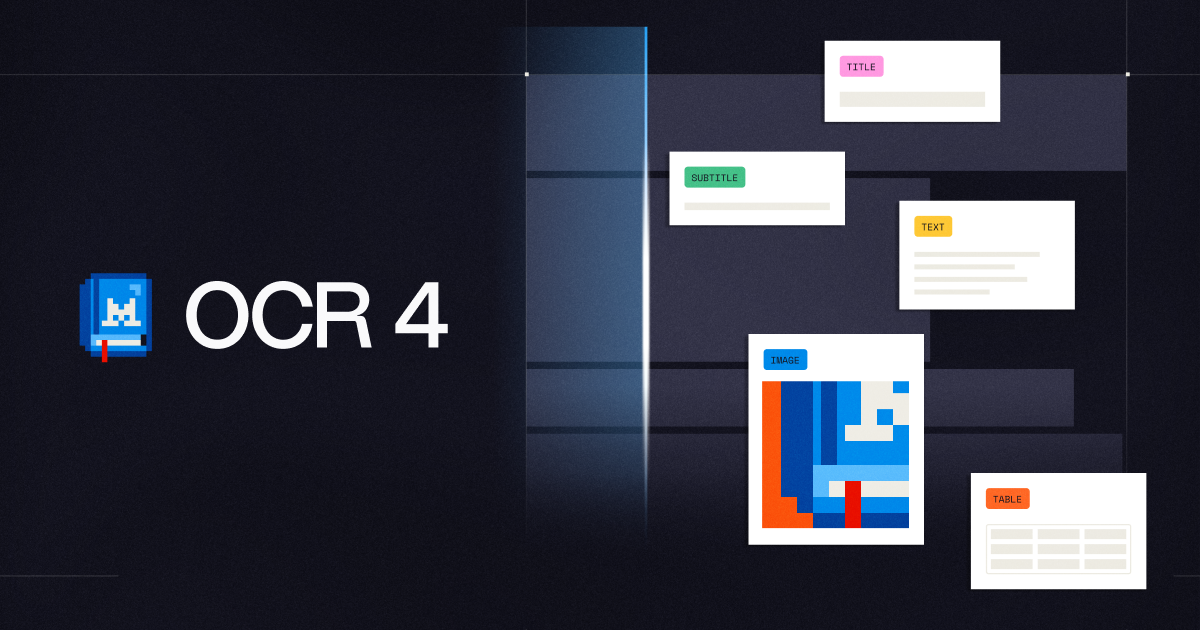
Mistral OCR introduces breakthrough performance in document parsing, outperforming previous generations and competitors on forms, scanned documents, complex tables, and handwriting. It offers state-of-the-art accuracy, supports markdown output with HTML table reconstruction, and is available at a competitive price. The model powers the Document AI Playground in Mistral AI Studio and can be integrated via API or self-hosted. It is designed for high-volume enterprise pipelines and interactive document processing. The latest iteration offers improved multilingual support and faster processing speeds.

3 posts · 2025–2026

Timeline

20252026
Feature trailActive

Mistral Vibe Terminal Agent

Mistral Vibe evolves into a unified AI agent for both work and coding, now powered by Devstral 2. This update introduces custom subagents for targeted tasks, multi-choice clarifications for ambiguous intents, slash-command skills for preconfigured workflows, and unified agent modes for context switching. Bug fixes and improvements in the Vibe CLI ship continuously. Devstral 2 moves to paid API access, with free usage on the Experiment plan in Mistral Studio. Enterprise services include fine-tuning, reinforcement learning, and code modernization.

6 posts · 2025–2026

Timeline

20252026
Feature trailActive

Physics AI for Engineering

Mistral AI is expanding its AI infrastructure offerings with a focus on AI sovereignty. This includes the general availability of Mistral Regional Endpoints for choosing inference regions (Europe/US), the public preview of Mistral Priority Tier for committed service levels and SLAs, and the expansion of platform support to include third-party open models. The company is also forming a coalition to secure long-term European AI compute capacity, aiming for 1 GW by 2030, to provide a scalable, sove

3 posts · 2026

Timeline

Feature trailActive

Physics AI for Engineering

Mistral AI introduces physics AI, a new foundational capability for AI-native industrial engineering. This capability leverages data-driven AI models to predict physical behavior directly from geometry and boundary conditions, offering a significant acceleration over traditional numerical physics simulations. The technology enables faster product design by exploring thousands of design variants, accelerated tooling and process design by optimizing tooling geometry and parameters, and real-time digital twins for predictive maintenance and operational efficiency.

1 post · 2026

Timeline

Feature trailActive

Voxtral Speech Understanding Models

Mistral AI releases Voxtral, state-of-the-art speech understanding models available in 24B and 3B variants under Apache 2.0, and via API. Voxtral offers advanced transcription, built-in Q&A and summarization, multilingual support, and function-calling directly from voice. Benchmarks show superior performance to Whisper, GPT-4o mini, and Gemini 2.5 Flash in transcription and audio understanding tasks. Enterprise features include private deployment, domain-specific fine-tuning, and advanced context support. Future updates will include speaker segmentation, emotion detection, word-level timestamps, and non-speech audio recognition.

3 posts · 2025–2026

Timeline

20252026
Feature trailActive

Model Customization and Agents

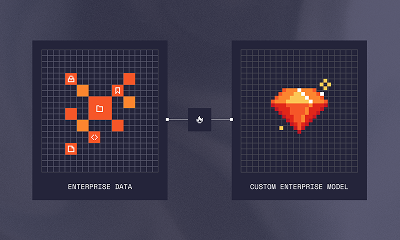
Mistral AI Forge enables enterprises to build frontier-grade AI models grounded in proprietary knowledge through pre-training, post-training, and reinforcement learning. This allows for custom models that understand enterprise-specific terminology, workflows, and policies, enhancing the reliability and accuracy of enterprise agents. The platform integrates with Mistral AI Studio for building, evaluating, and running AI in production, leveraging Temporal for durable and reproducible agent execution. Mistral AI is also introducing model customization on la Plateforme, offering open-source fine-tuning SDKs (mistral-finetune) using LoRA adapters, serverless fine-tuning services on la Plateforme, and custom training services for select customers. These services aim to reduce the cost and expertise required for customizing generative AI models at scale, enabling users to adapt Mistral AI models to their specific needs.

11 posts · 2023–2026

Timeline

20232026
Feature trailActive

Mistral Large Model

Mistral AI continues to evolve its flagship LLM with Mistral Large 2, featuring a 128k context window, enhanced multilingual capabilities, and improved reasoning and instruction-following. The model demonstrates competitive performance against leading models like GPT-4o and Claude 3 Opus, particularly in code generation and multilingual tasks. It also boasts improved function calling and retrieval skills. Mistral Large 2 is available via la Plateforme, cloud service providers (GCP, Azure, AWS, IBM), and its weights are released under the Mistral Research License for non-commercial use, with commercial licenses available.

1 post · 2024–2026

Timeline

20242026
Feature trailActive

vLLM Memory Leak Debugging

This post details the debugging of a memory leak in vLLM, specifically within a disaggregated Prefill/Decode serving setup utilizing NIXL and UCX. The investigation involved advanced profiling tools like Heaptrack and kernel-level tracing with pmap and BPFtrace to identify memory growth outside of the traditional heap, specifically in anonymous memory mappings managed by mmap/mremap. The root cause was identified as a leak within the KV Cache transfer mechanism via NIXL, leading to unreleased memory.

1 post · 2026

Timeline

Feature trailActive

Codestral Mamba Architecture

Mistral AI continues to advance its coding models with Codestral Mamba, a 7B parameter model based on the Mamba architecture. This model offers linear time inference and the ability to model sequences of infinite length, making it efficient for code productivity use cases. It has been trained with advanced code and reasoning capabilities and tested on in-context retrieval up to 256k tokens, positioning it as a strong local code assistant. The model is available for free use, modification, and distribution under Apache 2.0.

5 posts · 2024–2025

Timeline

20242026
Feature trailActive

Ministral Edge Models

Mistral AI continues to evolve its model offerings with the Mistral 3 family, including dense models (14B, 8B, 3B) and Mistral Large 3 (a sparse MoE with 41B active parameters). The Ministral models are optimized for edge and local use cases, offering state-of-the-art performance-to-cost ratios. Mistral Large 3 is a frontier instruction-fine-tuned open-source model with image understanding and strong multilingual capabilities. The release emphasizes open-sourcing models under Apache 2.0, collaborating with cloud partners, and providing commercial licenses for self-deployment. This post introduces Ministral 3B and Ministral 8B, specifically targeting on-device computing and edge use cases, highlighting their knowledge, commonsense, reasoning, function-calling, and efficiency in the sub-10B category. They support up to 128k context length (32k on vLLM) and Ministral 8B features interleaved sliding-window attention for faster inference. Use cases include on-device translation, internet-less smart assistants, local analytics, and autonomous robotics, as well as efficient intermediaries for function-calling in multi-step agentic workflows. Benchmarks show these models outperform peers like Gemma 2 and Llama 3.2/3.1 in their respective size classes.

1 post · 2024–2025

Timeline

20242026
Feature trailCooling

AI Memory System

Mistral AI introduces a new AI memory system for Le Chat, focusing on transparency, user agency, and data sovereignty. The system allows users to control what the AI remembers, how it recalls information, and provides visibility into the sources of recalled data. It features automatic saving of useful information with smart, timely, and visible recall, user controls for turning memory on/off, incognito modes, and editing/deleting memories. The system is designed to be portable and interoperable. The underlying architecture is graph-based, balancing performance with context-awareness.

2 posts · 2025

Timeline

20252026
Feature trailCooling

Vision Language Model Fine-tuning

Mistral AI continues to enhance its vision and multimodal model capabilities. Pixtral Large, a 124B multimodal model built on Mistral Large 2, offered frontier-level image understanding, excelling in document, chart, and natural image analysis. It achieved state-of-the-art performance on benchmarks like MathVista, DocVQA, and MM-MT-Bench. The model supported a 128K context window, allowing for the processing of multiple high-resolution images. Mistral Large 2 also received an update with improved performance.

1 post · 2024–2025

Timeline

20242026
Feature trailCooling

Codestral Embeddings

Mistral AI continues to evolve its coding stack with Codestral 25.01, enhancing code completion accuracy and chat capabilities. The model features a more efficient architecture and an improved tokenizer, generating and completing code about 2 times faster, making it the leader for coding in its weight class and SOTA for FIM use cases. The integrated system now includes advanced codebase-scale semantic retrieval via Codestral Embed, which offers flexible embedding dimensions and private deployment.

1 post · 2024–2025

Timeline

20242026
Feature trailCooling

Magistral Reasoning Model

Mistral AI introduces Magistral, a new family of reasoning models designed for domain-specific, transparent, and multilingual reasoning. The models are released in two variants: Magistral Small (24B parameters, open-source) and Magistral Medium (enterprise version). Magistral excels in multi-step logic, providing traceable thought processes and high-fidelity reasoning across multiple languages. It is optimized for speed, with Magistral Medium achieving up to 10x faster token throughput in Le Chat. Magistral Small is available for self-deployment under Apache 2.0, and Magistral Medium is available via API on La Plateforme and other cloud providers.

2 posts · 2024–2025

Timeline

20242026
Feature trailCooling

Batch API for Model Inference

Mistral AI introduces a Batch API for its models, offering a more cost-efficient way (50% lower cost) to process high-volume requests compared to synchronous API calls. This feature is ideal for applications prioritizing data volume over synchronous responses, enabling users to upload batch files and download processed outputs. Popular use cases include bulk customer feedback analysis, document summarization and translation, vector embedding generation, and data labeling. The Batch API is available for all models served on la Plateforme, and coming soon to our cloud provider partners. Rate of usage is limited to 1 million ongoing requests per workspace.

1 post · 2024

Timeline

20242026