Blogs
ScyllaDB logo

ScyllaDB

Engineering blog · scylladb.com/blog

28posts0this week0watchers

Feature trails

18
Feature trailActive

Rust C# Interop Framework

ScyllaDB continues to enhance its driver ecosystem by developing a custom asynchronous Foreign Function Interface (FFI) framework for Rust and C# interop. This framework aims to enable the creation of a Rust-based C# driver, building upon the 'One Driver To Rule Them All' strategy. The post details the challenges encountered with existing bindgen tools and the necessity of supporting asynchronous operations, leading to the development of a self-baked solution leveraging .NET 5+ features like `Un`. This post details the development of a Rust-based Python driver, leveraging PyO3 for binding Rust code to Python and yoke for zero-copy deserialization. It highlights the performance benefits of Rust over Python for CPU-bound operations and the maintainability advantages of a unified Rust driver implementation.

3 posts · 2026

Timeline

Feature trailActive

QUIC Transport for Seastar

ScyllaDB has integrated the QUIC transport protocol into its Seastar framework, aiming to mitigate TCP's head-of-line blocking and reduce handshake latency. This integration leverages the sans-I/O ngtcp2 library and adapts Seastar's RPC layer to run over QUIC, with benchmarks showing predictable performance on lossless networks and advantages when packet loss occurs. The integration focuses on user-space implementation and adapting Seastar's shared-nothing, per-core event loop architecture to QUIC.

1 post · 2026

Timeline

Feature trailActive

Full-Text Search and Object Storage Backend

ScyllaDB 2026.3 enhances its capabilities with the introduction of Full-Text Search (FTS) using BM25 relevance scoring, a preview of an object storage backend for S3, and improved Oracle Cloud Infrastructure (OCI) integration. The release also includes large data guardrails for cluster stability and experimental features like Strongly Consistent Tables and vNode-to-Tablet online migration. FTS allows direct keyword searches within CQL via a `fulltext_index` and `MATCH()` function, complementing ScyllaDB Vector Search for RAG and agentic AI use cases. The object storage backend is suitable for write-intensive, storage-bound workloads. Large data guardrails detect and control unsafe data patterns. Cluster-wide restore from object storage is now available for tablet-based tables. OCI support is extended with native backup and restore to OCI Object Storage.

1 post · 2026

Timeline

Feature trailActive

AI Agent Database Integration

ScyllaDB Agent Skills provides best practices and usage patterns for AI agents interacting with ScyllaDB Cloud clusters, improving reliability and performance. This integration with MCP Toolbox for Databases extends this by enabling AI agents and applications to query ScyllaDB clusters directly using the CQL protocol via the ScyllaDB Go driver, supporting both self-hosted and ScyllaDB Cloud deployments. MCP Toolbox acts as an MCP server for IDE assistants and a custom tools framework for product.

2 posts · 2026

Timeline

Feature trailActive

System Scalability Design

ScyllaDB X Cloud offers elastic scaling for variable workloads, allowing clusters to scale from 10K to 1M ops/sec and back down in minutes with single-digit millisecond P99 latency. This is achieved through automatic tablet streaming and rebalancing, enabling rapid capacity adjustments to match actual usage without overprovisioning. The system supports mixed instance sizes and maintains performance during scaling events. The Terraform provider allows for infrastructure-as-code management of these scaling operations.

17 posts · 2026

Timeline

Feature trailActive

Database Consolidation and Performance Improvement

This post details how Sprig consolidated its data infrastructure from Postgres, ClickHouse, and Redis to ScyllaDB, achieving significant latency improvements and simplifying their architecture. This capability focuses on migrating from multiple specialized databases to a single, high-performance NoSQL solution for complex, data-intensive applications. The post also details strategies for handling out-of-order writes and record versioning during migrations, and the importance of understanding sub-

1 post · 2026

Timeline

Feature trailActive

Medium Feature Store Scalability

Medium has evolved its feature store architecture to handle massive scale, moving from a relational feature model to a list-based model using ScyllaDB. This change was driven by the need to support 1M operations per second for real-time recommendations, addressing performance bottlenecks and complexity associated with relational features at scale. The new architecture leverages ScyllaDB's capabilities to store and retrieve features efficiently, enabling more personalized and timely user experiences.

1 post · 2026

Timeline

Feature trailActive

System Scalability Design

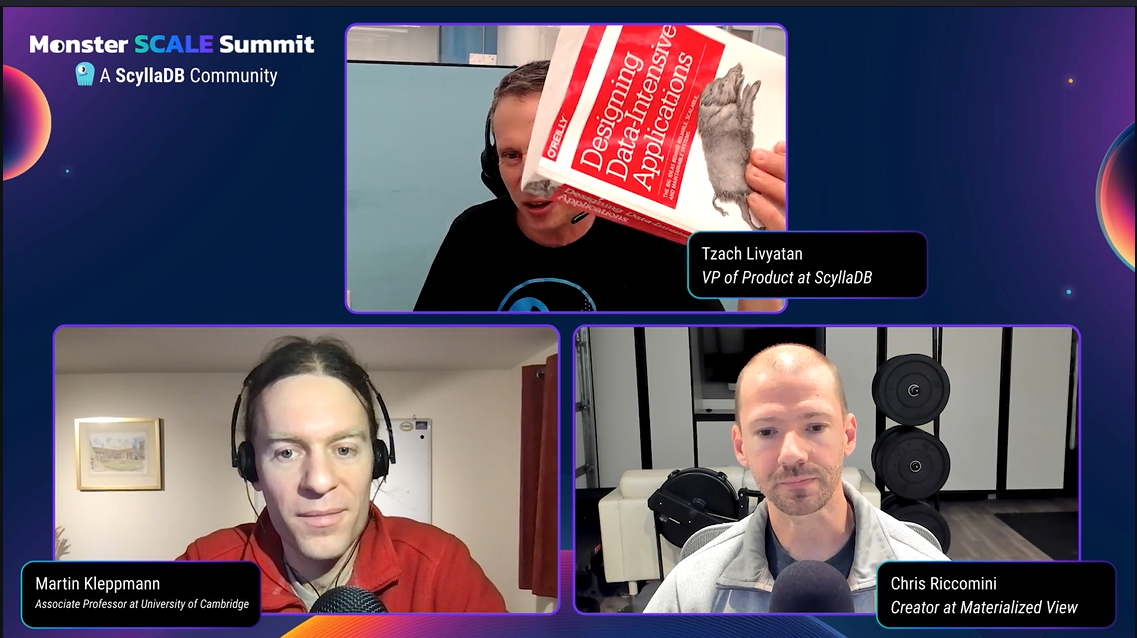
This post is an excerpt from the second edition of 'Designing Data-Intensive Applications' and discusses the fundamental concepts of scalability in system design. It emphasizes understanding current load, the different dimensions of scaling (vertical vs. horizontal), and the trade-offs involved in choosing scaling strategies. The excerpt highlights that scalability is not a binary attribute but a set of considerations for handling increased load and that premature optimization should be avoided.

1 post · 2026

Timeline

Feature trailActive

Asymmetric io_uring Backend for Seastar

ScyllaDB has introduced an asymmetric io_uring backend for Seastar, designed to offload I/O operations from application cores to dedicated I/O cores. This aims to reduce contention on application cores, minimize context switching overhead, and mitigate cache pollution by separating computation and I/O handling. The new backend contrasts with the existing symmetric io_uring and linux-aio backends, focusing on improving performance and latency predictability for compute-heavy workloads.

3 posts · 2026

Timeline

Feature trailActive

NoSQL Database Migration Strategies

This post outlines key considerations and strategies for planning, executing, and de-risking NoSQL database migrations. It covers the choice between online and offline migration approaches, the essential steps of schema migration, data migration, and data validation, and discusses methods for capturing changes in the source database (e.g., DynamoDB Streams, dual-writing, CDC, Kafka) to ensure data consistency during the migration process.

1 post · 2026

Timeline

Feature trailActive

Key-Value vs. Wide-Column Database Comparison

ScyllaDB 2026.2 enhances its Alternator API with GA DynamoDB Streams and a Vector Search extension, enabling event-driven architectures and semantic search. It defaults to the Trie index format for improved read performance and includes connection storm mitigation. ScyllaDB Cloud gains Private Link and Vector Search integrations. Experimental features like Strongly Consistent Tables and vNode-to-Tablet online migration are also available. This post further clarifies the distinction between key-value and wide-column models, emphasizing that access patterns are the primary driver for choosing the right data model and database technology, rather than relying on generic benchmarks or terminology.

1 post · 2026

Timeline

Feature trailActive

ScyllaDB Admission Control Hardening

ScyllaDB has successfully mitigated performance-degrading connection storms by optimizing caching, throttling, and password hashing, achieving a 1000x reduction in tail latency. This involved improvements across the connection establishment pipeline, including connection throttling, caching of connection-related data, optimization of password hashing, and the introduction of a dedicated service level for background traffic.

1 post · 2026

Timeline

Feature trailActive

Trie-Based Indexing

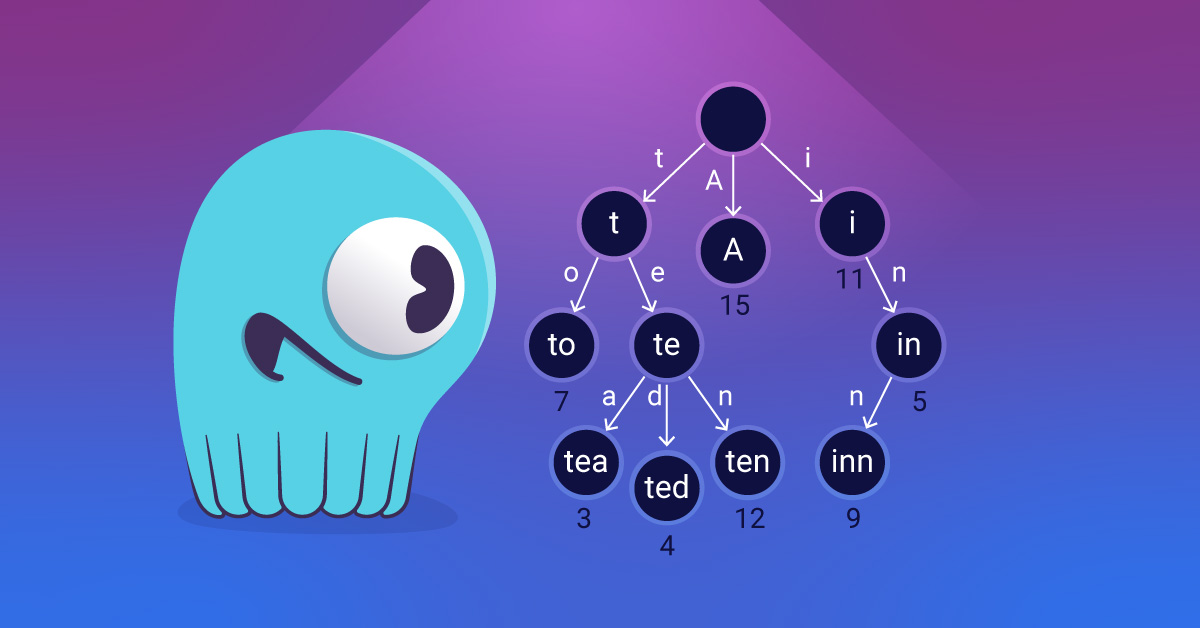
ScyllaDB has transitioned to a Trie-based index format for SSTables, which became the default in ScyllaDB 2026.2. This change significantly improves read performance by optimizing cache efficiency, reducing disk I/O, and lowering memory overhead compared to the legacy three-layer lookup format. Benchmarks show throughput increases of 30% to 230% and latency reductions of 31% to 63% for various read workloads, with negligible impact on the write path.

1 post · 2026

Timeline

Feature trailActive

Strongly Consistent Tables via Raft

ScyllaDB is introducing per-tablet Raft groups to provide strong consistency for specific data types and workloads, complementing its existing eventually consistent model. This allows for stronger guarantees on metadata and application data like counters, balances, and idempotency records, while aiming to maintain ScyllaDB's high performance and parallelism.

1 post · 2026

Timeline

Feature trailActive

ScyllaDB Operator Kubernetes Integration

ScyllaDB Operator continues to expand cloud platform support, now including Oracle Kubernetes Engine (OKE). It also introduces ECDSA support for TLS certificates, offering improved security and performance with smaller key sizes and faster cryptographic operations. Additionally, Prometheus Operator is no longer a hard dependency, reducing the operator's footprint and simplifying deployments.

1 post · 2026

Timeline

Feature trailActive

Large Blob Storage Optimization

ScyllaDB introduces a modified salting technique to address the performance challenges of storing large blobs, aiming to reduce P99 write latency and mitigate head-of-line blocking issues.

1 post · 2026

Timeline

Feature trailActive

cqlsh Rewrite in Rust

ScyllaDB has developed and released cqlsh-rs, a complete rewrite of the Python cqlsh in Rust. This rewrite addresses long-standing issues with Python dependency management and improves the reliability and performance of the COPY TO/FROM feature. The new Rust-based cqlsh provides a static binary with zero runtime dependencies, simplifying deployment and maintenance, and resolving critical bugs and performance bottlenecks in bulk data import/export.

1 post · 2026

Timeline

Feature trailActive

Apache Cassandra Performance Tuning

This post consolidates learnings from years of tuning Apache Cassandra for performance. It highlights the importance of understanding Cassandra's architecture and configuration, drawing parallels to older tuning guides while emphasizing the need for environment-specific adjustments. The post aims to help users improve their existing Cassandra cluster performance and conduct more meaningful comparisons.

1 post · 2026

Timeline