The case for an omni-bodied robot brain
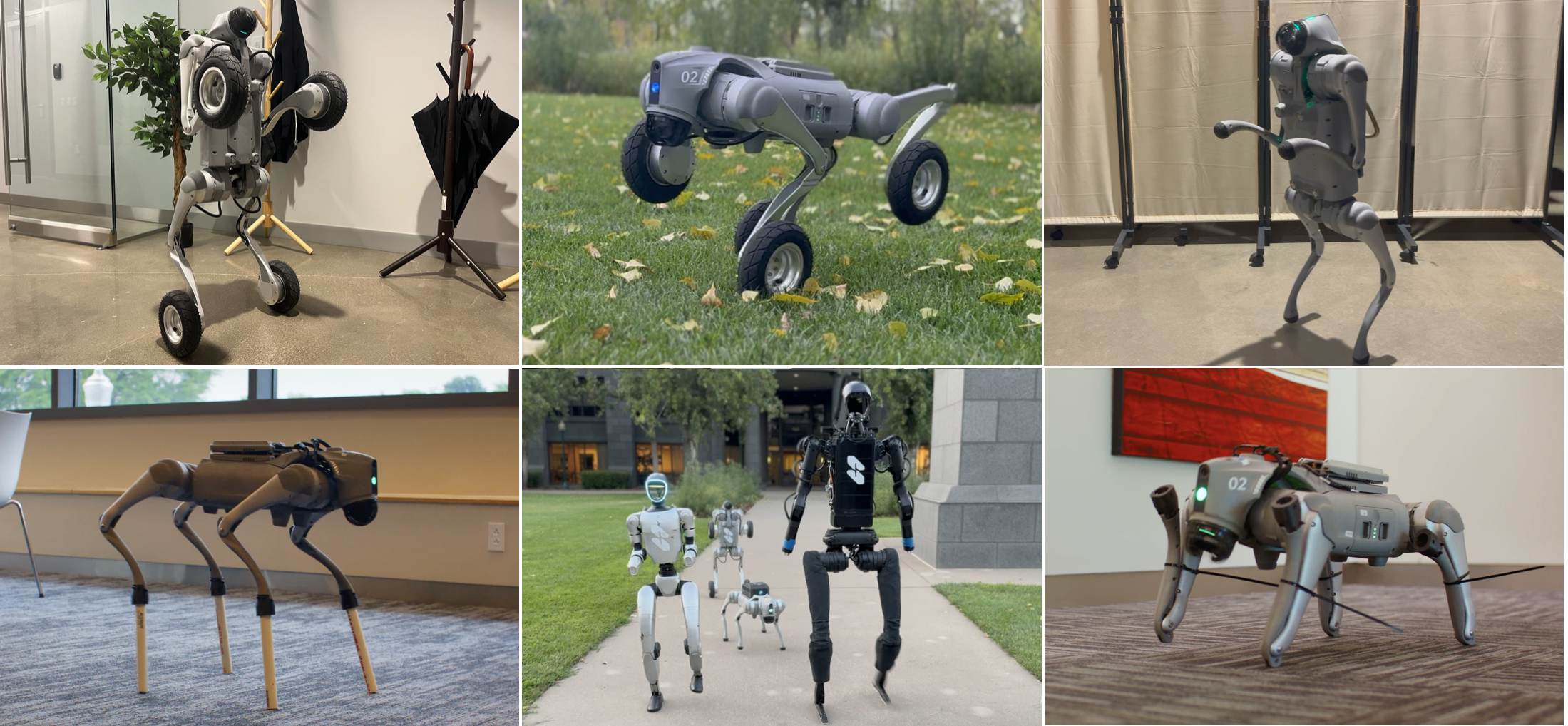
This post details the engineering effort behind creating an 'omni-bodied brain' for robots, trained on a simulated universe of 100,000 different robot bodies. The core contribution is demonstrating how training on a diverse set of morphologies forces a model to develop adaptive locomotion strategies. The post highlights the model's ability to perform zero-shot control and adapt to extreme morphological changes (loss of limbs, broken legs, jammed wheels, walking on stilts) through in-context learning, adapting within milliseconds to minutes. It showcases how the model learns from failures by prepending previous trial data as a prompt, improving behavior over successive attempts. This contrasts with specialist controllers that fail catastrophically in novel situations. The technical novelty lies in the scale of simulated diversity and the observed emergent adaptability and resilience in physical robot control.