Blogs
Figma logo

Figma

Engineering blog · figma.com/blog

25posts3this week0watchers

Feature trails

6
Feature trailActive

Figma Make Visual Editor

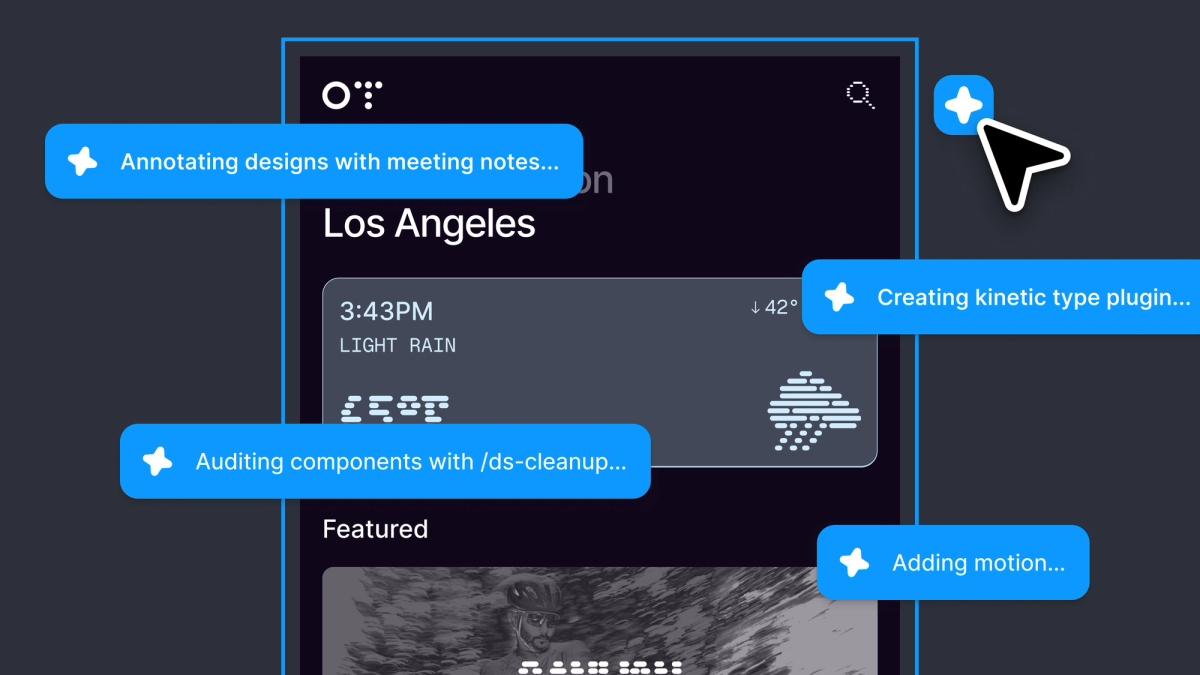
The Figma Make Visual Editor continues to evolve, enhancing AI-powered design-to-code workflows. This iteration focuses on expanding the agent's capabilities with custom tools, greater context, and reusable skills. The agent can now generate custom plugins and shader effects/fills, leveraging WebGPU for rendering. It integrates more deeply with external tools and Figma files to understand project context, brand, and ways of working. Custom skills allow for saving and sharing repeatable workflows. The Figma agent is now directly integrated into the canvas and left rail, offering deep context on design systems, components, tokens, and best practices. It allows for starting prompts from any layer, parallel prompting, and simultaneous editing with the agent. The agent automates busywork like bulk edits, renaming variables, swapping components, and populating designs with realistic content. It also assists in documenting design systems by updating descriptions, tags, and use cases, and standardizing naming conventions. Furthermore, the agent helps process feedback by summarizing themes, identifying next steps, and pressure-testing designs from different perspectives.

15 posts · 2026

Timeline

Feature trailActive

Figma Weave AI Creation Platform

Figma Weave continues to integrate generative AI and professional editing tools into the open canvas, enhancing image, video, animation, motion design, and VFX media generation and editing capabilities. This evolution includes bringing Weave tools directly to the Figma Design canvas as pre-built workflows, enabling users to leverage capabilities like style transfers, product shoots, and material extraction with simplified UIs. The platform also allows users to publish their own custom workflows, and now extends design system elements into marketing campaigns through AI-driven transformations and multi-language localization.

5 posts · 2026

Timeline

Feature trailActive

Figma File Organization and Permissions Model

Figma has introduced nested folders to improve file organization for growing teams. This required a significant overhaul of the underlying content and permissions model, impacting the file browser, admin controls, sharing, permissions, and core infrastructure. The development process shifted towards a 'lead with code' approach, with engineers making design calls and designers pushing code, fostering closer collaboration and faster iteration through early PRs and live demos. This evolution also involved integrating AI-native capabilities and leveraging tools like Figma Make, MCP server, agent skills, codebase prototyping, and context-aware agents to accelerate development.

2 posts · 2026

Timeline

Feature trailActive

Security Alert Triage Agents

Figma is building an agentic system to automate security alert triage. This system leverages retrieval-augmented generation (RAG) to provide historical context for alerts and then uses specialized agents with scoped toolkits to investigate and resolve issues. The system aims to reduce on-call burden and improve the speed and accuracy of security incident response. This post details the evolution of the security review process, focusing on improving precision and recall through agentic systems, a shared policy, and an adjudicator. The system now includes provider failover, retry policies, and detailed telemetry. The prompt has been ablated, and a TypeScript service has been built to host the reviewer. The system now measures recall with a corpus of 66 real vulnerabilities and aims for 70% precision.

3 posts · 2026

Timeline

Feature trailActive

Canvas Accessibility Layer

Figma has developed a comprehensive system to make its canvas-based product accessible to users of assistive technologies. This involves creating a 'Mirror DOM' that synchronizes with the internal scenegraph, an internal accessibility tree to cache accessibility details, a bidirectional synchronization system for focus and selection, and an announcement system for user actions. This system allows screen readers to navigate and operate the editor, and keyboard-only users to interact with Figma files. This post details the implementation of the Mirror DOM, including how it handles layout and positioning of elements, and the synchronization of focus and selection between the canvas and assistive technologies. It also describes the use of live regions for announcing user actions and changes.

1 post · 2026

Timeline

Feature trailActive

Figma Motion Animation Timeline

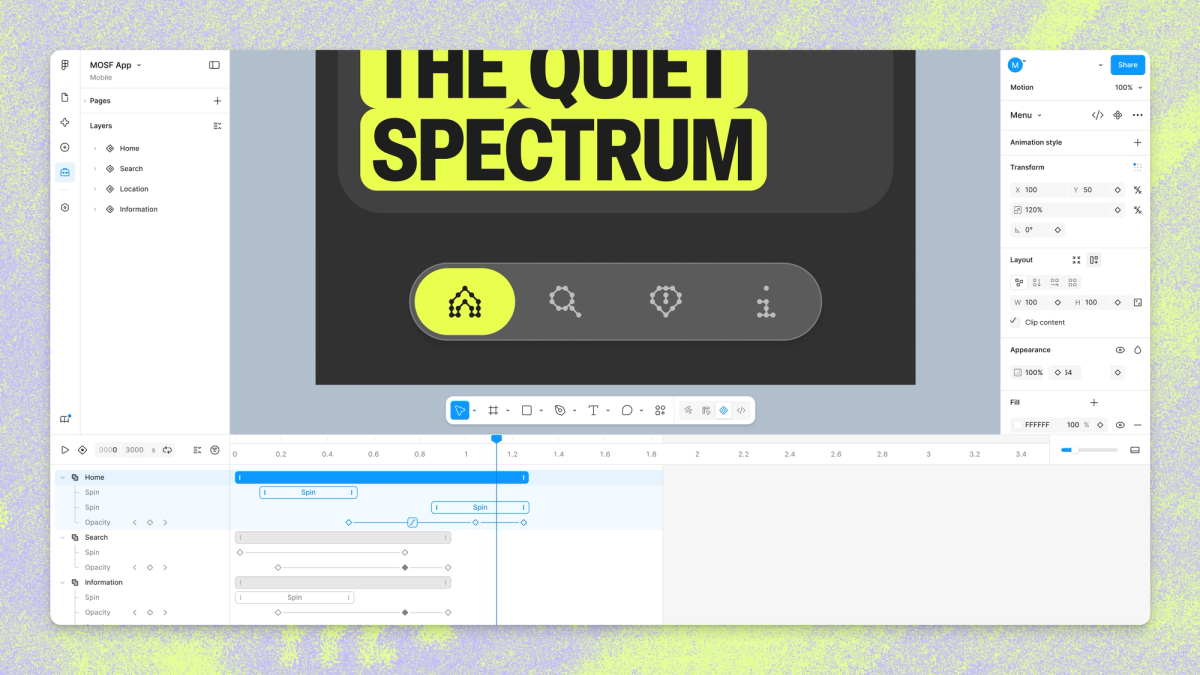
Figma Motion introduces a native animation timeline on the canvas, enabling keyframing of position, scale, rotation, and opacity. It supports auto keyframing, time-based comments, and preset animation styles. The system aims to build a motion system for design components and introduce motion variables for customization. It also integrates with Dev Mode for smoother handoffs and exports to various formats (MP4, GIF, SVG, WEBM, CSS, JSON, React, motion.dev). Future enhancements include 3D transforms and shader effect keyframing. The Figma agent assists in generating motion directly on the timeline.

2 posts · 2026

Timeline