Blogs›Netflix Feature Trails
See how major capabilities shipped, upgraded, and evolved across Netflix's engineering blog.
Publishing pulse
2026–2026 · peak 2026
11 posts mapped
Netflix is building a comprehensive device capability data model and integrating feature flags to enable smarter, more granular feature management across its global device landscape. This involves designing data storage and modeling strategies for efficient analytics at scale, using cumulative and histogram tables to capture device capabilities and their distributions. This data-driven approach informs decisions about feature enablement on specific devices, ensuring performance and reliability.
Timeline

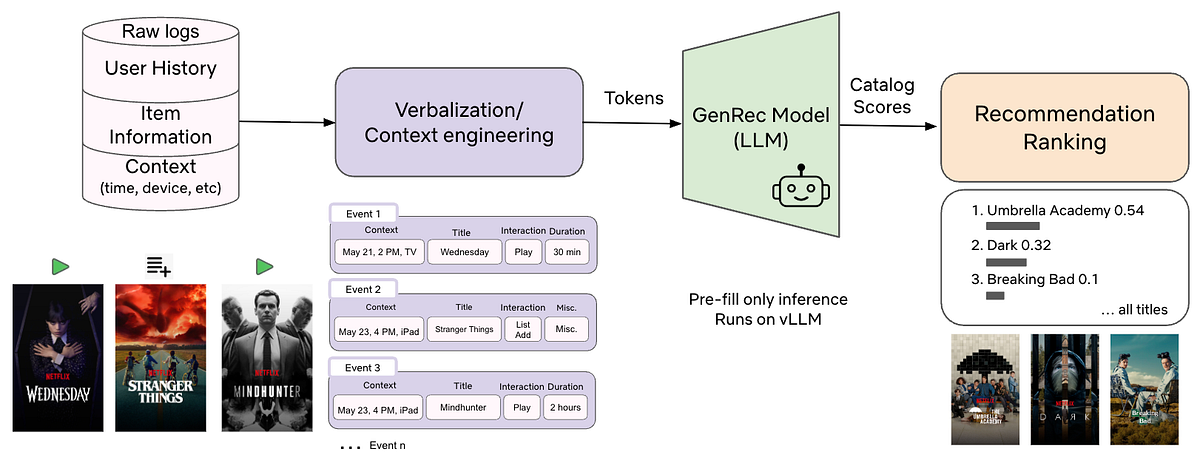
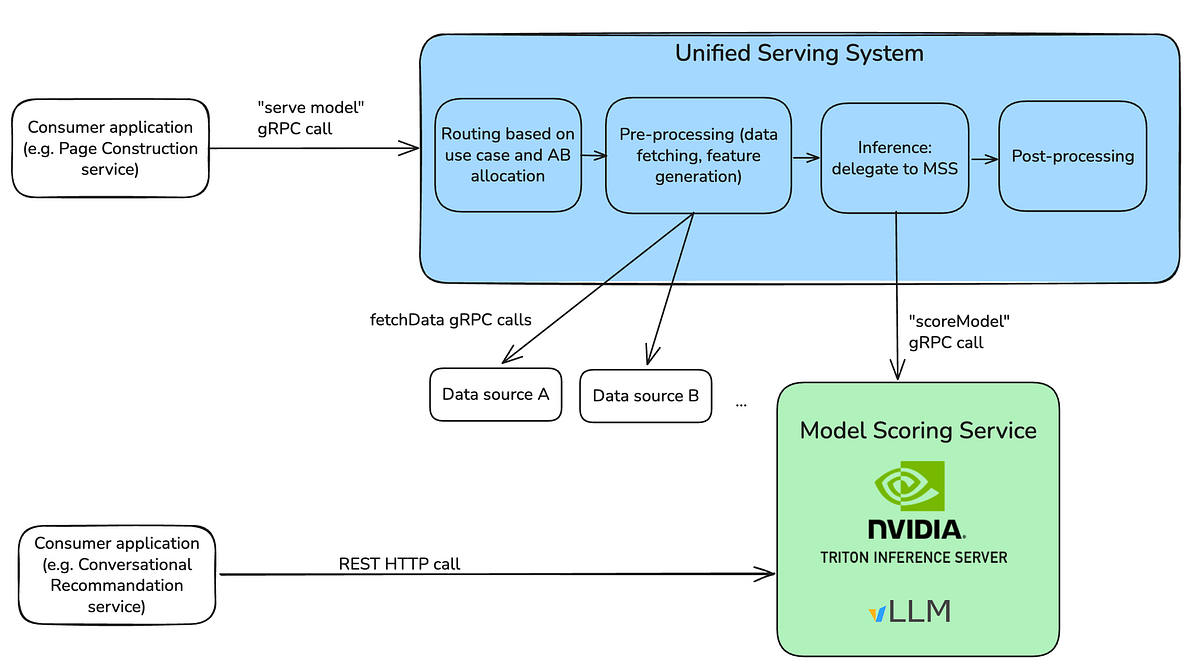
Netflix is building a comprehensive in-house infrastructure for serving Large Language Models (LLMs) and applying them to core product features. This involves developing a full stack solution that integrates model deployment, inference, and serving within their existing production environment. Key efforts include selecting and integrating performant LLM inference engines like vLLM, managing model packaging and deployment strategies, and exposing an operational interface. GenPage represents a significant step in this direction, demonstrating the application of LLMs to recommendation systems by developing GenRec, an LLM-backed recommendation ranker that post-trains an internal foundation LLM on Netflix-specific data and objectives. GenRec shows that an LLM-based ranker can match or exceed a mature production system while relying on far fewer labeled examples and input signals. It verbalizes user histories, item metadata, and context as text, post-trains a Netflix-adapted foundation LLM for ranking, adds a catalog-aware scoring head, uses reward signals to align with long-term member value and business goals, and runs in prefill-only mode on Netflix's LLM serving stack for cost efficiency.
Timeline

Netflix is exploring the application of AI in video editing to streamline complex manual tasks for content creators. This involves developing models that allow for precise control over edits, preserve the integrity of original footage, and ensure natural visual continuity. Initial research focuses on layered editing (Vera) and physically plausible object removal (VOID), aiming to empower artists while maintaining creative intent. Vera, a layered video diffusion model, generates edits as separate layers to preserve original footage. VOID, a video inpainting model, performs physically plausible object removal and scene reconstruction.
Timeline

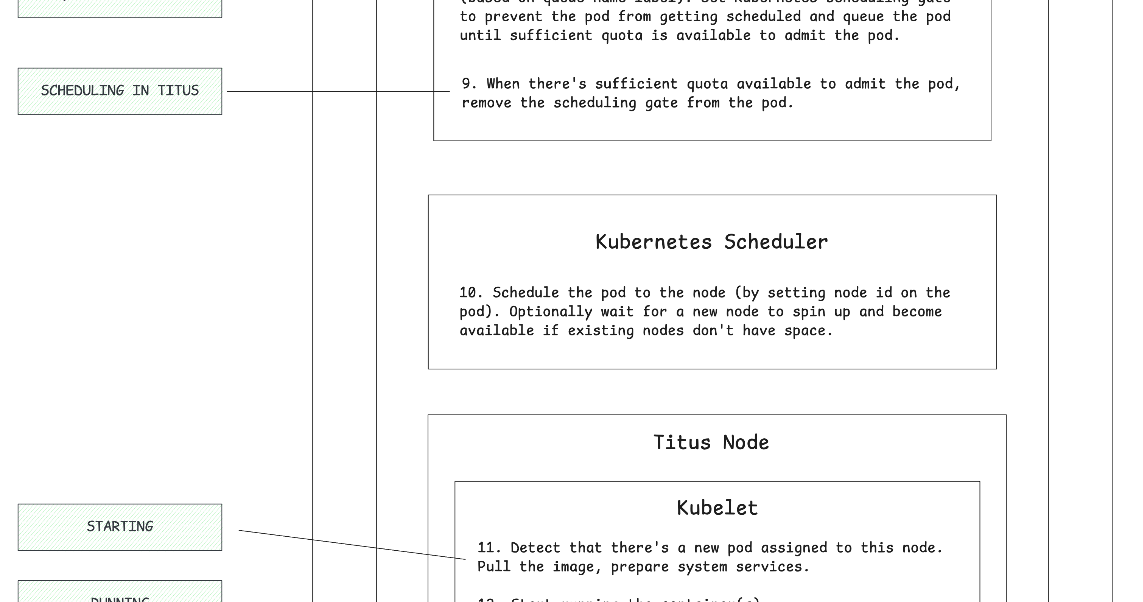
Netflix has evolved its batch compute management by migrating from a custom-built solution (CMB) to an open-source Kubernetes-native system, Kueue. This transition aims to simplify batch job execution, enhance resource utilization through fair sharing and preemption, and leverage the Kubernetes ecosystem for greater flexibility and innovation. The migration involved integrating Kueue into their existing container platform, Titus, and re-architecting tenant and capacity management to align with Kueue's concepts of ClusterQueues and LocalQueues. This has resulted in managing millions of batch workloads, improved resource utilization, and the productionization of preemption for better capacity management.
Timeline

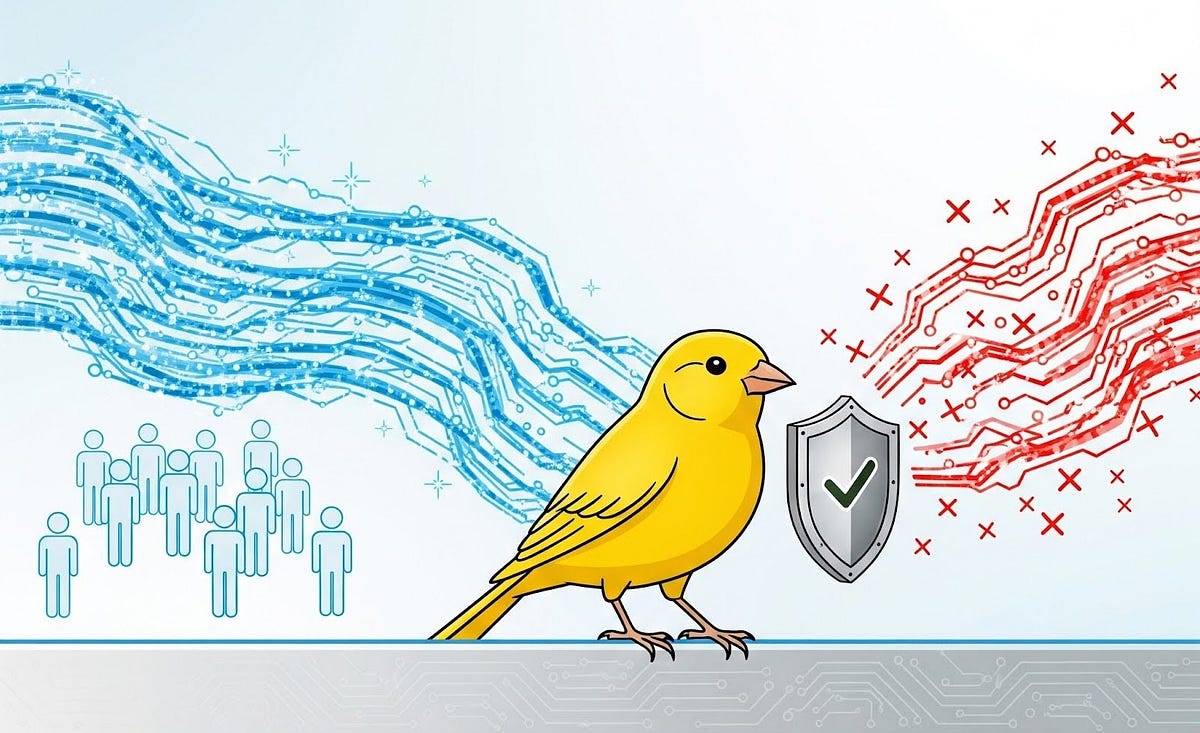
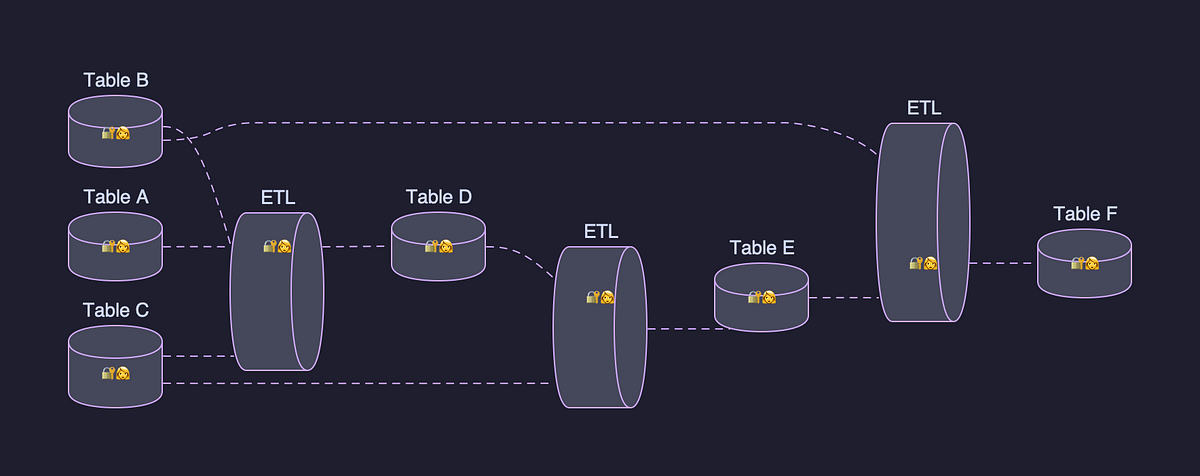
Netflix has introduced 'Data Projects' as a foundational system for managing data assets at scale. This system provides a container for related data assets (tables, workflows) and a durable, synthetic identity for workloads, decoupling them from human lifecycles. It simplifies permission management by allowing grants and roles to be applied at the project level rather than per asset. The 'gravity' feature automatically associates newly created assets with their parent project, ensuring organization. This post introduces the 'Data Canary' system, an automated approach to validate catalog metadata transformations using production traffic, ensuring data integrity and reliability by detecting issues in under 10 minutes and blocking bad data from reaching members. This extends the concept of validating data assets to ensuring the quality of the data itself within the broader data management framework.
Timeline

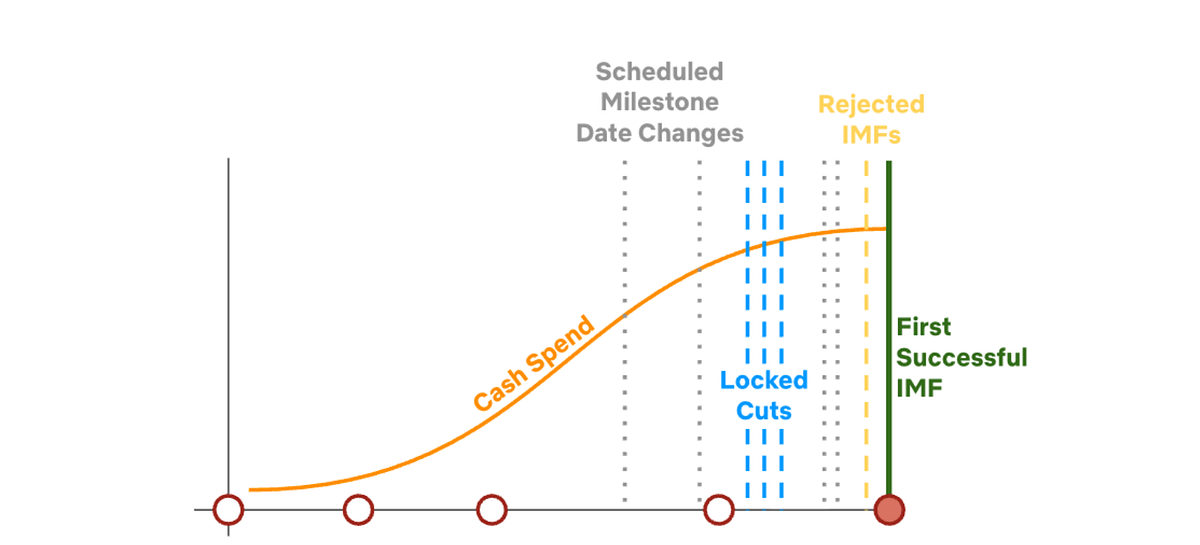
Netflix is developing predictive models to estimate content media asset delivery dates (Locked Cut and IMF) for launch preparation. These models leverage production-level signals, title metadata, and seasonal data to provide more accurate and timely delivery estimates than manual schedules, aiming to reduce launch misses caused by schedule inaccuracies. The system provides both predicted and scheduled dates, allowing teams to make informed decisions and improving overall launch planning efficiency.
Timeline

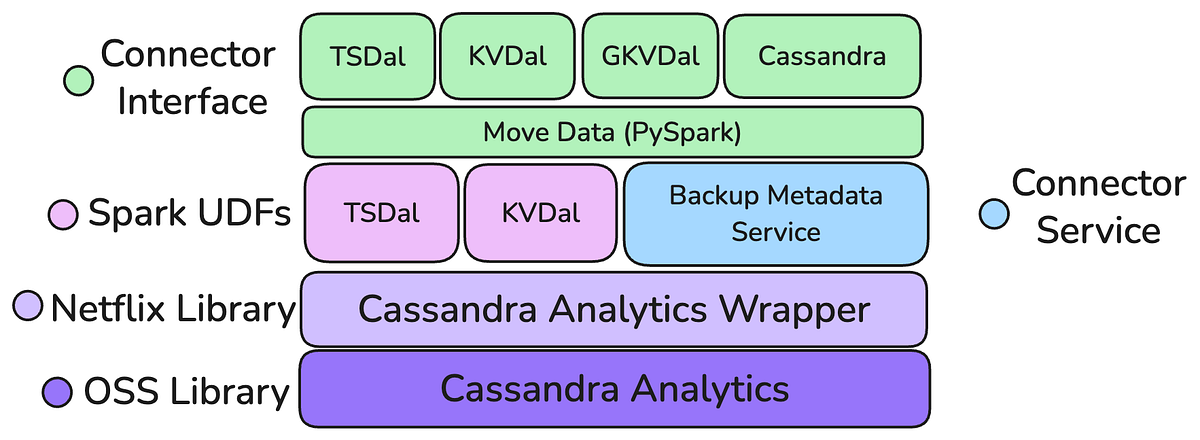
Netflix has evolved its Cassandra data movement capabilities by replacing the monolithic Casspactor engine with a new layered architecture. This new system leverages a core S3 reading capability (Cassandra Analytics Wrapper) to produce standard Spark DataFrames, enabling a 'Connector Factory' model. This allows for purpose-built, data-model-aware connectors for various Cassandra data abstractions (Key Value, Time Series, etc.), improving efficiency, reducing intermediate storage bloat, enhancing reliability by reading metadata directly from S3, and enabling time travel capabilities. The new stack also handles skewed partitions more effectively and offers auto-sizing for jobs, leading to significant performance gains and cost savings.
Timeline

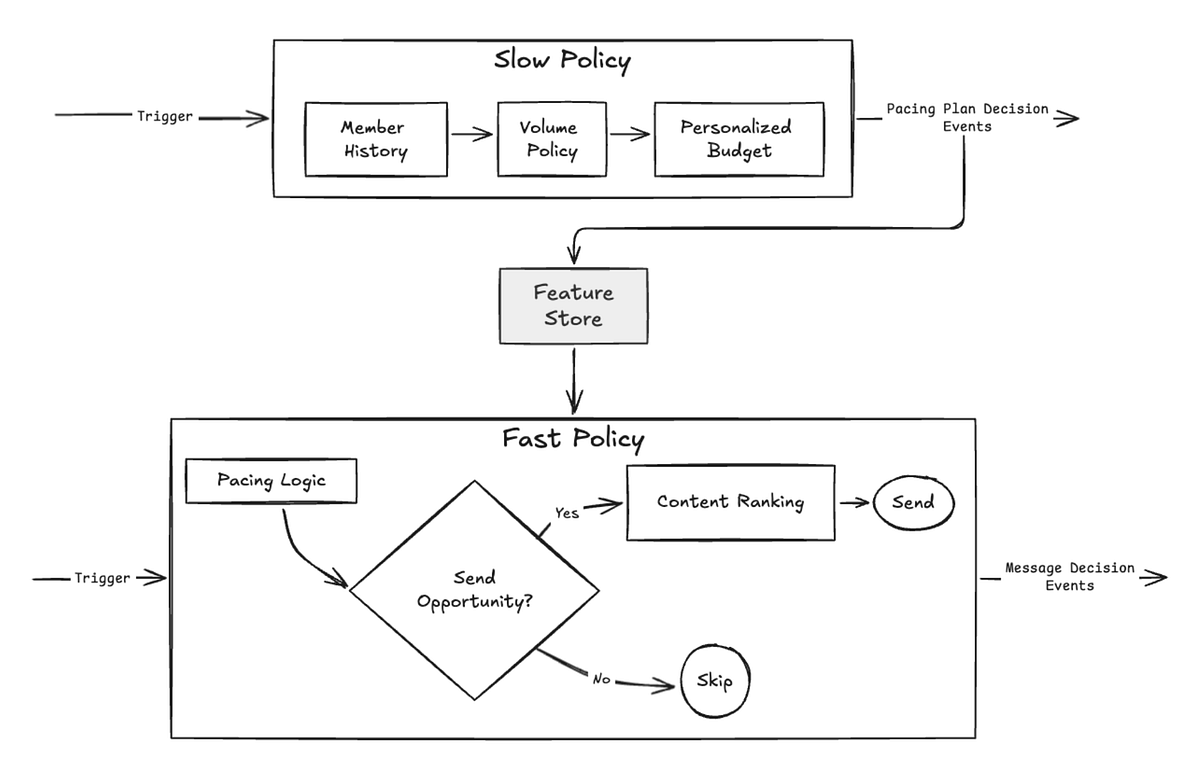
Netflix has developed a hierarchical framework for its personalized notification system, separating long-term strategic decisions from real-time tactical execution. This involves a 'Slow' policy that creates a personalized weekly messaging plan for members, considering long-term engagement and potential fatigue, and a 'Fast' policy that handles immediate send decisions within those strategic guardrails. This decoupling allows for independent optimization of pacing strategies and message selection, leading to significant improvements in member engagement, particularly for casual viewers, and better management of notification fatigue and opt-out risk.
Timeline