Blogs
Temporal logo

Temporal

Engineering blog · temporal.io/blog

284posts2this week0watchers

Feature trails

57
Feature trailActive

Sandbox Orchestration Harness

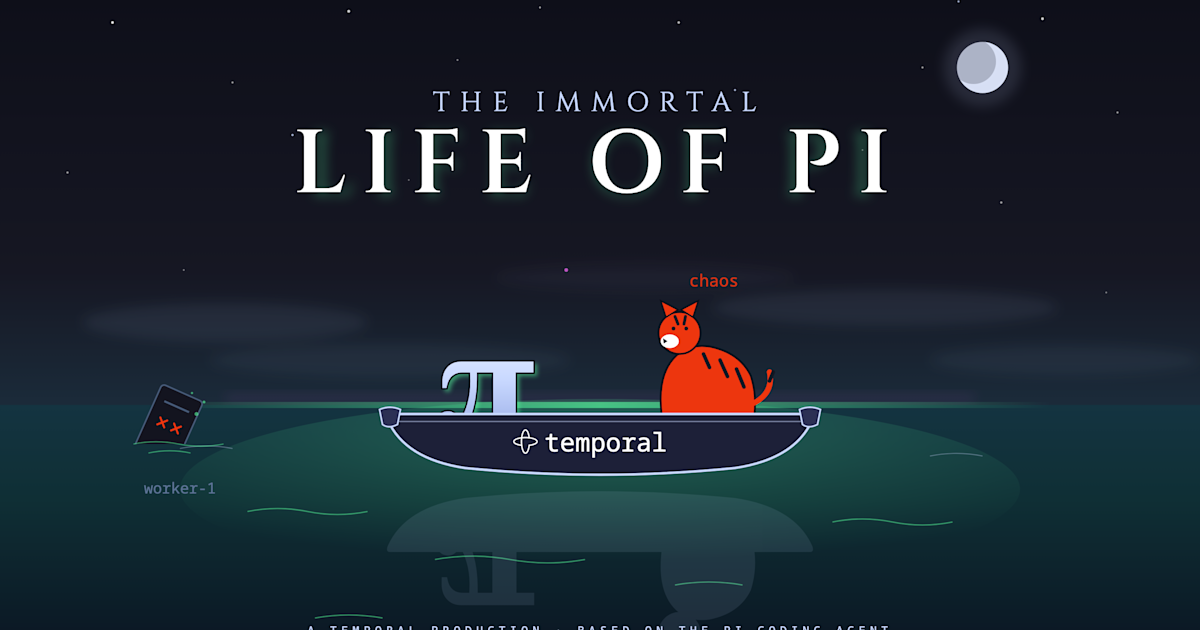
Temporal provides a robust foundation for Agentic AI workflows, offering durability, scalability, and flexibility. This includes features like scheduled execution, human-in-the-loop support, and multi-language integration. The platform acts as a centralized orchestrator for coordinating API calls, services, and data sources, enabling complex, long-running AI agents that can persist and evolve. The Temporal Agent Harness provides an outer layer of control and durability for AI agents, integrating with existing inner agent SDKs. It offers durable execution for agent interactions, a "turn"-based model for managing complex interactions, strongly typed agent interfaces for composition, and controls around tool execution, including approval policies. It also introduces a "code mode" for executing model-generated Python code in secure, durable sandboxes. This post codifies base templates and demonstrates how to run the Pi coding agent on Temporal, enabling recovery across machines while preserving its session format and allowing for automatic failover of interrupted tasks.

4 posts · 2024–2026

Timeline
20242026
Feature trailActive

Activity Isolation for Security

Temporal Cloud offers a layered approach to data security, including TLS for data in transit and application-level encryption via Payload Codecs for data at rest. This ensures that the Temporal Service only sees encrypted data, with keys managed externally. The integration of Oso enhances AI agent security by providing native identity propagation and policy enforcement within the execution platform, ensuring that authorization controls hold up through failures and retries.

3 posts · 2025–2026

Timeline
20252026
Feature trailActive

Core SDK Development

The Temporal Rust SDK has reached version 1.0.0, demonstrating its production readiness and portability by successfully running on an ESP32-S3 microcontroller. This achievement validates the SDK's ability to operate in resource-constrained environments and highlights the robustness of its core Durable Execution capabilities, including TLS authentication, task polling, and activity heartbeating. The project involved minimal, targeted compatibility patches for the ESP-IDF environment, showcasing the SDK's adaptability and the effectiveness of the Rust Core SDK's design. This success further solidifies the Rust SDK's role as a foundational component for Temporal's cross-language SDK strategy.

4 posts · 2021–2026

Timeline
20212026
Feature trailActive

Software Supply Chain Security Tooling

Camper, a system for running security campaigns, has been enhanced by migrating its core logic to Temporal Workflows. This provides durability, allowing campaigns to resume after restarts, retry failed API calls, and easily accept new instructions. Camper orchestrates security campaigns by integrating with tools like Jira, GitHub, and Deputy (for automated code transformations) or Codex (for AI-assisted code generation). Campaigns are defined by specifications outlining objectives, scope, and remediation strategies. The system supports manual approval workflows and allows for dynamic updates to campaign scope and targets. Review remains with repository maintainers, with Camper facilitating interactions like rebasing and retrying through GitHub commands. The system has successfully executed campaigns across Temporal repositories and has been used for cross-repository credential migrations.

2 posts · 2026

Timeline

Feature trailActive

Serverless Workers

Serverless Workers enable Temporal Workflows to run on serverless compute platforms like AWS Lambda and GCP Cloud Run, scaling automatically based on workload. This post details the integration process with AWS Lambda and Amazon Bedrock AgentCore Runtime, focusing on how Temporal invokes, scales, and gracefully shuts down Workers on behalf of the user. It highlights automatic state management for the Worker lifecycle, routing tasks through Temporal Activities, and leveraging AgentCore's scaling capabilities. This reduces operational overhead and allows for elastic compute for agentic applications.

7 posts · 2026

Timeline

Feature trailActive

Standalone Activities

Standalone Activities are now Generally Available across Go, Python, Java, TypeScript, .NET, and Ruby SDKs. They provide a durable record of execution for background jobs, including retries, visibility, and control, eliminating the need for custom job systems. Features like Activity ID for uniqueness, Conflict and Reuse Policies, Heartbeating for long-running jobs, and Search Attributes for discoverability are supported. Start Delay allows scheduling jobs for later execution. Priority and Fairness mechanisms are available for sharing Worker capacity. Standalone Activities can be invoked independently or as part of a larger Temporal Workflow. Planned work includes direct support for Temporal Schedules, audit exports, Nexus integration, and enhanced manual completion.

5 posts · 2022–2026

Timeline
20222026
Feature trailActive

Durable Execution

Temporal Workflows provide a durable orchestration layer for complex business processes and event-driven systems. This post defines Durable Execution as 'crash-proof execution', emphasizing its benefits in improving reliability, simplifying code by focusing on goals over potential problems, and accelerating development by eliminating complex error-handling logic. It details the four key characteristics: virtualization of execution across processes/machines, no time limitation for execution, automatic preservation of application state, and hardware agnosticism. The post highlights how Durable Execution abstracts away failures, allowing developers to focus on application logic rather than anticipating and handling every possible failure mode.

120 posts · 2020–2026

Timeline
20202026
Feature trailActive

Worker Versioning

Worker Versioning allows for safe deployment of new code changes to Workflows without breaking active executions. This includes concepts like Worker Deployments, Worker Deployment Versions, Build IDs, Pinned and Auto-upgrade Workflows, Current Versions, and ramping versions. The Temporal CLI provides commands for managing and rolling out updates, while the Worker Controller automates these processes in Kubernetes. The Worker Controller now supports autoscaling of Worker versions by allowing the use of new Worker Versioning APIs and a Deployments abstraction for pinning Workflows, ramping traffic, and testing new versions directly.

5 posts · 2025–2026

Timeline

20252026
Feature trailActive

AI-Assisted Code Migration

Temporal provides a robust foundation for Agentic AI workflows, offering durability, scalability, and flexibility. This includes features like scheduled execution, human-in-the-loop support, and multi-language integration. The platform acts as a centralized orchestrator for coordinating API calls, services, and data sources, enabling complex, long-running AI agents that can persist and evolve. This post details practices for using coding agents effectively during migrations, focusing on cleanup, and introduces a dedicated PM role to optimize AI coding assistants for Temporal.

3 posts · 2024–2026

Timeline

20242026
Feature trailActive

Task Queue Priority and Fairness

Task Queue Priority and Fairness provide granular control over task execution order and resource distribution within Temporal. Priority allows assigning integer levels (1-5) to Workflows, Activities, and Child Workflows to ensure critical tasks are processed before lower-priority ones. Fairness uses 'Fairness Keys' and weighted round-robin to ensure equitable resource distribution among tenants or logical groups, preventing monopolization of workers. These features can be combined to support differentiated service tiers and guaranteed performance floors, and are available in Temporal Cloud and self-hosted deployments with specific configuration. Pricing for Fairness in Temporal Cloud is based on additional actions charged per hour a Namespace has the feature enabled.

6 posts · 2026

Timeline

Feature trailActive

Serverless Workers for Cloud Run

Serverless Workers enable Temporal Workflows to run on serverless compute platforms like AWS Lambda and Google Cloud Run, scaling automatically based on workload. This post details the integration with Google Cloud Run Worker Pools, providing a custom, highly responsive, and efficient autoscaling algorithm that allows users to skip manual setup and tuning. Temporal Cloud now manages the autoscaling of Worker Pools based on key metrics indicating work queueing up, scaling down to zero when appropriate. This update focuses on leveraging Worker Pools and CREMA for enhanced autoscaling based on Temporal Task Queue backlog.

6 posts · 2025–2026

Timeline

20252026
Feature trailActive

ML Workflow Orchestration

Temporal is being used to orchestrate complex AI/ML processes, including end-to-end ML pipelines and data engineering flows. This includes managing state machines, handling retries and rollbacks, and coordinating tasks across different infrastructure, such as GPU servers. The platform's durable execution model ensures reliability and allows for faster iteration by developers. Julep AI leverages Temporal to build multi-step AI workflows, enabling AI agents to remember past interactions and execut. This post details how Temporal and Chainlit can be integrated to build a Durable RAG system that provides reliable, efficient, and scalable conversational AI, addressing challenges in workflow orchestration, scalability, reliability, and user interaction for RAG models.

18 posts · 2024–2026

Timeline

20242026
Feature trailActive

AI-Assisted Workflow Debugging

Temporal MCP server provides AI assistants with read-only access to Temporal Cloud and self-hosted clusters, enabling natural language querying of workflow status, history, and infrastructure. This facilitates debugging by correlating runtime state with code, improving cross-team troubleshooting. This post details the integration of the Temporal MCP server with AI editors, allowing engineers to query workflow status, history, and infrastructure using natural language directly within their development environment. Coinbase built their own read-only Temporal MCP server to integrate with their AI editor, enabling engineers to ask natural language questions about workflow failures and get answers directly in their IDE. The system uses FastMCP and exposes tools for workflow operations, schedule operations, and infrastructure inspection. It communicates over stdio using the MCP protocol and handles namespace resolution, auth, and payload decoding. The example demonstrates how a single question can trigger multiple tool calls to diagnose a workflow failure.

2 posts · 2026

Timeline

Feature trailActive

Cost Transparency and Billing API

Temporal Cloud offers enhanced cost transparency through a new Billing API and the Billable Action Count metric. The Billing API provides namespace- and tag-level cost attribution with hourly granularity. The Billable Action Count metric offers granular usage information for namespaces and workflow types. This post details the migration of the billing store to ClickHouse, improving headroom, reducing steady-state cost, and accelerating usage data delivery to customers. The migration involved validating metering pipeline accuracy by comparing direct Temporal Server queries with the emitted Billable Actions metric, enabling granular debugging of discrepancies by Workflow Type and Action Type. This improved confidence in the metering pipeline and streamlined troubleshooting.

4 posts · 2023–2026

Timeline

20232026
Feature trailActive

Firmware Flashing System

Ignition, a Temporal-powered system for flashing firmware onto devices at scale, has been further refined. The system manages distributed workflows for individual device flashing, handles device re-enumeration and retries, and provides detailed state tracking for each device. The latest iteration focuses on robust handling of USB re-enumeration issues, improved carrier-based workflow boundaries, and detailed per-badge lifecycle management with granular failure reporting. The system demonstrated the ability to coordinate the manufacturing and distribution of 2,000 custom hardware badges for a conference, involving complex supply chain management, hardware development, and firmware deployment.

3 posts · 2026

Timeline

Feature trailActive

Activity Timeouts and Timers

This post clarifies the distinction between Temporal Timers and Activity Timeouts, emphasizing that Timers are for implementing business logic and durable waiting, while Timeouts are for detecting failures. It details the four Activity timeout types (Start-to-Close, Schedule-to-Close, Schedule-to-Start, and Heartbeat) and their use cases, providing guidance on how to configure them for reliable workflow execution. The post also touches upon the underlying Temporal Service mechanisms for handling these timeouts, including the internal timer queue.

1 post · 2021–2026

Timeline

20212026
Feature trailActive

Workflow Streams

Workflow Streams provides a durable abstraction for real-time, interactive communication within Temporal applications. It enables applications to publish ordered sequences of typed events to topics scoped to a Workflow, allowing both the Workflow itself and external clients to publish and subscribe. This feature leverages Temporal's core primitives (Workflows, Signals, Updates, and Queries) to offer exactly-once semantics and seamless integration with AI agent frameworks and other streaming use cases. This post details the implementation using Signals for external publishing and Updates for subscriber polling, including handling batching, deduplication, and Continue-as-New transitions. Integrations with AI agent frameworks like OpenAI Agents SDK and Google ADK are also covered, along with a complete example demonstrating Server-Sent Events for UI updates.

1 post · 2026

Timeline

Feature trailActive

Local Development Environment

The Temporal CLI has been unified into a single `temporal` command-line tool, combining the functionality of `tctl` and `temporalite`. This new CLI simplifies development and testing by allowing users to run a local development server with persistent SQLite storage, exposing key endpoints (gRPC and Web UI), and offering basic workflow status visibility. It supports core Temporal functionality, including Advanced Visibility and a next-generation tctl experience. The goal is to provide a single, easy-to-use local development environment. This post details the creation of a Docker Desktop extension that leverages this unified CLI to provide a button-based interface for starting a local Temporal server, managing its state, and linking to the Temporal UI.

1 post · 2021–2026

Timeline

20212026
Feature trailActive

Actor Model Abstraction

Temporal Workflows can be used to model the Actor Model, enabling durable, stateful, and message-driven entities. This post details how Temporal's features like Signals, Updates, Queries, and Child Workflows map to the core tenets of the Actor Model (message passing, state maintenance, and actor creation). It highlights the use of Workflow Updates for request/response patterns and the combination of Signals and Queries for external client interactions. The ability to create child workflows is also leveraged. This post details building a telecommunications customer service chatbot that treats each conversation as a persistent workflow, enabling stateless applications, infinite scalability, and resilience to failures. The chatbot maintains perfect conversation context across any number of pod restarts, deployments, or scaling events. Conversations are managed by Temporal Workflows, with automatic lifecycle management that ends conversations after inactivity or explicit user farewell. The system generates summaries and satisfaction scores for retrieved conversations. The implementation uses Java and interacts with LLMs and external tools via Activities, passing the full conversation history for context. This approach offers simplified state management, infinite scalability, resilient workflows, maintainable design, rich context management, transparent state inspection, and robust error handling compared to traditional session-based implementations.

3 posts · 2021–2026

Timeline

20212026
Feature trailActive

Open Source Embedded Playground

The Temporal Agent Harness provides an outer layer of control and durability for AI agents, integrating with existing inner agent SDKs. It offers durable execution for agent interactions, a "turn"-based model for managing complex interactions, strongly typed agent interfaces for composition, and controls around tool execution, including approval policies. It also introduces a "code mode" for executing model-generated Python code in secure, durable sandboxes. This post codifies base templates and documentation for the open-source embedded playground, demonstrating how to build and deploy custom applications on hardware devices using Temporal's orchestration capabilities. The project includes firmware, hardware design files, flashing workflows, and community app infrastructure, enabling users to inspect, modify, repair, reflash, and extend the badge's functionality.

1 post · 2026

Timeline

Feature trailActive

Failure Handling Patterns

Temporal Workflows are used for reliable email delivery at scale, handling large volumes with smart batching and resilient error handling. Event duplication involves a two-phase approach: an atomic, rollback-safe main workflow for core operations and a subsequent asynchronous workflow for background tasks like notifications and integrations. This has led to significant improvements in success rates, processing times, and reduced manual intervention. The Validate pattern has been introduced for robust error handling and rollback mechanisms in distributed systems, leveraging Temporal's durable execution to guarantee compensation logic runs even if workers crash. This post details the implementation of sagas with compensating transactions, emphasizing the importance of idempotency for retries and the use of timeouts as a first line of defense. It highlights how Temporal's durable execution simplifies complex, long-running processes and provides an effectively exactly-once guarantee for business processes.

17 posts · 2020–2026

Timeline

20202026
Feature trailActive

Observability Platform

Temporal Cloud integrates with Grafana Cloud for enhanced observability, providing a unified platform for metrics, logs, traces, dashboards, and alerts. This integration allows for visualization of Workflow health, monitoring of Task Queue backlogs, tracking service latency, and uncovering bottlenecks. It includes expanded metrics with new dimensions like `temporal_task_queue` and `workflow_type`, a prebuilt dashboard, cost control features, and AI-assisted exploration via Grafana Assistant. The integration scrapes metrics from Temporal Cloud's OpenMetrics endpoint and pushes them into Grafana Cloud Metrics instances.

8 posts · 2022–2026

Timeline

20222026
Feature trailActive

Scheduled Actions

Temporal Cloud metering has been updated to reflect new features and ensure consistent billing. This includes changes to how Schedules, Workflow Updates, Child Workflows, and Local Activities are counted as actions. The goal is to align metering with the value consumed by customers and prevent suboptimal implementation decisions driven by cost management. These changes are designed to be net-neutral for most customers, with minor fluctuations expected for some. This post details how to use Temporal Workflows to orchestrate temporary rate limit increases on Namespaces, involving a parent Workflow to raise capacity, a child Workflow with an abandon policy to revert it, and Activities for these actions.

10 posts · 2023–2026

Timeline

20232026
Feature trailActive

Worker Affinity

Worker Affinity with Task Queues allows ensuring that multiple Activities within a workflow execute on the same Worker. This is achieved by using a combination of shared and unique task queues. The workflow first discovers an available worker via a shared queue and then routes all subsequent activities to that worker's unique queue, maintaining data locality for scenarios like file processing, ML model caching, and database connection pooling. This post details how to route specialized workloads.

1 post · 2026

Timeline

Feature trailActive

Temporal Server Deployment Automation

Temporal Cloud offers a managed, scalable, and cost-effective solution for running Temporal clusters, abstracting away the complexities of self-hosting. For self-hosted deployments, Temporal provides guidance on scaling through metrics, configuration tuning (e.g., shard count, resource allocation), and leveraging Kubernetes for deployment and management. The focus is on a load-measure-scale iteration loop to optimize performance and reliability. This post details the auto-setup script which simplifies deployment and the 1.0.0 release of the Helm Charts, which now require users to provide their own database and optional components like Elasticsearch, Prometheus, and Grafana, while adding configurable readiness probes, custom deployment strategies, and improved log level control.

2 posts · 2022–2026

Timeline

20222026
Feature trailActive

Temporal Worker Deployment on AWS ECS

Temporal Workers can be deployed to Kubernetes, with specific guidance on containerization, Kubernetes Deployment manifests, and the use of ConfigMaps and Secrets. The post emphasizes leveraging standard Kubernetes patterns, the Temporal Worker Controller for advanced version management, and Worker Versioning for safe deployments. It also details autoscaling strategies for Temporal Workers on Kubernetes, highlighting the inadequacy of standard CPU/memory metrics and recommending Task Queue Backlog, Schedule-to-Start latency, and Worker Task slots as more effective signals. KEDA-based autoscaling is presented as a streamlined solution. For the Temporal Service, official Helm charts are provided, with recommendations to disable bundled dependencies and use external ones for production. Planning capacity and tuning for production involves iterative load testing and avoiding CPU throttling. The post also touches on the need for graceful shutdown of workers.

1 post · 2025–2026

Timeline

20252026
Feature trailActive

Kubernetes Deployment Tuning

EvenUp migrated from a self-managed workflow execution system to Temporal, leveraging Temporal's built-in metrics for scaling workers based on task slots and latency. They implemented a Kubernetes liveness probe using Temporal SDK metrics to automatically restart unhealthy worker containers, improving reliability and reducing on-call incidents. This contributes to a more robust and observable worker deployment strategy.

3 posts · 2023–2026

Timeline

20232026
Feature trailActive

Worker Resource Auto-Tuning

Worker Auto-Tuning automatically adjusts worker slots based on CPU and memory usage, maximizing efficiency and preventing out-of-memory errors with no manual tuning required. Worker Scaling provides real-time data for making informed scaling decisions for worker fleets, optimizing the balance between workflow execution speed and fleet size/cost.

4 posts · 2022–2026

Timeline

20222026
Feature trailActive

Temporal Nexus

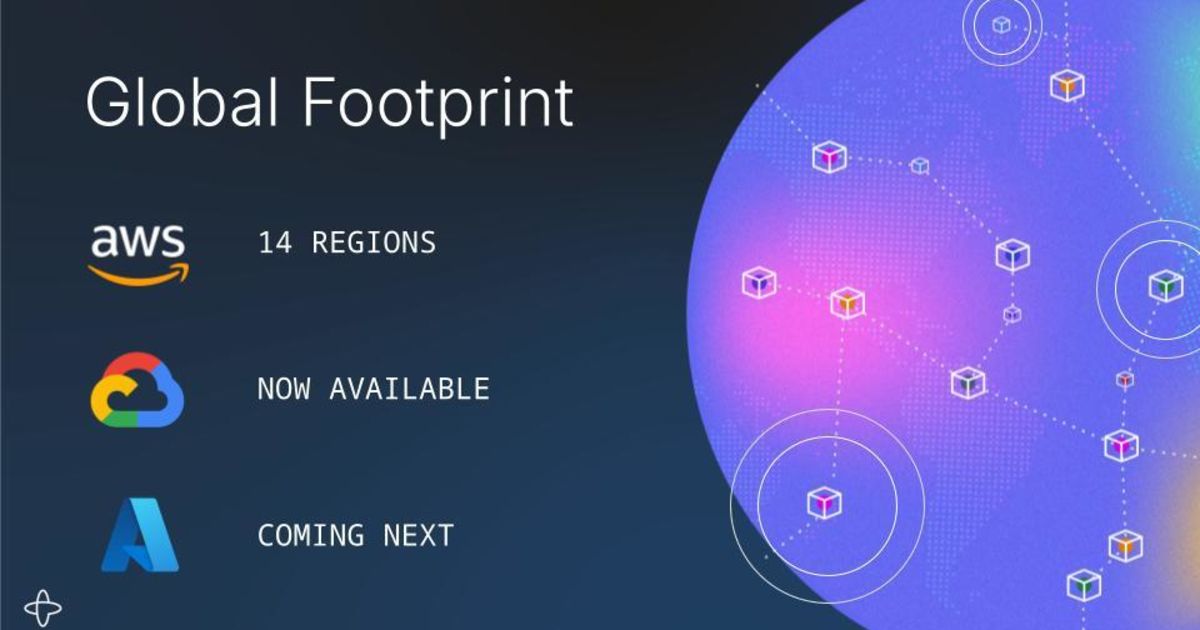
Temporal Nexus provides a durable abstraction for inter-service communication, enabling long-lived, guaranteed operations between services across isolated namespaces. It acts as a network of durable bridges, ensuring that operations initiated across services are completed with at-least-once and exactly-once semantics, regardless of duration or intermediate failures. Nexus uses Temporal's queue-based Worker architecture and built-in machinery for reliable execution, automatic retries, circuit breakers, and multi-region connectivity across AWS and GCP in Temporal Cloud. It supports Nexus Operation handlers in Temporal Workers, Nexus Endpoints as reverse proxies, and enhanced capabilities in Temporal Cloud including policy enforcement, auditing, and multi-region targets. The roadmap focuses on expanding connectivity, multi-language SDK support, and enhanced operational control.

6 posts · 2024–2025

Timeline

20242026
Feature trailActive

Code Snippet Synchronization

Temporal's SDK ecosystem continues to expand with the announcement and initial release of the Swift SDK. This SDK leverages Swift's modern concurrency features like async/await and structured concurrency, integrating with the Temporal Core SDK for durable execution. It provides macros for defining Workflows and Activities, and supports core Temporal features like signals, queries, updates, child workflows, continue-as-new, local activities, and search attributes. Production-ready features like interceptors and OpenTelemetry are included.

3 posts · 2021–2025

Timeline

20212026
Feature trailActive

TypeScript SDK

The Temporal TypeScript SDK has reached version 1.0.0, marking its stable release. This SDK is built on a shared Rust Core SDK, enabling faster development of new SDKs and improved reliability across languages. Key features include a deterministic sandboxed workflow runtime using V8 isolates to enforce determinism and prevent unsafe JavaScript, and a public API that has evolved to a simpler function-based approach for defining workflows. Future plans include safer APIs, improved developer tools. This post details how to use the SDK to build resilient applications, including examples of workflow definition, worker failover, error handling with retries and non-retryable errors, and signal integration with timeouts.

6 posts · 2021–2025

Timeline

20212026
Feature trailActive

High Availability and Disaster Recovery for Temporal Cloud

Temporal Cloud offers Multi-region Namespaces for high availability and disaster recovery, enabling active-standby setups with seamless failover during outages to meet a 99.99% SLA. This feature replicates workflows to a standby region, managed by Temporal Cloud without user configuration changes. Recent improvements focus on hardening the auto-failover mechanism to prevent dependencies on the source region and to trigger failovers earlier. Multi-region Replication is now Generally Available (GA).

5 posts · 2024–2025

Timeline

20242026
Feature trailActive

Ruby SDK

The Temporal Ruby SDK is now Generally Available (GA), offering developers a native Ruby experience for authoring durable workflows and activities. It leverages the Rust Core SDK for shared logic and provides advanced features like durable fiber scheduling and robust error handling. The SDK supports core Temporal functionalities including Activities, Workflows, Signals, Updates, and Timers, with a focus on deterministic execution and crash-proof operation.

1 post · 2025

Timeline

20252026
Feature trailCooling

Saved Views in Temporal Web UI

Saved Views in the Temporal Web UI allow users to save and quickly access frequently used workflow queries. This feature includes System Views for common use cases and Custom Views that users can create and manage. The UI also features streamlined filtering and the ability to share views with teammates. Views are stored in browser localStorage with a limit of 20 custom views per namespace.

1 post · 2025

Timeline

20252026
Feature trailCooling

Authentication and Authorization Layer

Temporal Cloud's authentication and authorization layer has been enhanced with Just-In-Time (JIT) access provisioning for infrastructure, time-boxed access, and reduced blast radius. This includes implementing access hours, reducing the percentage of time engineers have access to infrastructure, and further reducing it based on specific needs. Mutual TLS anchored to customer CAs, SAML SSO, API keys, RBAC, and private connectivity options (AWS PrivateLink, Google Cloud Private Service Connect) are also key components. Secure debugging is enabled via a self-hosted Codec Server. Compliance readiness (SOC 2 Type II, HIPAA, GDPR) and operational defense in depth (SSO-gated MFA, time-boxed access, logging, auditing, pen testing) are emphasized. The platform aims to speed up teams by providing consistent security models across development and production, with proven outcomes at scale for enterprises in regulated industries.

7 posts · 2020–2025

Timeline

20202026
Feature trailCooling

Workflow Scheduling

Temporal Schedules provide a robust and observable alternative to traditional scheduling systems like Cron, systemd timers, and Celery. This feature allows for the execution of Temporal Workflows at specific times or intervals, offering enhanced control over task operations such as starting, pausing, resuming, backfilling, deleting, describing, listing, triggering, and updating scheduled workflow executions. Schedules support features like limiting runs, configuring overlap policies, and pausing on failure. This post details the migration of existing scheduling systems to Temporal Schedules, providing examples for Kubernetes CronJobs, systemd Timers, Quartz, and Celery. It emphasizes wrapping existing scripts in Activities within single-activity Workflows or implementing jobs as full Temporal Workflows to leverage Temporal's capabilities. The post also highlights the command-line and SDK-based creation of schedules, including calendar and interval-based scheduling, and overlap policies.

5 posts · 2022–2025

Timeline

20222026
Feature trailCooling

Self-hosted to Temporal Cloud Migration Tooling

Temporal Cloud offers migration tooling for seamless transitions from self-hosted Temporal instances. This pre-release feature automates the migration process with zero downtime for workflows, requiring minimal application code changes. It involves a migration server and proxies for secure communication, with a step-by-step guide for preparation, initiation, monitoring, validation, and finalization or abortion. The tooling currently supports self-hosted to Cloud migrations, with reverse migratio

1 post · 2024–2025

Timeline

20242026
Feature trailCooling

Game Development with Temporal

Temporal Workflows are used to build and orchestrate complex applications, including multiplayer games. This post details the development of a trivia game, showcasing how Workflows can manage game state, player interactions, and integrate with external services like ChatGPT for question generation. The game evolved through multiple versions, demonstrating iterative development and the application of Temporal's durable execution, signals, queries, and timers. Polyglot development was also highlighted. Layer.ai uses Temporal to streamline AI-driven workflows for scalable game asset production, offloading heavy tasks like asset generation and file processing to prevent server bottlenecks and improve user experience. Temporal's built-in retries and observability provide better control over task execution, reducing failures and ensuring reliability. The 'FileUploadWorkflow' example demonstrates handling retries, timeouts, and checks for file upload and processing.

2 posts · 2023–2025

Timeline

20232026
Feature trailCooling

Eager Workflow Start

Eager Workflow Start (EWS) is an experimental optimization that reduces the time to start a workflow by allowing the starter and worker to interact directly, bypassing some server operations. The start response with EWS includes the initial workflow task when there is a local worker ready to process it. This is particularly useful for short-lived workflows that interact with other services using local activities and are deployed close to the Temporal Server. The current implementation has limitations, requiring the worker and starter to share a client connection and run in the same process. It does not yet support worker versioning with build IDs. EWS is enabled via a dynamic configuration flag and is available in Temporal Cloud via a support ticket.

2 posts · 2024–2025

Timeline

20242026
Feature trailCooling

Workflow Updates

Workflow Updates provide a new mechanism for clients to send messages to Workflows, wait for their completion, and receive a result or error. This addresses limitations of existing Query and Signal messages by allowing the handler to perform arbitrary work, execute Activities and Child Workflows, and mutate Workflow state, while also returning a result. This enables lower-latency use cases and more efficient communication patterns compared to Signal+Query polling. Updates can also include validators to reject invalid updates early, leaving no trace in history. The feature is now Generally Available and has been integrated into various design patterns for state mutation, activity execution, and conditional waiting.

1 post · 2025

Timeline

20252026
Feature trailCooling

ROI Analysis of Temporal Cloud Migration

Temporal Cloud offers a compelling ROI for organizations migrating from self-hosted solutions or complex homegrown systems. This thread tracks the economic and strategic benefits, including cost savings, developer productivity gains, and faster time-to-market. It highlights how Temporal Cloud can replace legacy systems, improve reliability, and reduce infrastructure and staffing costs, making it a preferred choice for various industries. Recent updates focus on detailed cost attribution and migration tooling, with ZoomInfo reporting significant cost savings and operational efficiency gains by migrating from a self-hosted solution to Temporal Cloud for their dynamic audience management and AI-powered account summary features, handling hundreds of millions of operations monthly with reduced debugging and faster development cycles.

3 posts · 2024

Timeline

20242026
Feature trailCooling

Temporal Cloud Persistence Layer

Temporal Cloud offers a multi-cloud platform, expanding its infrastructure from AWS to Google Cloud. This expansion involved leveraging Temporal's own capabilities for cloud-agnostic workflows, addressing challenges in containerization, orchestration, and infrastructure-as-code across different cloud providers. The migration involved adapting to provider-specific APIs and resource models, and finding solutions for services like the visibility layer where direct compatibility was lacking. The use of a custom persistence layer with efficient sharding, WAL, and tiered data storage has been shown to significantly reduce application-side latency compared to self-hosted instances, even when accounting for increased network latency.

3 posts · 2021–2024

Timeline

20212026
Feature trailCooling

Temporal Anti-Patterns

This thread tracks common anti-patterns and best practices for using Temporal effectively. It covers topics such as SDK wrapping, idempotency with Local Activities, leveraging Temporal's time-travel debugging features (Reset), managing Workflow History size, ensuring Workflow determinism, utilizing built-in Temporal features like Signals and Updates, and understanding Activity timeouts. This post adds guidance on avoiding 'mega workflows' by breaking down complex processes into smaller, manageable units, and emphasizes the importance of using Temporal's built-in features like Signals, Queries, and Updates, and the correct application of Local Activities and idempotency.

1 post · 2024

Timeline

20242026
Feature trailQuiet since 2024

Workflow History Export

Temporal Cloud allows users to export closed workflow histories to AWS S3 for long-term storage, compliance, auditing, and analysis. This enables feeding workflow history data into data warehouses and building custom dashboards for operational insights, cost inference, and implementation refinement. The export process involves converting Protocol Buffer (proto) formatted history data to Parquet for easier analysis, with considerations for data transformation, schema evolution, and deduplication.

1 post · 2024

Timeline

20242026
Feature trailQuiet since 2024

Workflow Execution UI

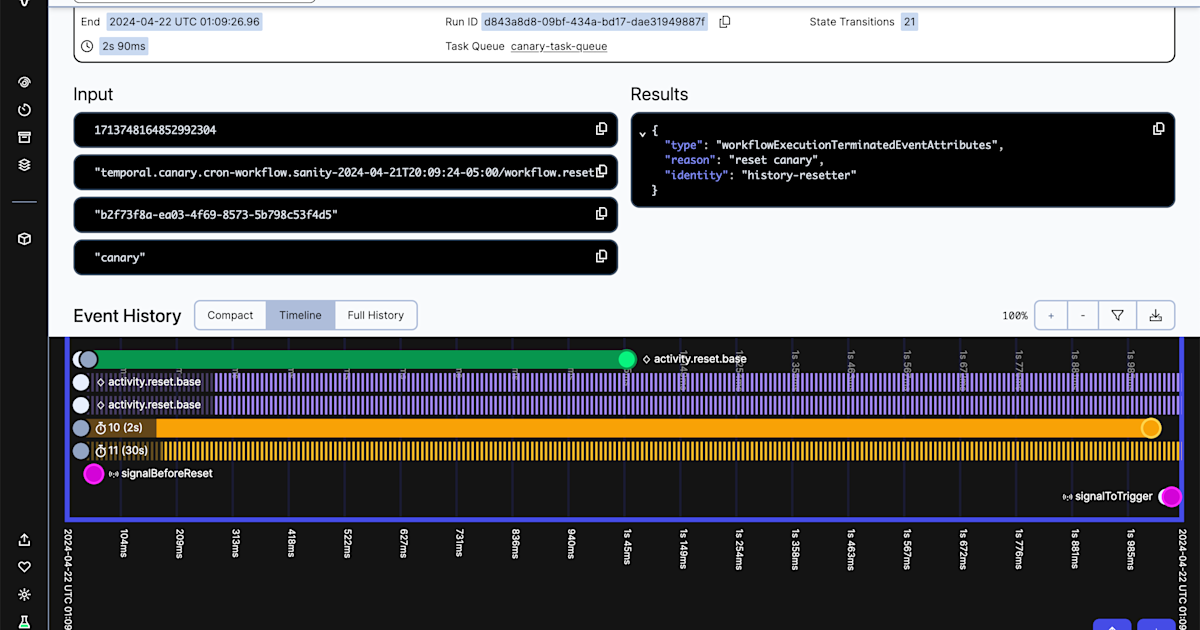
The Temporal UI has been significantly redesigned with a ground-up rewrite using Svelte, focusing on improved performance, a smaller application bundle, and a more intuitive user experience. Key improvements include parity with the current UI, easier visibility of Data Converters, and URL-based storage of filter settings and queries for shareability. The new UI is progressively rolling out and will eventually become the default. This post details the new Compact, Timeline, and Full History views, along with enhancements to filters, tabs, dark mode, and child workflow visibility.

3 posts · 2022–2024

Timeline

20222026
Feature trailQuiet since 2024

Terraform Provider for Temporal Cloud

Temporal Cloud Automation capabilities, including API Keys, the Temporal Cloud CLI (tcld), and the Terraform Provider, enable automated management of namespaces, users, and account settings. This facilitates centralized cloud operations, automated certificate rotation for mTLS, seamless integration with Enterprise Identity Providers for user and access management, and streamlined onboarding of new teams by encapsulating resource provisioning. The Terraform Provider specifically allows for declarative management of Temporal Cloud resources like Namespaces and Users.

2 posts · 2024

Timeline

20242026
Feature trailQuiet since 2024

Polyglot Workflows

Temporal Workflows can now be orchestrated across multiple programming languages. While a single Workflow definition must reside in one language, it can invoke Activities written in different languages. This requires separate Workers for each language and distinct task queue names to ensure proper routing. The Temporal SDKs handle automatic data type conversion between languages, enabling seamless interoperability. Example applications like Temporal Polyglot and Temporal Pendulum demonstrate this.

1 post · 2024

Timeline

20242026
Feature trailQuiet since 2023

.NET SDK

Temporal's SDK ecosystem has expanded to include .NET, allowing developers to write durable workflows and activities using C# and other .NET languages. This SDK offers high performance, good resource utilization, and type-safe APIs, addressing challenges related to workflow determinism through a custom TaskScheduler and runtime/compile-time checks.

1 post · 2023

Timeline

20232026
Feature trailQuiet since 2023

CVE Numbering Authority Program

Temporal has become a CVE Numbering Authority (CNA), enabling the company to assign CVE identifiers to vulnerabilities in its software. This initiative enhances transparency and security for users of Temporal Server and Temporal Cloud. A specific vulnerability (CVE-2023-3485) related to namespace protection in self-hosted Temporal Server was addressed in version 1.20.0, with a configuration option available in earlier versions to mitigate the risk.

1 post · 2023

Timeline

20232026
Feature trailQuiet since 2023

Data Encryption and Decryption

Temporal Cloud now allows configuring a Codec Server endpoint per Namespace, enabling different encryption/decryption algorithms for different namespaces and simplifying the user experience for viewing unencrypted data locally. This enhances data security by ensuring Temporal never has access to user encryption keys.

1 post · 2023

Timeline

20232026
Feature trailQuiet since 2023

VS Code Debugger Extension

The VS Code extension provides an improved debugging experience for TypeScript workflows by enabling replay debugging. Users can load Event Histories, set breakpoints on events, and interact with the workflow execution directly within VS Code. This enhances the ability to debug workflows locally and in production by replaying historical executions.

1 post · 2023

Timeline

20232026
Feature trailQuiet since 2023

Temporal CLI

The Temporal CLI has been unified into a single `temporal` command-line tool, combining the functionality of `tctl` and `temporalite`. This new CLI simplifies development and testing by allowing users to run a local development server with persistent SQLite storage, exposing key endpoints (gRPC and Web UI), and offering basic workflow status visibility. It supports core Temporal functionality, including Advanced Visibility and a next-generation tctl experience. The goal is to provide a single, easily installable package for all Temporal tooling.

3 posts · 2021–2023

Timeline

20212026
Feature trailQuiet since 2023

Python SDK

The Python SDK is now generally available, offering developers a robust way to build durable workflows and activities using Python's asyncio. This post details the core components: workflow definitions, activity implementations, and the worker setup for executing these tasks. It emphasizes best practices like using dataclasses for input and understanding the roles of the client and worker in interacting with the Temporal Server.

4 posts · 2023

Timeline

20232026
Feature trailQuiet since 2022

End-to-End Argument in System Design

This feature thread tracks the application of the End-to-End Argument principle in system design, guiding the placement of functionality between application and platform layers. It emphasizes that while platform layers can offer optimizations, complete and correct implementation of certain functions, particularly those involving failure detection and mitigation, often requires the application layer's full context. The thread will document how this principle is applied in building robust and reliable distributed systems.

1 post · 2022

Timeline

20222026
Feature trailQuiet since 2022

Workflow REST API Generation

Temporal Workflows can now be exposed as REST APIs with minimal boilerplate using the temporal-rest library. This library automatically generates ExpressJS middleware to handle starting workflows, querying their state, and signaling them, abstracting away the need for manual API implementation and reducing boilerplate code for developers.

1 post · 2022

Timeline

20222026
Feature trailQuiet since 2020

Temporal V1 Release

Temporal V1 marks the production-ready release of the Temporal platform, signifying a commitment to backward compatibility for publicly facing APIs. This release includes improvements to shard ID hashing, which may cause temporary resource usage increases during in-place upgrades. Features like Archival, Cross Data Center Replication, Batch Operations, Dynamic Config, and dynamic management of searchable attributes with Elasticsearch are designated as 'experimental' and will undergo further validation.

6 posts · 2020

Timeline

20202026
Feature trailQuiet since 2020

Temporal Stabilization and Testing

This thread tracks the ongoing stabilization and testing efforts for the Temporal platform, focusing on improving deployment infrastructure, completing test scenarios (both non-failure and failure-based), and identifying/fixing bugs. The goal is to ensure the reliability and robustness of Temporal releases. Initial work on fault-injection testing and dedicated Cassandra clusters are key components of this effort. The JavaSDK rewrite is complete and released, and the team is now fully focused on stabilization.

1 post · 2020

Timeline

20202026