BlogsGitHub Feature Trails

GitHub logo

GitHub Feature Trails

See how major capabilities shipped, upgraded, and evolved across GitHub's engineering blog.

Feature trails

9

GitHub Copilot SDK for Java

Active

This feature thread tracks the evolution of the GitHub Copilot SDK for Java, enabling Java developers to integrate AI capabilities into their enterprise applications in a framework-agnostic and AI-vendor-neutral manner. This post introduces the SDK, detailing its core features such as creating Copilot agent sessions, registering tools via annotations or lambdas, sending prompts, and receiving structured responses. It highlights the use of virtual threads for efficient agent processing and real-time UI updates via WebSockets. The SDK supports direct integration with various AI model providers and offers fine-grained control over system messages. A sample Jakarta EE 11 application demonstrates the SDK's capabilities, including defining tools with `@CopilotTool` and inline lambdas, cross-class tool scanning, and the `sendAndWait` method for the agentic loop.

1 post

Timeline

Agentic Workflows for Cross-Repo Automation

Active

This feature thread tracks the evolution of using agentic workflows to automate cross-repository tasks, specifically for documentation generation and code review. Initially, the focus was on enabling AI to assist in code development and review. This post details the implementation of GitHub Stacked Pull Requests to manage AI-generated code changes, enabling the decomposition of large features into smaller, reviewable units. It covers the use of the `gh stack` CLI for managing these stacks, agentic workflows for creating and managing individual layers, and the review process for stacked pull requests.

3 posts

Timeline

Case Folding for Code Search

Active

This feature thread tracks the evolution of case folding for code search. Initially, the focus was on basic case-insensitive matching. This post details significant performance optimizations for case folding, particularly for ASCII characters, by removing early exits and optimizing for vectorization. It also covers efficient handling of Unicode case folding and memory management to avoid unnecessary allocations.

1 post

Timeline

Dependabot Configuration and Optimization

Active

This feature thread tracks the evolution of Dependabot's capabilities and how engineers configure it to manage dependency updates effectively. Initially, the focus was on basic version bumping. This post details how to optimize Dependabot by grouping updates, adjusting the update cadence (e.g., from daily to monthly), and ensuring all relevant package ecosystems are configured. It also highlights new features like dependency grouping across multiple directories in monorepos, the automatic package cooldown period before issuing updates, and the separation of version updates from critical security fixes.

1 post

Timeline

AI-Assisted Code Development and Review

Active

This feature thread tracks the evolution of how AI is integrated into the software development lifecycle. Initially, the focus was on AI's potential to accelerate code writing. This post highlights a significant shift: AI's ability to rapidly produce initial code 'probes' or 'price checks' is changing the economics of decision-making around feature requests, moving the expensive part from code implementation to the debate about whether to implement. The emphasis is now on using AI to make human intellectual toil automated, enabling rapid development loops and collaborative agent creation. The post details strategies for effective prompting, architectural design for agent-first repositories, and iteration strategies that mirror blameless culture, leading to accelerated development of new agents and features.

3 posts

Timeline

eBPF for Deployment Safety

Active

This feature thread tracks the evolution of using eBPF to enhance deployment safety by preventing circular dependencies. Initially, the focus was on identifying and mitigating direct, hidden, and transient dependencies that could halt deployments. This post details the implementation of eBPF programs to selectively monitor and block network egress from deployment scripts. Specifically, it covers using `BPF_PROG_TYPE_CGROUP_SKB` for egress filtering and `BPF_PROG_TYPE_CGROUP_SOCK_ADDR` to intercept and redirect DNS queries to a userspace proxy for blocklist evaluation. The system also correlates blocked DNS requests with the originating process and command line for improved debugging and auditing.

1 post

Timeline

Pull Request Files Changed Performance

Active

This feature thread tracks the evolution of the Pull Request 'Files changed' tab performance. Initially, the focus was on general responsiveness. This post details significant optimizations for rendering diff lines, reducing DOM node counts, memory usage, and improving Interaction to Next Paint (INP) scores, especially for large pull requests. It introduced strategies like focused diff-line optimizations, graceful degradation with virtualization, and foundational rendering improvements. The v2 refactor simplified component structure, moved complex state to conditionally rendered children, adopted O(1) data access with JavaScript Maps, and restricted useEffect usage. Further improvements for massive pull requests involve window virtualization.

1 post

Timeline

High Availability Search Architecture for GitHub Enterprise Server

Active

This feature thread tracks the evolution of search architecture for high availability in GitHub Enterprise Server. Initially, HA setups relied on a leader/follower pattern with a clustered Elasticsearch, which led to issues with shard management and potential system lockups. This post details the successful migration to Elasticsearch's Cross Cluster Replication (CCR) feature, enabling independent single-node Elasticsearch clusters on primary and replica servers. This new architecture ensures data durability and simplifies management by leveraging CCR for index data replication between primary and replica nodes, moving away from problematic clustered Elasticsearch setups. Custom workflows for failover, index deletion, and upgrades have been engineered to manage the index lifecycle beyond CCR's document replication.

1 post

Timeline

Animated ASCII Banners for CLI

Active

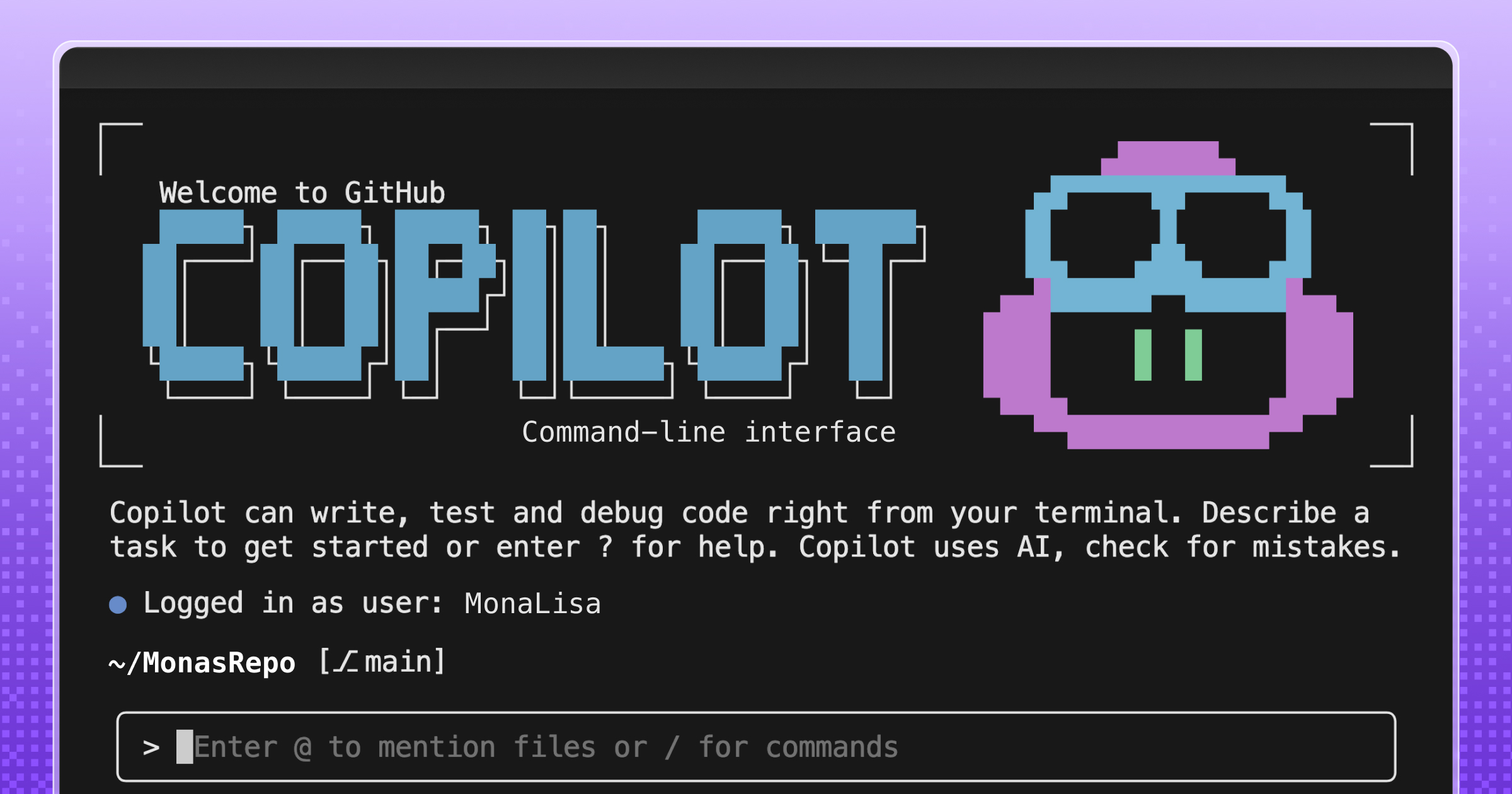
This feature thread tracks the evolution of creating animated ASCII banners for command-line interfaces (CLIs). Initially, the focus was on the technical challenges of rendering dynamic text-based graphics in highly constrained terminal environments. This post details the engineering effort behind GitHub Copilot CLI's animated banner, highlighting the complexities of terminal inconsistencies, ANSI color handling, accessibility considerations, and the development of custom tooling to bridge the gap between design and CLI rendering. The team built a custom ASCII animation editor and integrated it with Ink (React for the terminal) to achieve the desired visual effect while addressing significant engineering challenges related to terminal fragmentation and accessibility.

1 post

Timeline