How do you build a context graph?
Feb 4, 2026
Summary
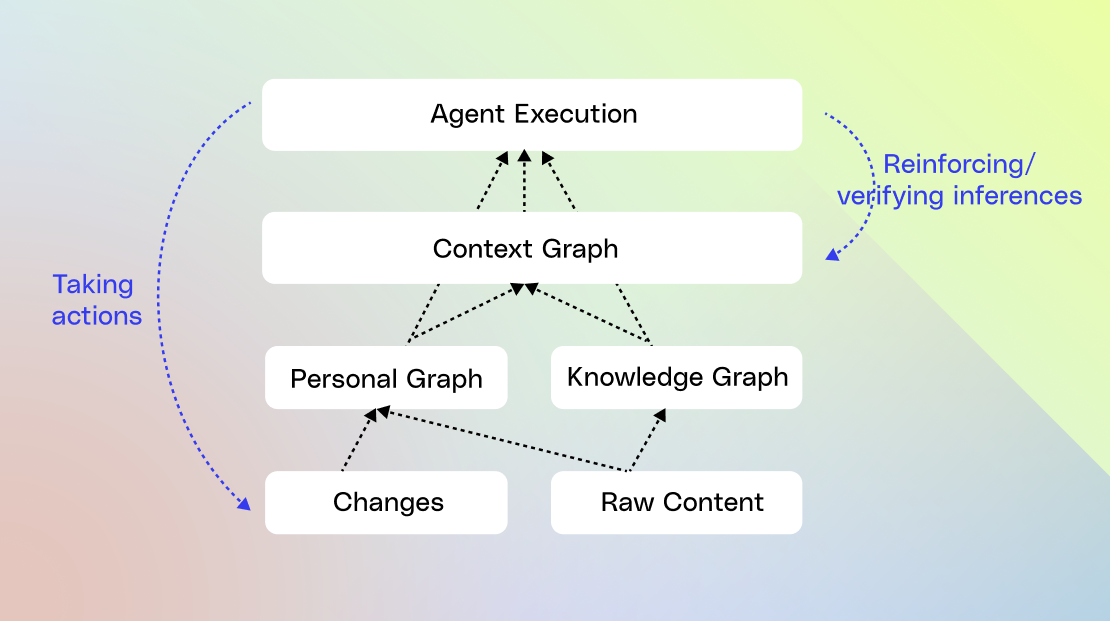
This post details Glean's approach to building context graphs, which are essential for AI to understand and automate work processes. It defines context graphs as models connecting enterprise entities with temporal traces of actions and events. The post outlines the 'how' of building these graphs, emphasizing deep connectors, observability, a unified knowledge graph, personal graphs, and the creation of anonymized, probabilistic process traces. It highlights the hybrid storage model using embedded entity IDs for step-by-step traversal and the importance of closing the loop with agentic traces to continuously learn and refine the context graph. The post also mentions an internal test of the concept using opt-in personal graph data.
More from the Agent Orchestration Platform trail
- AI Agents for Financial Compliance: How Enterprise AI Is Solving the Regulatory Reporting Challenge
- From enterprise search to enterprise context: what AI agents actually need
- Scale AI usage without runaway spend with Glean’s AI usage controls
- Glean Agents can now work independently, build faster, and stay governed at scale
- Glean expands horizontal, agent platform with open agent interoperability, dozens of personal and business agents, and comprehensive AI security