Shifting the work of context engineering to the AI platform
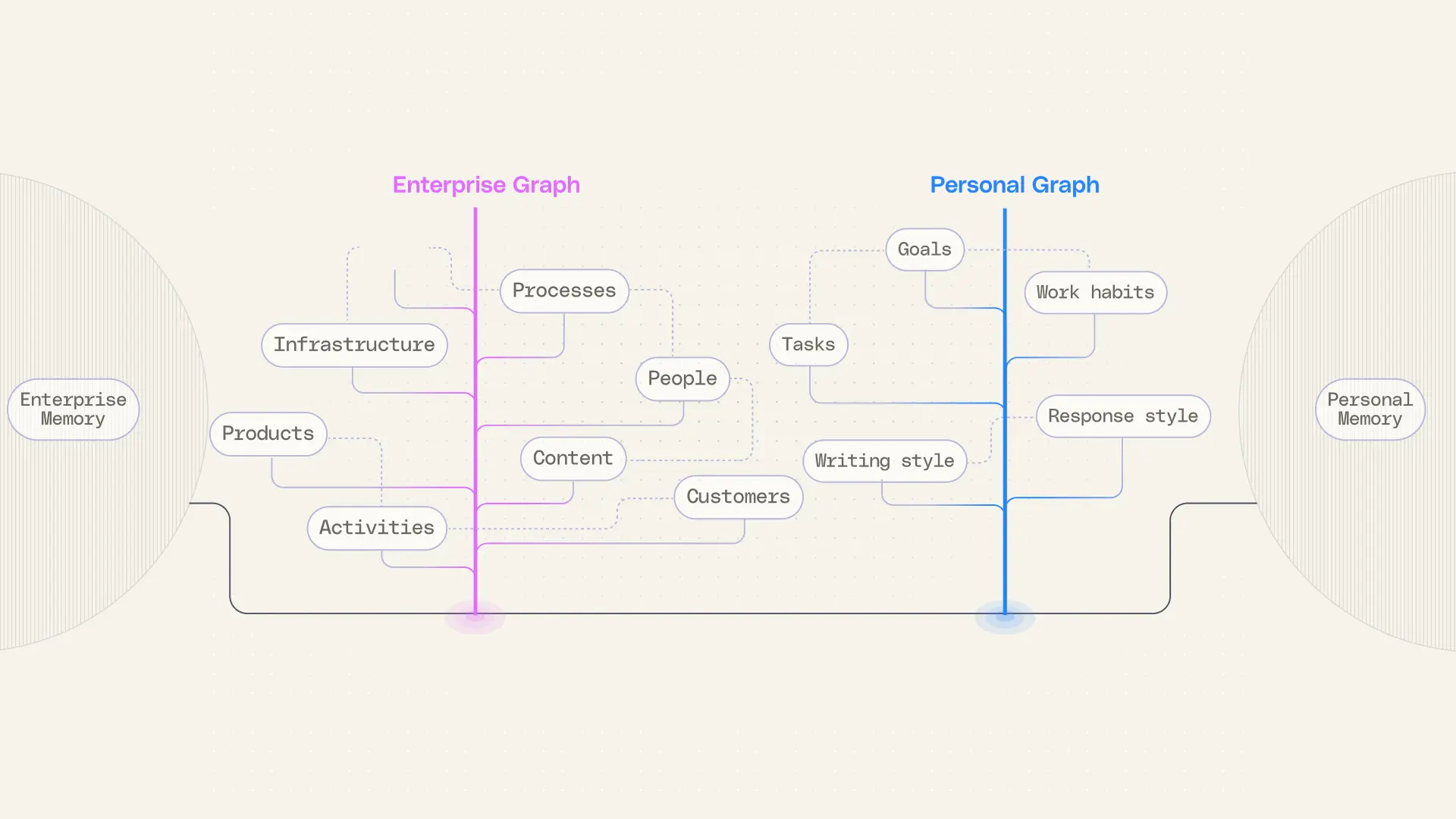
This post details Glean's design decisions and lessons learned in building enterprise context for AI agents. It introduces the concept of shifting context engineering from individual engineers to the AI platform. Key technical contributions include: 1. **Index Diversification:** Separating indexes for different jobs (e.g., calendar search by time/people, Glean search for unstructured data, Salesforce dashboard index for metrics) to improve retrieval. 2. **Hybrid Connectors:** Combining MCP tools with Glean's indexing system for real-time freshness and unified understanding, emphasizing the need for ongoing data modeling and signal extraction for MCP tools. 3. **Knowledge Graphs:** Using graph-based structures to encode entities (people, projects, processes) and their relationships for multi-hop reasoning, disambiguation, and understanding work flows. 4. **Tool Search:** Creating an index of tools and learning from successful agent workflows to map common patterns and select the best next tool, optimizing for speed and reducing hallucinations. 5. **Enterprise Memory:** Storing traces of agent runs (tools used, parameters, sequences, outcomes) and offline permutation analysis to learn tool-use heuristics, optimize tool parameterization, and improve action sequencing. This memory is fed back into the system to guide tool selection and structuring.
More from the Agent Orchestration Platform trail
- AI Agents for Financial Compliance: How Enterprise AI Is Solving the Regulatory Reporting Challenge
- From enterprise search to enterprise context: what AI agents actually need
- Scale AI usage without runaway spend with Glean’s AI usage controls
- Glean Agents can now work independently, build faster, and stay governed at scale
- Glean expands horizontal, agent platform with open agent interoperability, dozens of personal and business agents, and comprehensive AI security