Blogs
AI Engineer logo

AI Engineer

YouTube channel · youtube.com/@aiDotEngineer

169videos60this week0watchers

Feature trails

36
Feature trailActive

Ai Engineer Conference Keynotes

This post is part of a collection of keynotes and Q&A sessions from the AI Engineer Paris 2026 conference, covering a range of topics including AI infrastructure, coding agents, software factories, and building frontier AI. The content aims to provide insights into the current state and future directions of AI engineering, with specific discussions on speaker selection, event logistics, and community building.

4 posts · 2026

Timeline

Feature trailActive

Agentic Research and Discovery Loops

This post contributes to the field of agentic research by detailing experiments with AI agents (ARIA) tasked with optimizing AI model training and research workflows. It highlights the potential for agents to automate the launch, monitoring, summarization, and reporting of experiments, significantly accelerating the research process. The work also emphasizes the importance of agent-focused observability, treating evals as CI, and human review of traces for effective productionization of AI agentic systems. This installment specifically details multi-session fan-out with custom tools, scheduled agent deployments, and a research preview called 'Dreaming' that improves memory stores by reviewing past sessions.

14 posts · 2026

Timeline

Feature trailActive

Agentic System Security Guardrails

This post contributes to the field of agentic system security by detailing the 'lethal trifecta' (access to private data, exposure to untrusted content, ability to communicate externally) inherent in AI agents running on developer laptops. It proposes four architectural guardrails to mitigate these risks: local Docker containers, cloud-based CI/CD (GitHub Actions), dedicated VMs/Mac Minis, and Kubernetes pods per session. It highlights the trade-offs of each approach regarding local vs. remote execution, scale, isolation, persistence, and triggers, emphasizing that sandboxing is not a panacea. The work also introduces OpenHands Agent Canvas as a tool for managing these configurations.

7 posts · 2026

Timeline

Feature trailActive

Agentic Systems

This post contributes to the understanding of agentic systems by detailing a performance review framework for AI agents. It moves beyond simple containment metrics to a seven-pillar scorecard that assesses configuration, runtime behavior, and governance. This framework scores 26 components, weighted by business impact, to provide a more accurate measure of agent performance, addressing issues like error tolerance, risk, compliance, drift, and hallucination. The work also highlights the importance of industry-specific targets and the ROI of AI agents.

4 posts · 2026

Timeline

Feature trailActive

Low-Latency Inference Engineering Playbook

This post contributes to the growing body of knowledge around optimizing AI inference for low latency. It details specific techniques, architectural patterns, and tooling strategies employed by leading organizations to achieve faster inference times, crucial for real-time AI applications and agentic systems. This includes optimizations in model loading, execution, caching, and network communication within inference infrastructure, as well as the use of autoresearch for kernel optimization and ba

11 posts · 2026

Timeline

Feature trailActive

Agentic MicroVM Sandboxing for Security

This post contributes to the understanding of agentic systems by proposing an interface designed for agents that moves beyond traditional dashboards and query languages. It addresses the limitations of current Multi-Cloud Platforms (MCPs) where agents don't learn, too many tools overwhelm models, and applications are isolated. The proposed interface enables agents to work across applications by integrating tool search with execution plans, allowing for cross-app analysis and direct PR generation. This talk specifically details the failures encountered when an AI agent was tasked with stress-testing a code sandbox and cloud browser, highlighting interface-layer bugs and sandbox-layer limitations such as memory exhaustion, file permission issues, and seccomp/eBPF constraints. It emphasizes the importance of structured logging to databases and the distinction between interface and sandbox failures for robust agentic system development and security.

6 posts · 2026

Timeline

Feature trailActive

AI Monetization and Entitlement Infrastructure

This post contributes to the understanding of AI monetization and entitlement infrastructure by arguing that AI companies are inadvertently building complex financial systems. It highlights the critical need for synchronous entitlement checks before inference and asynchronous settlement, drawing parallels to ATM operations. The discussion covers essential banking concepts like hold-and-settle, double-entry bookkeeping, credit pools, and spend caps, proposing four patterns for selling AI at scale.

2 posts · 2026

Timeline

Feature trailActive

Open-weight frontier model release and ecosystem development

This post contributes to the field of AI model development and deployment by introducing GLM-5.2, an open-weight model that achieves near-frontier intelligence on challenging benchmarks. It highlights the strategic advantage of releasing such models as open weights, enabling enterprise and government use, specialized fine-tuning (law, finance, security), and co-design of future model development. The post also introduces Z Code, a coding harness designed for GLM-5.2 and other frontier models, fostering an ecosystem around open-weight models. This talk specifically details the train-to-deploy loop for specialized AI using open models, emphasizing customization, continuous training and serving, and practical implementation details like custom CUDA kernels, speculative decoding, and hot-loading of weights without downtime. It showcases customer results demonstrating significant improvements in inference speed, latency, and model quality through fine-tuning on the Fireworks AI platform.

3 posts · 2026

Timeline

Feature trailActive

Agentic Inference Cloud

This post contributes to the field of agentic inference by detailing how to build and deploy AI applications on cloud GPUs with an iterative, local-like development experience. It introduces Runpod Flash, a system that eliminates the Docker build-push-run loop by enabling direct Python execution on GPUs, supporting serverless queues, load-balanced endpoints, inter-endpoint calls, network volumes with warm caching, and live serverless for instant iteration. This allows developers to deploy and iterate on AI applications, including text and image generation, with a single command, significantly accelerating the development cycle.

10 posts · 2026

Timeline

Feature trailActive

AI-Assisted Code Verification and Deterministic Testing

This post contributes to the field of AI-assisted software development by highlighting the bottleneck of verification for AI-generated code. It introduces a system that records user flows, replays them on every pull request, and provides visual diffs for near-exhaustive frontend verification with zero developer effort. Key technologies include fully mocked network traffic, a deterministic browser, and coverage-guided flow selection, enabling code coverage to finally mean 'code tested' by capturing user interactions.

4 posts · 2026

Timeline

Feature trailActive

Agentic Ai Assisted Code Verification And Deterministic Testing

This post contributes to the field of AI-assisted software development by highlighting the bottleneck of verification for AI-generated code. It introduces a system that records user flows, replays them on every pull request, and provides visual diffs for near-exhaustive frontend verification with zero developer effort. Key technologies include fully mocked network traffic, a deterministic browser, and coverage-guided flow selection, enabling code coverage to finally mean 'code tested' by capturing user interactions and automatically verifying them. The system is extended to agentic workflows, allowing AI agents to investigate traces, identify specific failures (e.g., grounding problems, fabricated responses, redundant searches), and propose code changes. These proposed fixes are then made testable through dataset, evaluator, and experiment skills, enabling iterative improvement of agentic applications. The process emphasizes tailoring evaluations to application-specific failures and human review of proposed changes to ensure effective regression detection.

2 posts · 2026

Timeline

Feature trailActive

Llm Observability And Monitoring

This post contributes to the field of LLM observability and evaluation by detailing the challenges of traditional testing methods for AI systems and proposing a robust evaluation framework. It emphasizes moving beyond simple assertions and fuzzy matching to sophisticated LLM judges, curated datasets of real-world scenarios, and continuous calibration against human verdicts. The work highlights the importance of integrating live policy retrieval (e.g., via OpenRAG) and dynamic model refinement in production.

8 posts · 2026

Timeline

Feature trailActive

Distributed Systems

This post contributes to the understanding of agent-to-agent communication and collaboration by highlighting the limitations of current approaches and proposing a new framework for distributed AI systems. It emphasizes the need for real-time ordered transport, persistence, runtime binding, agent-first abstractions, and enterprise governance to enable true multi-agent collaboration. The proposed solution, Band, aims to provide a global interaction layer for agents, moving beyond simple messaging.

5 posts · 2026

Timeline

Feature trailActive

Knowledge Management for AI Systems

This post contributes to the understanding of knowledge management in AI systems by proposing a framework that distinguishes between prompt, memory, and weights as distinct tools for different jobs, rather than a linear progression. It emphasizes that architectural decisions about knowledge placement are made implicitly through product development and offers diagnostic questions to guide these decisions. The post also introduces a circulating architecture where agents improve through continuous learning and a relational context engine that integrates structured data (PRs, Slack threads, incident history) with unstructured data, significantly reducing token burn and improving agent performance on tasks requiring structural understanding beyond simple vector search.

3 posts · 2026

Timeline

Feature trailActive

Software Factory Engineering

This post contributes to the understanding of software development paradigms by contrasting the 'software factory' model with an 'orchestra' model. It emphasizes human-centric coordination of people and AI agents, advocating for principles like staying near the frontier, creating 'slop-free zones' for critical tasks (migrations, docs, skill files), centralizing all communication and data for agents ('feeding the beast'), and providing agents with free-range cloud sandboxes. The Conductor platform facilitates this by enabling the scaling of custom agents from local development to organizational-wide CI pipelines, including features like agent marketplaces, cross-repository orchestration, and automated cost monitoring.

18 posts · 2026

Timeline

Feature trailActive

Agent Memory and Harness Engineering

This post contributes to the understanding of agent memory and harness engineering by detailing how to give AI agents memory that learns and changes their behavior. It introduces a framework for agent memory that includes semantic, episodic, and procedural types, separating working memory from long-term memory. The read-write cycle for memory updates (read context, run, filter evidence for signal, write back) is explained, along with practical lessons on what to keep, caching strategies, and the necessity of human review for procedural changes. LangSmith and Context Hub are presented as tools for capturing, analyzing, and updating this context, enabling agents to improve over time.

36 posts · 2026

Timeline

Feature trailActive

AI-Assisted Offensive Security

This post contributes to the understanding of AI-assisted offensive security by proposing a paradigm shift from traditional, infrequent pen testing to continuous, automated security validation. It highlights the limitations of existing security tools (SAST, DAST, manual pen tests) in the face of rapidly evolving AI-powered threats and AI-generated code. The proposed solution involves an agent-based system that performs AI pen testing on every code change, including reconnaissance, vulnerability hunting, exploit validation, and remediation suggestions. This approach aims to provide real-time security feedback to developers, significantly reducing the window of vulnerability.

1 post · 2026

Timeline

Feature trailActive

Multiscale Indexing for RAG

This post contributes to the field of RAG and document intelligence by detailing how to build robust AI systems that can process and reason over complex, non-standard document formats like PDFs, slides, and schematics. It highlights the challenges of traditional OCR and RAG when dealing with visual encoding of meaning and large, multimodal, permissioned company data. It introduces agentic approaches for improved accuracy and reasoning by providing agents with a harness of tools, including hybrid retrieval, listing, metadata filtering, grep, and reading capabilities. The work emphasizes specialized data processing with LlamaParse and LiteParse, agent harnesses for multi-step problem-solving, and comprehensive production concerns like multi-tenancy, permissions, and data freshness. The post demonstrates an agent building a cash-flow table from financial filings, grounded in source files, showcasing the power of agentic search over company documents.

5 posts · 2026

Timeline

Feature trailActive

Speculative Inference Enhancements

This post contributes to the field of speculative inference for LLMs by profiling its effectiveness on NVIDIA Blackwell GPUs using vLLM. It details the trade-offs, including memory costs and acceptance rates, and identifies specific workloads (structured output, small batches, short context) that benefit most. The analysis highlights that long-context and high-concurrency workloads gain less, and creative writing tasks show lower acceptance rates compared to structured tasks.

2 posts · 2026

Timeline

Feature trailActive

Product Engineering with Jobs-to-be-Done and Kano Model

This post contributes to the field of product engineering by detailing how to translate user requests into actionable engineering tasks using frameworks like Jobs-to-be-Done and the Kano model. It emphasizes understanding the functional, social, and emotional dimensions of user needs, and how these map to architectural decisions and prioritization. The content highlights the importance of validating ideas before metrics exist, handling demanding customers, and the role of technical expertise in guiding product development. This part focuses on customer discovery habits and technical ownership, setting the stage for subsequent stages of product development.

2 posts · 2026

Timeline

Feature trailActive

Self-healing ML Training Infrastructure

This post contributes to the field of ML infrastructure by detailing a robust self-healing system for distributed training. It addresses the inevitability of hardware failures in large-scale GPU clusters by integrating Kubernetes for dynamic resource management and observability with Slurm for familiar researcher workflows. The system automates the remediation of hardware failures, enabling seamless resumption of training from checkpoints with minimal human intervention, thus improving uptime and resource utilization.

1 post · 2026

Timeline

Feature trailActive

AI Engineering Conference Keynotes

This post is a collection of opening keynotes from the AI Engineer Paris 2026 conference. It covers a range of topics including AI infrastructure, coding agents, software factories, and building frontier AI, as presented by speakers from Mistral, Langfuse, and Sizzy. The content aims to provide insights into the current state and future directions of AI engineering.

2 posts · 2026

Timeline

Feature trailActive

Agentic Document Intelligence and OCR Correction

This post contributes to the field of agentic document intelligence by detailing how to build robust AI systems that can process and reason over complex, non-standard document formats like PDFs. It highlights the challenges of traditional OCR and RAG when dealing with visual encoding of meaning, and introduces agentic approaches for improved accuracy and reasoning. The work emphasizes the importance of specialized data processing, agent harnesses for multi-step problem-solving, and comprehensive evaluation strategies. The Large Taste Model at Spotify, an LLM-native system, demonstrates generative personalization across a vast catalog of music and podcasts, moving from curated playlists to steerable and editable user experiences. The training methodology, NEO, involves domain grounding with a frozen backbone and multitask tuning, which significantly improves performance on various Spotify tasks, including cold-starting audiobook recommendations. Furthermore, grounded LLM judges, informed by user profiles and behavior, show a substantial increase in agreement with human judgments on ambiguous queries, enhancing evaluation reliability.

5 posts · 2026

Timeline

Feature trailActive

Robot Reliability and Active Learning

This post contributes to the field of robot reliability by detailing how to achieve high success rates in complex manipulation tasks. It introduces a reward model-driven active learning cycle for targeted data collection and fine-tuning, a pre-training data pyramid approach, and a dual-model architecture combining reasoning and world action models. The work demonstrates successful deployments in real-world environments like restaurants and laundromats, achieving over 99% success rates on tasks like napkin folding and T-shirt folding without site-specific data.

1 post · 2026

Timeline

Feature trailActive

Action-based Video Indexing for Physical AI Training

This post contributes to the field of AI training data acquisition by highlighting the bottleneck of acquiring relevant video data for physical AI and robotics. It proposes an 'action-based' indexing approach for large video corpora, moving beyond simple metadata to identify and retrieve specific actions and physical interactions. This enables more efficient and less biased data collection for training models in robotics, self-driving, and other physical AI domains, reducing reliance on staged or teleoperated data. The work emphasizes the development of an 'omni-bodied' brain, a single model capable of operating any robot for any task, trained on scalable data like simulation and human video, then fine-tuned with teleoperation data and improved via a deployment flywheel. Demonstrations include complex manipulation tasks like inserting AirPods, cooking omelets, and learning to walk, showcasing the model's adaptability and efficiency with limited robot-specific data.

2 posts · 2026

Timeline

Feature trailActive

State-Space Models for Vision Language Tasks

This post introduces a novel approach to training state-space models (SSMs) for vision-language tasks, specifically focusing on document intelligence for Indic languages. It details a multi-stage curriculum that prioritizes text token pre-training before visual data, a contrarian bet on block-level OCR with layout and reading order harnesses, and the use of verifiable reward reinforcement learning for OCR correctness. The resulting 3B parameter model demonstrates state-of-the-art performance, outperforming much larger transformer-based models on document AI benchmarks, and is being deployed in production for digitizing millions of pages.

1 post · 2026
Timeline

Feature trailActive

Embodied AI Interaction and Learning

This post introduces a novel approach to embodied AI, where an AI agent is given a physical form (a shape display) and encouraged to learn and develop its own 'body language' through interaction and a closed-loop system. This moves beyond task-oriented AI to explore self-discovery and emergent behaviors in physical AI. The system learns to generate, score, and validate gestures, developing a response mechanism that can be faster than the underlying language model. The work explores aesthetic machines and the potential for physical AI to feel more welcoming.

1 post · 2026

Timeline

Feature trailActive

Visual Reasoning and Grounding for AI Models

This post introduces Elorian's approach to enhancing AI models' visual reasoning and grounding capabilities, moving beyond pattern matching to address limitations in counting, spatial understanding, and state tracking in complex visual tasks. The proposed solution involves creating novel visual reasoning datasets, a synthetic data flywheel for evaluation and training (agents, SFT, RL), architectural modifications to transformers, and a native visual chain-of-thought mechanism. This aims to improve AI performance in domains like robotics, construction, and mechanical design where understanding blueprints, CAD, and dynamic environments is critical.

1 post · 2026

Timeline

Feature trailActive

FlashNorm Optimization

FlashNorm is a novel optimization technique for RMS normalization layers in transformer models. It achieves significant speedups by folding the normalization gain into projection weights offline and deferring scalar division. This allows for parallel execution of matrix and vector units, reducing idle time. The implementation involves custom CUDA kernels to leverage tensor and CUDA cores concurrently. A key challenge addressed was a race condition arising from implicit stream joins, where stale buffers were read due to unfinished computations. Explicit stream synchronization was implemented to resolve this.

1 post · 2026

Timeline

Feature trailActive

vLLM Debugging and Stateful Inference

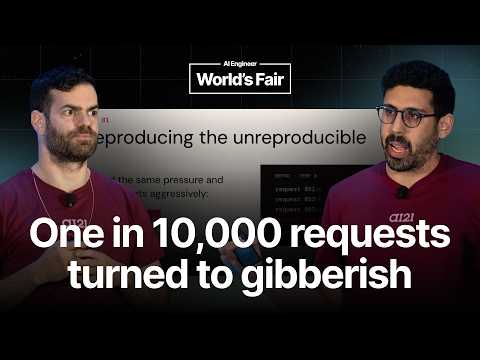
This post introduces a new capability focused on debugging complex issues within vLLM, specifically addressing subtle bugs in stateful inference for models like Jamba. It details methods for reproducing elusive bugs under load and memory pressure, and highlights the importance of careful state management and type safety in preventing data corruption and incorrect model outputs.

1 post · 2026

Timeline

Feature trailActive

LLM Benchmark Reliability

This post introduces a new capability focused on improving the reliability and accuracy of LLM performance benchmarks. It addresses common pitfalls in benchmark harnesses and proposes a new system for more robust evaluation.

1 post · 2026

Timeline

Feature trailActive

LLM Inference Routing Policy

This post introduces a new capability focused on routing LLM inference traffic in production. It moves from a feedback-loop-based proportional controller to a control plane with a global view and a data plane for serving cached routing weights. The optimizer aims to minimize end-to-end latency under hard constraints, considering factors beyond simple network proximity. Protections like outlier penalties, retry budgets, and load shedding are also detailed.

1 post · 2026

Timeline

Feature trailActive

Homa Transport Protocol for AI Clusters

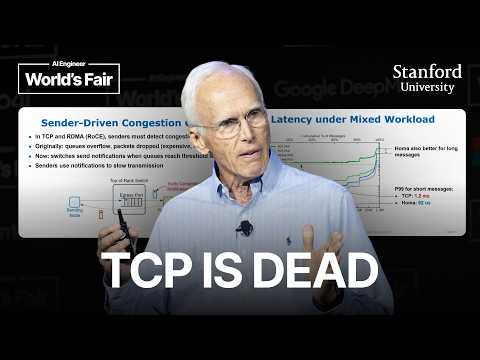
Homa is a new transport protocol designed to address the latency challenges of modern AI workloads, particularly inference and agentic applications, in data center environments. It moves away from TCP's sender-driven congestion control and byte-stream model to a receiver-driven, message-based approach that leverages switch hardware queues for prioritizing short, critical messages. This significantly reduces tail latency for coordination traffic while maintaining high throughput for large data transfers.

1 post · 2026

Timeline

Feature trailActive

RL-driven Search Optimization

Reinforcement learning (RL) is being applied to optimize search processes within AI agents. This approach moves beyond traditional fixed pipelines by enabling agents to learn and adapt their search strategies dynamically. RL offers a verifiable reward signal (finding the correct document) and a grindable environment, allowing for rapid iteration and cost-effective optimization. Specialized RL models can achieve significantly faster search times and lower costs compared to general-purpose models.

1 post · 2026

Timeline

Feature trailActive

Agreement Data Extraction and Structuring

This post introduces a new capability focused on extracting and structuring data from complex legal agreements. It addresses the challenge of querying negotiated value locked in PDFs by building a specialized vision language model. This model replaces multiple extraction components with a single pass, preserving semantic structure and tables, and achieving significantly faster extraction speeds compared to general-purpose models. The capability aims to make agreement data queryable and useful for organizations.

1 post · 2026

Timeline