Blogs
Vercel logo

Vercel

Engineering blog · vercel.com/blog

440posts0this week0watchers

Feature trails

82
Feature trailActive

AI Gateway and AI SDK Integration

Vercel's AI SDK continues to evolve, offering enhanced capabilities for building and running AI agents. Version 7 introduces production-ready features for agent development, including reasoning control, tool and runtime context management, provider file and skill uploads, MCP Apps for richer UIs, and a terminal UI for rapid testing. For running agents, it adds tool approvals (user-in-the-loop and automated), durability with WorkflowAgent, timeouts, and sandboxing. Integration with various agent providers and the introduction of Jev, a universal classifier model, are key advancements. The Python AI SDK now supports Jev via an experimental `evaluate()` API for narrow decision-making tasks.

81 posts · 2023–2026

Timeline

20232026
Feature trailActive

Framework-Defined Infrastructure

Vercel's platform is evolving towards self-driving infrastructure, leveraging AI agents to autonomously manage production operations, improve application code with real-world insights, and learn from production behavior. This builds upon the foundation of framework-defined infrastructure, where application code dictates infrastructure provisioning. The Vercel AI Cloud enables new primitives for AI workloads, and the Vercel Agent acts as a first responder for production operations and security, investigating and resolving issues.

6 posts · 2023–2026

Timeline

20232026
Feature trailActive

Deployment Protection

Vercel's platform offers flexible deployment protection options, including Vercel Authentication for team collaboration, Shareable Links for external collaborators without Vercel accounts, and Advanced Deployment Protection for enhanced security requirements like E2E testing with header secrets, password protection, and private production deployments. These features aim to streamline collaboration and enhance security for preview and production deployments across all plans. The public bug bounty program for OSS projects is now available on HackerOne, inviting security researchers to find and report vulnerabilities in core Vercel open-source projects like Next.js, Nuxt, SWR, Turborepo, and the AI SDK. This program builds on a successful private bug bounty initiative and aims to reduce risk for all users of Vercel's open-source tools.

3 posts · 2022–2026

Timeline

20222026
Feature trailActive

Framework-Defined Infrastructure

Vercel's platform evolves towards self-driving infrastructure, leveraging AI agents to autonomously manage production operations, improve application code with real-world insights, and learn from production behavior. This builds upon the foundation of framework-defined infrastructure, where application code dictates infrastructure provisioning. The Vercel AI Cloud enables new primitives for AI workloads, and the Vercel Agent acts as a first responder for production operations and security, inves. Vercel Sandbox provides on-demand Linux microVMs for agents, offering sub-second starts, full isolation, ephemeral environments, snapshotting for state restoration, and fluid compute with Active CPU pricing. This infrastructure is built on Vercel's internal compute platform, Hive, which uses Firecracker microVMs for scalable, isolated, and ephemeral execution of user code, now extended to agent workloads.

39 posts · 2019–2026

Timeline

20192026
Feature trailActive

Next.js Framework Evolution

Vercel's platform continues to evolve its support for modern JavaScript frameworks like Next.js, integrating advanced caching, streaming SSR, and per-route runtime selection across Node.js and Edge runtimes. This evolution includes optimizations for SEO best practices such as Incremental Static Regeneration (ISR), image optimization, code splitting, and font optimization, all contributing to improved user experience and search engine ranking. React 18 introduces Server Components, Client Components. The platform also actively engages in securing the ecosystem by identifying and mitigating vulnerabilities in dependencies like libheif, ensuring the safety of image optimization features.

19 posts · 2016–2026

Timeline

…20172026
Feature trailActive

Real-time Data Serving at Scale

Vercel's Edge Network provides a globally distributed infrastructure for caching and computing user requests close to the user. This enables both high performance for static assets and dynamic personalization by caching the results of dynamic requests. Incremental Static Regeneration (ISR) allows for granular, on-demand content updates, reducing build times and enabling content previews without developer intervention. The Edge Network caches at multiple levels (proxy, region, origin) and integrates with framework-defined infrastructure for seamless configuration. ISR can act as a full replacement for HTTP caching at the edge, offering time-based or on-demand regeneration strategies to keep dynamic content fresh with cached speeds.

19 posts · 2019–2026

Timeline

20192026
Feature trailActive

Redirects

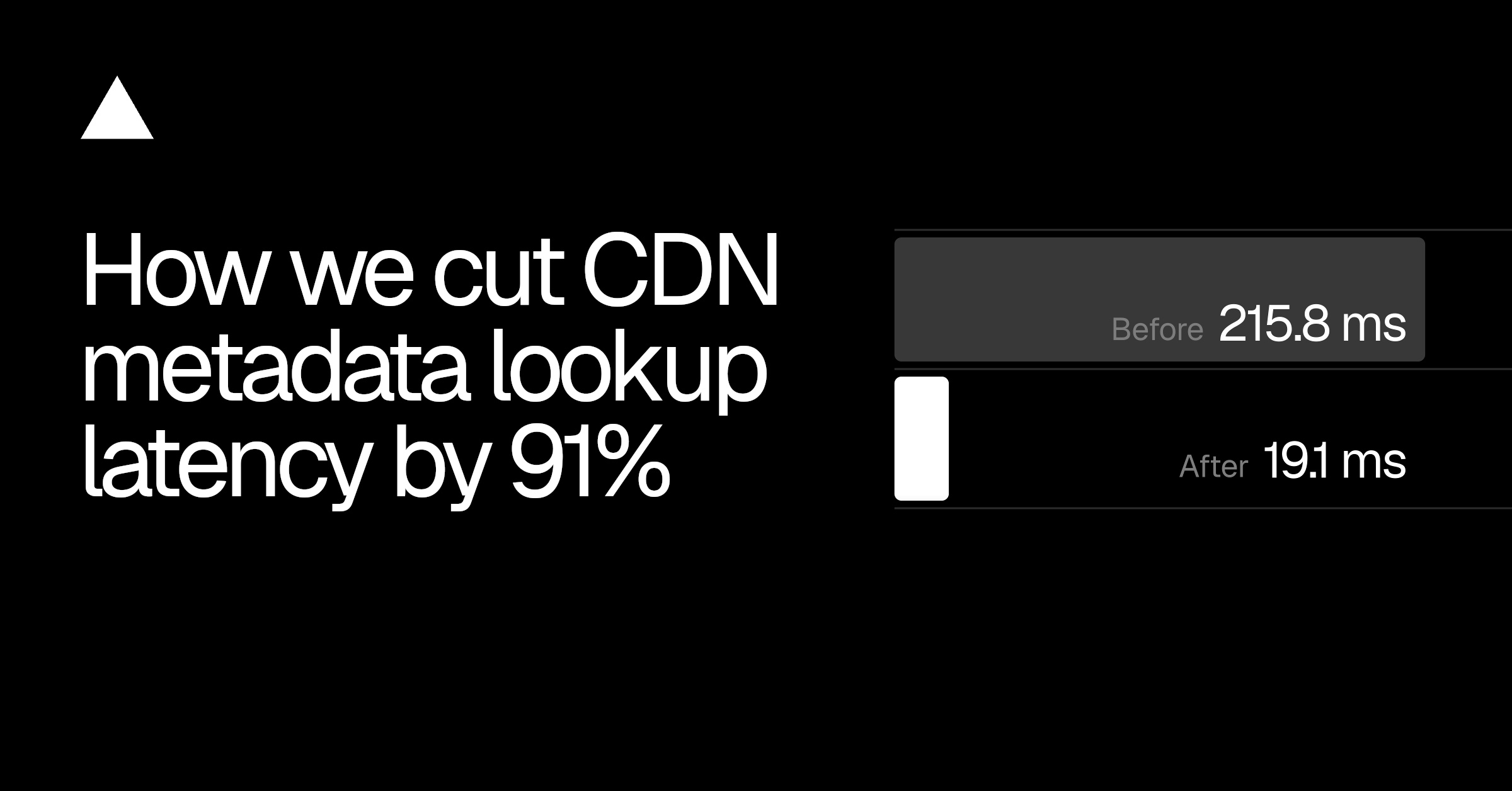
Vercel's platform can front any application, not just those deployed natively on the platform, providing firewall protection, DDoS mitigation, and observability. This includes using Vercel Web Analytics, Firewall, and Bot Management. Microfrontends allow for running multiple applications on a single domain, enabling incremental modernization by mounting different Vercel projects to specific route paths. This approach offers better isolation, independent environment variables, and organization. The platform now supports millions of static redirects per project with optimized lookup paths using sharded Bloom filters and binary search over sorted keys, significantly reducing latency and cost for large-scale redirect management.

22 posts · 2019–2026

Timeline

20192026
Feature trailActive

Black Friday Cyber Monday Traffic Operations

Vercel's platform demonstrated its ability to handle massive traffic surges during Black Friday and Cyber Monday 2024, processing over 86.7 billion requests with 99.9992% uptime. Key metrics include 1.9 million peak requests per second, 2.4 million deployments, 3 billion system-triggered Firewall blocks, and 519 million customer-specific WAF blocks. The platform dynamically scaled functions, handled 28.9 billion function invocations, and mitigated 1.75 million DDoS requests per second. It also m

10 posts · 2022–2026

Timeline

20222026
Feature trailActive

Fluid Compute

Fluid compute is Vercel's next-generation compute model designed to handle modern workloads with real-time scaling, cost efficiency, and minimal overhead. It dynamically adjusts to traffic demands, reusing existing resources before provisioning new ones. The Vercel Functions router orchestrates function execution to minimize cold starts, maximize concurrency, and optimize resource usage by dynamically routing invocations to pre-warmed or active instances. Instances communicate exclusively through the Vercel network. Fluid compute offers improved scaling with higher ceilings and better cost efficiency by prioritizing existing resources, reducing cold starts through a Rust-based runtime and bytecode caching, and supporting advanced tasks like background processing with `waitUntil`. It also provides dense global compute with multi-region failover and is open and portable across providers.

8 posts · 2024–2026

Timeline

20242026
Feature trailActive

Agent Product Design System

Vercel's Agent Product Design System offers a marketplace for AI agents and services, supporting custom agent development and deployment with unified billing and observability. It includes pre-built agents for specialized workflows and infrastructure services for building custom agents, demonstrating high autonomous resolution rates and significant cost savings in areas like customer support.

38 posts · 2024–2026

Timeline

20242026
Feature trailActive

Vercel Workflows

Vercel Workflows provides a programming model for durable execution of long-running systems like agents, backends, and ETL pipelines. It integrates with the AI SDK for durable agents and provides a Python SDK beta. The system eliminates separate orchestrators by running coordination within application code, leveraging an event log, Fluid compute for function execution, and Vercel Queues. Security is enhanced with default encryption of all data. The Community Guardian is now generally available. Eve, Vercel's open-source agent framework, simplifies agent development by providing pre-built scaffolding for channels, connections, tools, approval gates, and durable workflows, allowing developers to focus on the agent's core logic.

15 posts · 2023–2026

Timeline

20232026
Feature trailActive

Hydrogen Framework Rebuild

Vercel and Shopify are collaborating to rebuild Hydrogen from the ground up, making it open-source and runtime-agnostic. The new version will feature a three-layer strategy: core (centralized Shopify API bindings), client (reusable UI components like cart management), and server (integrating with modern frameworks like Next.js, Nuxt, and SvelteKit for full-stack capabilities). This aims to improve portability, reduce boilerplate code, and leverage existing framework features for performance and developer experience.

8 posts · 2023–2026

Timeline

20232026
Feature trailActive

Agent Credential Management

Vercel's platform continues to evolve its security posture for AI agents, focusing on robust defenses against prompt injection and data exfiltration. This includes emphasizing scoped tools, treating model output as untrusted, and providing libraries for sanitizing markdown. The platform also offers guidance on designing for failure, ensuring that even when agents behave incorrectly, the consequences are minimized.

9 posts · 2022–2026

Timeline

20222026
Feature trailActive

AI Security Vulnerability Benchmarking

Vercel Sandbox provides hard isolation via Firecracker microVMs, credential security through a firewall proxy, dynamic network policies, and filesystem snapshotting for fast cold starts. This enables Notion to offer a developer platform for third-party data syncing, custom automations, and AI agent tools. Performance optimizations have been applied to snapshot restore times, reducing p75 latency from over 40 seconds to under one second. The platform now enforces network boundaries for untrusted code execution, enhancing AI agent security.

12 posts · 2025–2026

Timeline

20252026
Feature trailActive

AWS Database Integration

Vercel's platform integrates third-party services, starting with storage solutions like Supabase, Redis, and EdgeDB, offering integrated billing and streamlined setup. Vercel Postgres (Neon) and Vercel KV (Upstash) will be migrated to Marketplace integrations. The platform aims to be a central hub for developer tools. Nuxt integration now supports Vercel KV via Nitro Storage. The Vercel Marketplace also now supports Stripe integration, enabling single-click installation of Stripe accounts and au

12 posts · 2021–2026

Timeline

20212026
Feature trailActive

Database Failover and Resilience Testing

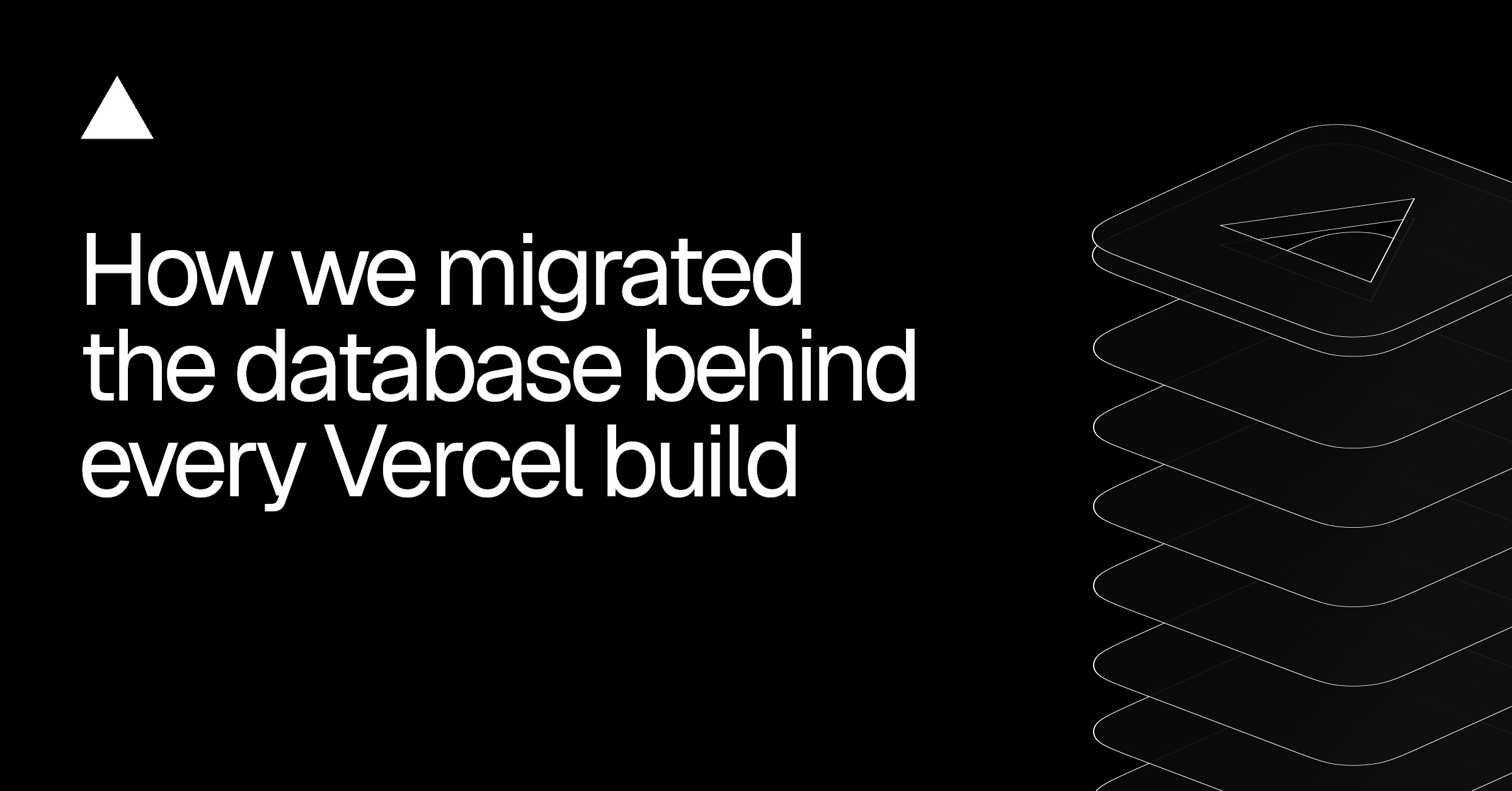
Vercel's platform is designed for resilience, with each of its 19 cloud regions operating autonomously. In the event of a regional outage, the anycast routing layer removes the affected region from rotation within seconds, automatically rerouting traffic with no disruption. Compute is also resilient, with backup regions for function execution. The platform has undergone rigorous testing, including full production failovers of its core control-plane database, to ensure minimal disruption and zero data loss. This post details the migration of the build warm pool's state from Redis to DynamoDB, a critical system that tracks container readiness, authentication tokens, and billing mappings. The migration was performed live, in phases, using feature flags and shadow modes to ensure data durability and consistency. Key challenges included handling the continuous nature of the build pool, the latency differences between Redis and DynamoDB, and the need to redesign the supply loop to accommodate slower reads. The migration involved designing a new DynamoDB schema based on access patterns, implementing a phased rollout with extensive monitoring and validation, and ultimately rebuilding the supply loop to run concurrently around the new latency characteristics.

2 posts · 2025–2026

Timeline

20252026
Feature trailActive

v0 AI-powered UI generation

v0's AI-powered UI generation capabilities are evolving to integrate more deeply with existing design systems and workflows. This includes enhanced Figma import for component extraction, support for custom Tailwind configurations, and the ability to leverage public npm packages like Material UI and React Aria. The platform aims to streamline the transition from design to implementation by learning user style preferences and enabling iterative component-based generation. v0 also extends its capabilities to assist developers with debugging, feature implementation, code suggestions, and migration to new framework versions. For content creators and marketers, v0 can generate full-stack applications, assist with content ideation, keyword research, SEO optimization, and email campaign drafting. Designers benefit from rapid prototyping, code generation from screenshots or URLs, CSS/HTML generation, accessibility improvements, and interactive component creation. Data engineers and analysts can leverage v0 for Python and Node scripting, data visualization with libraries like Matplotlib and Pandas, SQL querying, and dashboard creation. Project managers can use v0 for drafting project plans, generating user interview questions, creating feedback forms, and templating RFCs. Educators can utilize v0 for lesson plan creation, exercise generation, and developing online course materials. Customer support can use v0 to create chatbots, build searchable knowledge bases, and design feedback forms for trend analysis.

15 posts · 2023–2026

Timeline

20232026
Feature trailActive

Deepsec Security Harness

DeepsecBench evaluates AI models for cybersecurity vulnerability detection in code, providing metrics like recall, precision, cost, and total time. The cost of capable analysis is decreasing, with open-weight models closing the gap with frontier models. The benchmark runs on an open-source codebase.

1 post · 2026

Timeline

Feature trailActive

Dockerfile Support

Vercel supports running any HTTP server directly from a Dockerfile, enabling deployment of applications built with frameworks like Rails, Django, Spring Boot, and Go. This feature leverages Fluid compute for autoscaling and active CPU pricing, with optimized boot images for fast startup. Containers are treated as first-class citizens, integrating with the Vercel platform for builds, storage, deployment, and observability. This extends Vercel's capabilities to support a wider range of backend app

5 posts · 2024–2026

Timeline

20242026
Feature trailActive

Vercel Services

Vercel Services allows running multiple frameworks (frontend, backend, agents, etc.) within a single Vercel Project, enabling atomic deployments, shared preview deployments, and internal service communication. Services are configured via `vercel.json` and can communicate internally via service bindings, with traffic staying on Vercel's network. The platform supports zero-configuration deployment for various Python and TypeScript frameworks, leveraging Fluid Compute with Active CPU pricing. It in Vercel's platform now extends zero-configuration deployment to backends, supporting popular Python and TypeScript frameworks like FastAPI, Flask, Express, Hono, NestJS, and Nitro. This Framework-Defined Infrastructure (FDI) approach automatically provisions and scales infrastructure based on framework conventions, eliminating the need for manual configuration files or Docker images. Backends are billed using Active CPU Pricing on Fluid Compute, meaning users only pay for active execution time, not idle waiting. For long-running processes, the Workflow Development Kit (WDK) provides durable orchestration and observability. New backend AI templates are also available, demonstrating patterns like RAG pipelines.

8 posts · 2023–2026

Timeline

20232026
Feature trailActive

Vercel Flags

Vercel's platform continues to enhance its feature flagging capabilities by integrating them deeper into the developer workflow. This includes the general availability of the Flags Explorer within the Vercel Toolbar for direct management and overriding of flags, new first-party integrations with experimentation providers like Statsig via the Vercel Marketplace, and updates to the open-source Flags SDK with a new adapter architecture for easier integration with various providers. The Flags SDK enables server-side experimentation and integrates with Web Analytics and Runtime Logs for deeper insights and debugging. A new experimental Next.js design pattern allows for precomputing flags in Middleware to avoid jank and improve performance.

12 posts · 2023–2026

Timeline

20232026
Feature trailActive

Bot Detection and Mitigation

Vercel's platform is evolving to address the growing challenge of AI bot traffic and Denial of Wallet (DoW) attacks. The platform offers tools like Vercel Firewall, Bot Protection, and BotID to differentiate between beneficial AI crawlers and malicious bots, and to protect against attacks that exploit cloud scalability to drive up operational costs. This includes granular API rate limiting, challenge-response protocols, behavioral analysis, and adaptive filtering to distinguish between human use.

17 posts · 2023–2026
Timeline

20232026
Feature trailActive

Edge Runtime

Vercel's Edge Network provides a globally distributed infrastructure for caching and computing user requests close to the user. This enables both high performance for static assets and dynamic personalization by caching the results of dynamic requests. Edge Functions can now be regionally executed, allowing developers to colocate compute resources near data sources to avoid latency waterfalls. This complements the existing global distribution of Edge Functions for low-latency user experiences. The Edge Runtime is a subset of Node.js APIs, giving compatibility and interoperability between multiple web environments, compliant with WinterCG standards. It uses the JavaScript V8 engine in production, not Node.js, and is designed for integration into frameworks like Next.js.

14 posts · 2022–2026

Timeline

20222026
Feature trailActive

Turborepo Performance Optimizations

Turborepo continues to evolve its performance optimizations, with recent efforts focusing on reducing the overhead of task graph computation. This includes leveraging AI agents for initial performance analysis and code suggestions, developing LLM-friendly profiling formats (Markdown-based profiles), and integrating these insights with human engineering practices. The goal is to make Turborepo's task graph computation near-instantaneous, even for very large monorepos, by optimizing hashing algorithms, reducing allocations, and improving the efficiency of internal algorithms. The integration of sandboxes and rigorous testing ensures these performance gains are realized in real-world scenarios.

41 posts · 2021–2026

Timeline

20212026
Feature trailActive

Python Type Manipulation

Vercel is researching and contributing to advancements in Python's type system, aiming to make it more expressive and composable, similar to TypeScript's programmable types. This effort has resulted in PEP 827, which proposes standard type-level building blocks for introspecting and constructing types, benefiting both type checkers and runtime tooling. The goal is to align Python's static typing with its dynamic runtime capabilities, enabling frameworks like Pydantic to leverage these improvements.

1 post · 2026

Timeline

Feature trailActive

WebStreams Performance Optimization

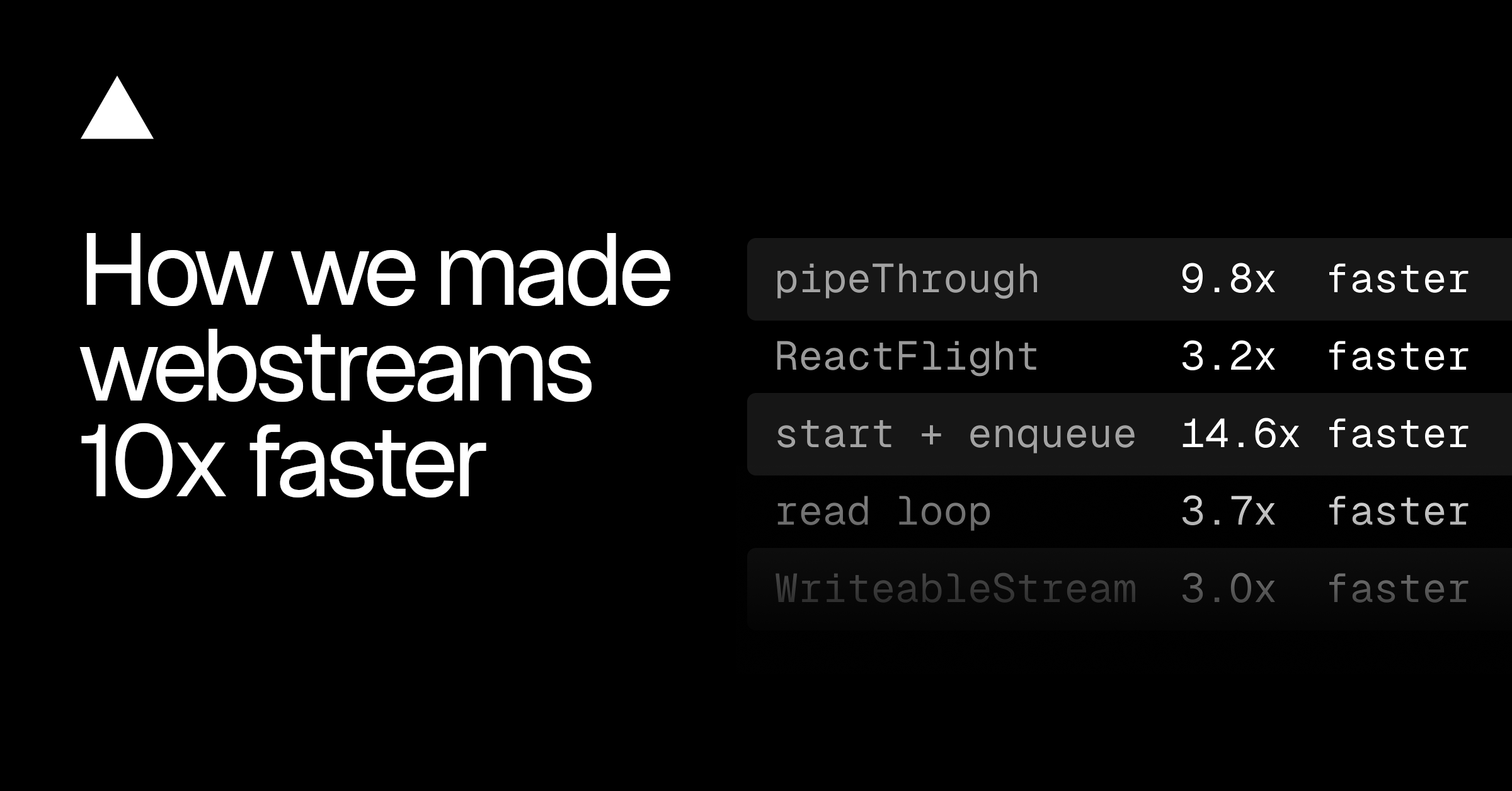
Vercel has developed a library called `fast-webstreams` that reimplements the WHATWG `ReadableStream`, `WritableStream`, and `TransformStream` APIs using Node.js streams internally. This library significantly improves performance for common operations like piping between streams, chunk-by-chunk reading, and handling React Server Component byte streams. The library aims to reduce Promise and object allocation overhead, leading to substantial speedups in server-side rendering and data processing. This work is being contributed upstream to Node.js.

3 posts · 2023–2026

Timeline

20232026
Feature trailActive

Agent Content Negotiation

Vercel has implemented content negotiation to serve agent-friendly markdown versions of pages, significantly reducing payload size and improving agent efficiency. This includes updating pages like the blog and changelog, and generating markdown sitemaps for agent discovery. The implementation in Next.js involves rewrite rules and route handlers to serve markdown, and the use of `link rel="alternate"` tags for fallback discovery.

1 post · 2026

Timeline

Feature trailActive

Core Web Vitals Optimization

Vercel's platform provides tools and guidance for optimizing website performance, focusing on key metrics like Core Web Vitals. This includes detailed explanations and optimization strategies for metrics such as First Input Delay (FID) and Interaction to Next Paint (INP), enabling developers to improve user experience and site responsiveness. React 18's concurrent features (Transitions, Suspense, React Server Components) are highlighted as key enablers for reducing long tasks and improving TBT. The platform also introduces new tools like `await-interaction-response` to help developers manage complex interactions and ensure responsiveness by separating user interaction acknowledgment from expensive rendering tasks.

1 post · 2022–2026

Timeline

20222026
Feature trailActive

React Performance Best Practices

Vercel's platform enables customers to achieve significant site performance improvements through the adoption of modern frameworks like Next.js and content management systems like Sitecore. This includes achieving faster load times, improved Interaction to Next Paint (INP) scores, and outperforming a large percentage of global websites. The platform's architecture supports scalable deployments, efficient content management, and localization, empowering marketing teams to independently manage a g. This post details how to improve the accessibility of Next.js sites by increasing element target size, building with semantic HTML using ARIA patterns, providing descriptive alternative text for images, and implementing accessible input error messages using `role="alert"` and `aria-atomic="true"`.

5 posts · 2022–2026
Timeline

20222026
Feature trailActive

React Server Components Security

Vercel has enhanced its security posture against React Server Components vulnerabilities like React2Shell. This includes significant updates to the Seawall WAF, incorporating over 20 unique bypass techniques discovered through a $1 million bug bounty program, and the implementation of a defense-in-depth strategy with a compute-layer runtime mitigation. This mitigation directly prevents code execution via the `constructor` property during React rendering, covering 96% of Vercel traffic. The WAF w

5 posts · 2021–2025

Timeline

20212026
Feature trailActive

Mobile

Vercel's platform continues to evolve its mobile offerings, with the v0 iOS app showcasing the successful adoption of React Native with Expo for building native experiences. The app demonstrates advanced techniques in chat UI development, keyboard handling, floating composers, and streaming content, while also exploring code sharing opportunities between web and native platforms. This expansion into native mobile development signifies Vercel's commitment to providing a comprehensive development ecosystem.

1 post · 2025

Timeline

20252026
Feature trailActive

Data Applications on Snowflake with v0

Vercel's v0 integration with Snowflake allows users to build and deploy data-driven Next.js applications directly within their Snowflake environment. This integration leverages Vercel's secure vibe coding architecture for application and authentication layers, while Snowflake handles compute and data, ensuring data never leaves the Snowflake environment. Use cases include sales pipeline dashboards, inventory monitoring tools, customer analytics, and financial reporting interfaces, enabling non-developers to create data applications.

1 post · 2025

Timeline

20252026
Feature trailActive

Node.js Runtime Support

Vercel Functions now support multiple runtimes, including Node.js and Bun, offering increased concurrency, unified Web Standard API signatures, zero-config streaming responses, longer execution durations, faster cold starts, and automatic regional failover. Bun provides performance gains for CPU-bound and streaming workloads, while Node.js offers broad compatibility. The platform integrates with observability, logging, and monitoring infrastructure for both runtimes. Fluid compute with active CP

3 posts · 2019–2025

Timeline

20192026
Feature trailActive

Runtime Options for Vercel Functions

Vercel Functions now support streaming responses by default for all Node.js runtimes, allowing immediate return of results and near real-time log visibility. This change impacts how runtime errors are handled, with headers sent immediately and errors logged upon stream closure. The log experience is enhanced, with individual log statements appearing on separate lines with precise timestamps, rather than being aggregated into a single line after function completion. This also affects Vercel Log Drains. Additionally, Vercel Functions are now powered by Rust, leading to significant performance improvements in cold starts and execution times, with slightly lower costs. The Rust rewrite optimizes environment variable handling, Node.js process spawning, response streaming and encryption, and `waitUntil` API usage.

12 posts · 2019–2025

Timeline

20192026
Feature trailActive

Edge Compute Resilience

Vercel's Edge Middleware and Edge Functions experienced a significant outage due to an upstream provider's global configuration error. The platform is accelerating efforts to enhance resilience by improving configuration management with the provider, developing a backup option for Edge Middleware and Edge Functions, and working towards unifying the compute subsystem for Edge, Edge Functions, and Serverless Functions to reduce provider dependency.

1 post · 2024–2025

Timeline

20242026
Feature trailCooling

Vercel Infrastructure and Request Routing

Vercel's infrastructure handles application delivery from deployment to request handling. This includes a global Edge Network with Anycast routing to Points of Presence (PoPs) for low-latency access. Vercel Firewall provides multi-layered defense at L3, L4, and L7, with a Web Application Firewall (WAF) for project-level customization. Advanced routing is managed via redirects, rewrites, and Edge Middleware, allowing for dynamic tasks like experimentation and geographic routing. The platform also...

3 posts · 2020–2025

Timeline

20202026
Feature trailCooling

Log Drains

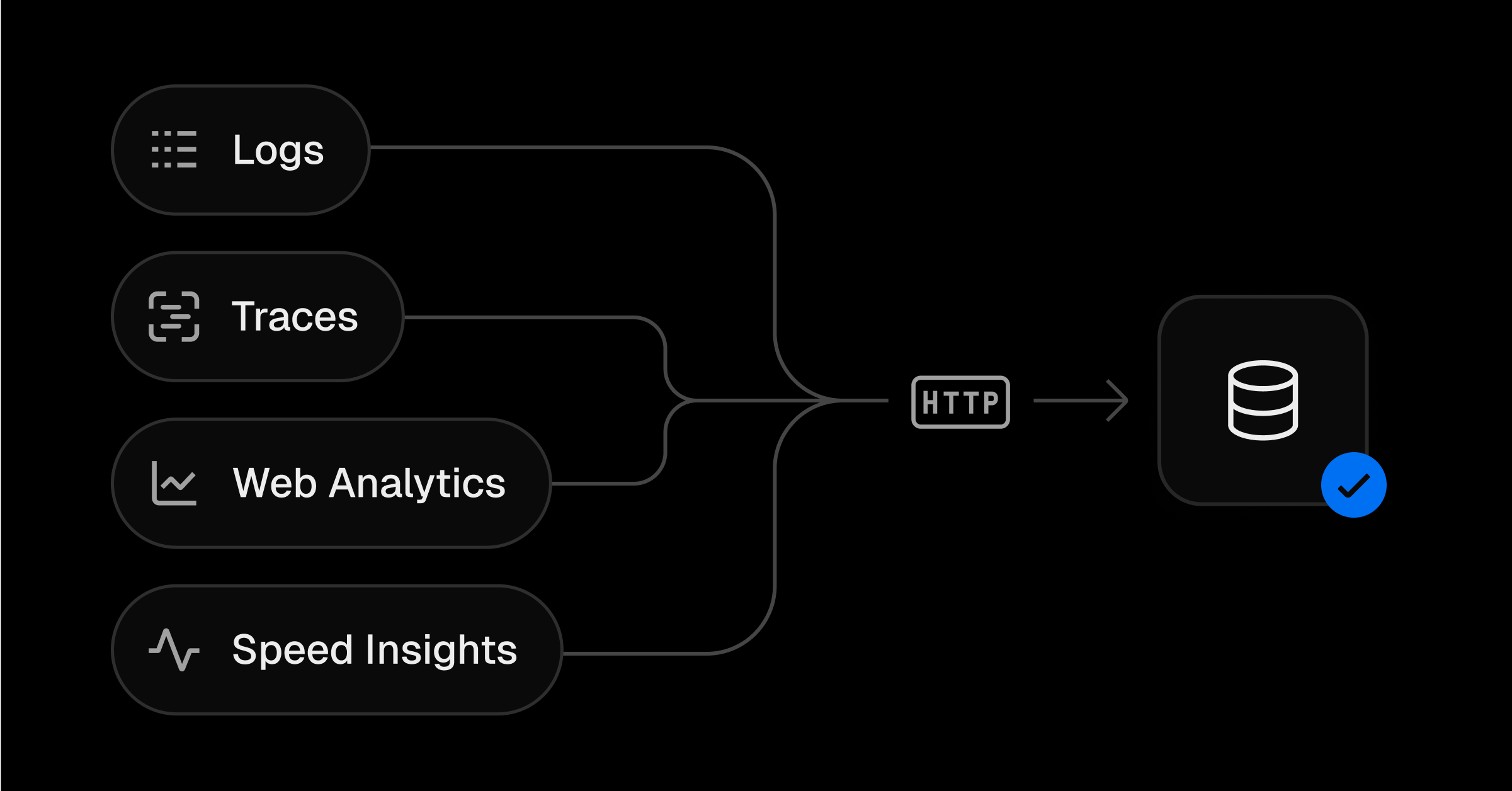
Vercel Drains (formerly Log Drains) now support exporting OpenTelemetry traces, Web Analytics events, and Speed Insights metrics in addition to logs. This provides a unified pipeline for streaming complete observability data to external systems like Datadog, Honeycomb, Grafana, and Elastic. Data is correlated across logs, traces, analytics, and performance metrics, enabling end-to-end observability. Drains can be configured as custom HTTP endpoints or through turnkey integrations. New native integrations from Sentry, Checkly, and Dash0 are now available on the Vercel Marketplace, allowing users to connect their preferred observability tools directly with integrated billing and SSO, further enhancing the unified workflow for debugging and monitoring applications.

4 posts · 2020–2025

Timeline

20202026
Feature trailCooling

npm Supply Chain Security

Vercel's platform actively monitors and responds to supply chain attacks targeting the npm ecosystem. This includes identifying affected projects, purging build caches to prevent the serving of malicious code, and notifying customers with specific guidance. The platform enhances its supply chain security posture through improved monitoring for suspicious package updates and rapid cache invalidation during incidents. This capability aims to minimize the impact of upstream compromises by enabling rapid detection and response.

1 post · 2025

Timeline

20252026
Feature trailCooling

Lint Rule Stress Testing

Vercel partnered with Biome to stress test and strengthen their `noFloatingPromises` lint rule. Engineers devised creative test cases involving arrays of Promises, Promise-like objects, structural typing tricks, conditional type aliases, Proxy-based Promises, frozen Promise objects, Promise-returning object members, property getters, type remapping with getters, short-circuit operators, randomized expressions, and optional chaining fallbacks to identify subtle edge cases and ensure robust error handling in asynchronous code.

1 post · 2025

Timeline

20252026
Feature trailCooling

Lint Rule Stress Testing

Vercel partners with Biome to stress test and strengthen their `noFloatingPromises` lint rule, developing creative test cases to identify subtle edge cases and ensure robust error handling in JavaScript and TypeScript.

1 post · 2025

Timeline

20252026
Feature trailCooling

Lint Rule Stress Testing

Vercel partnered with Biome to stress test and strengthen their `noFloatingPromises` lint rule. Engineers devised creative test cases involving arrays of Promises, Promise-like objects, structural typing tricks, conditional type aliases, Proxy-based Promises, frozen Promise objects, Promise-returning object members, property getters, type remapping with getters, short-circuit operators, randomized expressions, and optional chaining fallbacks to identify subtle edge cases and ensure robust error handling.

1 post · 2025

Timeline

20252026
Feature trailCooling

Model Context Protocol (MCP) Server

Vercel's platform supports hosting Model Context Protocol (MCP) servers, enabling AI applications to query various tools and data sources via a standardized HTTP interface. The MCP adapter, built with frameworks like Next.js, Nuxt, and SvelteKit, facilitates the creation of these servers. The MCP specification has evolved to include Streamable HTTP as the recommended transport, replacing the less efficient SSE. The MCP adapter supports both Streamable HTTP and SSE, with an option to disable SSE. AI SDK 4.2 introduces MCP clients, allowing direct integration with MCP servers for tool usage within AI applications.

1 post · 2025

Timeline

20252026
Feature trailCooling

Vercel Blob Storage

Vercel Blob provides durable, cost-efficient storage integrated with Vercel's application delivery network, leveraging Amazon S3. It offers Blob Data Transfer for high-volume delivery and Fast Data Transfer for low-latency delivery. Blob integrates with Vercel's caching infrastructure, supports large uploads (up to 5TB) with multipart uploads and resumability, and works with Image Optimization. Private Blobs with scoped access have also shipped.

3 posts · 2023–2025

Timeline

20232026
Feature trailCooling

Next.js Middleware Security

Vercel has addressed a critical vulnerability (CVE-2025-29927) in Next.js Middleware that allowed for bypasses. The vulnerability stemmed from an internal `x-middleware-subrequest` header used to prevent recursion, which could be manipulated. Patches have been released for Next.js 15.x, 14.x, 13.5.9, and 12.3.5. Vercel's own platform was incidentally invulnerable due to its decoupled routing system. Next steps include improving partner communication, streamlining security reporting, enhancing internal processes for vulnerability response, and establishing a partner mailing list.

1 post · 2025

Timeline

20252026
Feature trailCooling

Incremental Migration Strategies

Vercel's platform supports incremental migration strategies, enabling businesses to transition to new or updated systems with minimized risk and downtime. This includes detailed guidance on vertical (feature-by-feature) and horizontal (user-by-user) migration approaches, as well as specific considerations for frontend and web frontend migrations using reverse proxies and Edge Middleware. The platform facilitates phased traffic migration, allowing for gradual validation of technical solutions. This post details how to incrementally migrate from monolithic platforms like Salesforce Commerce Cloud to a headless architecture using Next.js and Vercel's Edge Middleware for traffic control and session synchronization.

1 post · 2023–2025

Timeline

20232026
Feature trailCooling

Vercel Build Compute Platform (Hive)

Vercel's build infrastructure, powered by Hive, has been enhanced with Secure Compute integration. This integration leverages EC2 instances with custom AMIs, a Key Exchange Service, and WireGuard for encrypted traffic between Hive cells and private networks. Provisioning times for secure builds have been reduced from 90 seconds to 5 seconds, and average build performance has improved by 30%. This allows for faster and more secure builds, even for sensitive workloads, by replacing Fargate with a

2 posts · 2024

Timeline

20242026
Feature trailCooling

AI Crawler Behavior Analysis

Vercel's platform is used to analyze and understand the behavior of AI crawlers, including their scale, geographic distribution, JavaScript rendering capabilities, content type priorities, and crawling inefficiencies. This analysis helps site owners optimize their content for AI consumption and provides insights into the evolving web landscape. This post details research into Google's crawling and rendering of JavaScript-heavy sites, debunking common myths about its capabilities and providing empirical evidence on how Googlebot renders and indexes modern web applications, including those built with JavaScript frameworks and React Server Components. The research involved analyzing over 100,000 Googlebot fetches to validate Google's SEO capabilities and provide recommendations for optimizing sites for search engines.

2 posts · 2024

Timeline

20242026
Feature trailCooling

Customer Site Performance Optimization

Vercel's platform enables customers to achieve significant site performance improvements through the adoption of modern frameworks like Next.js and content management systems like Sitecore. This includes achieving faster load times, improved Interaction to Next Paint (INP) scores, and outperforming a large percentage of global websites. The platform's architecture supports scalable deployments, efficient content management, and localization, empowering marketing teams to independently manage a greater degree of control over their web presence. This includes leveraging Edge Middleware for localized experiences and optimizing server rendering for SEO and performance.

22 posts · 2021–2024

Timeline

20212026
Feature trailCooling

Latency Benchmarking

Vercel's platform provides tools and guidance for optimizing website performance, focusing on key metrics like Core Web Vitals. This includes detailed explanations and optimization strategies for metrics such as First Input Delay (FID) and Interaction to Next Paint (INP), enabling developers to improve user experience and site responsiveness. React 18's concurrent features (Transitions, Suspense, React Server Components) are highlighted as key enablers for reducing long tasks and improving TBT. This post specifically details latency numbers relevant to frontend developers, covering network latency, device frame budgets, and human perception thresholds for responsiveness.

1 post · 2024

Timeline

20242026
Feature trailQuiet since 2024

Interactive 3D Graphics

Vercel's platform supports the creation and deployment of interactive 3D graphics experiences, leveraging technologies like React Three Fiber and physics engines for dynamic and engaging web content. This includes AI-powered generation of 3D scenes and components via v0, integration with GLB files, and advanced rendering techniques like postprocessing and environment maps. The platform facilitates mixing 3D elements with HTML/CSS and provides user navigation controls.

3 posts · 2022–2024

Timeline

20222026
Feature trailQuiet since 2024

Bundler Performance

Turbopack is a high-performance bundler for JavaScript/TypeScript codebases, built on an incremental, cache-based architecture using Rust. It aims to significantly improve development server startup times and update speeds compared to existing bundlers like Webpack and Vite. It will eventually power both development and production builds for Next.js, with potential for shared team caches via Vercel Remote Caching and an incremental migration path for Webpack users. The codebase is being moved to the Next.js monorepo to accelerate iteration and support for production builds.

1 post · 2022–2024

Timeline

20222026
Feature trailQuiet since 2024

Vercel Toolbar Developer Tools

Vercel's Toolbar toolkit continues to grow, offering enhanced developer and user experiences. New additions include tools for accessibility audits (WCAG 2.1 Level A and AA compliance checks), Open Graph previews for social media link cards, and an interaction timing tool to measure and optimize Interaction to Next Paint (INP). The toolbar can now be used in production via a zero-config Chrome extension, enabling evaluation of INP, layout shifts, accessibility, and feature flag overrides on live sites. Existing features like Comments, CMS integration, Layout Shift analysis, and Quick Links are also enhanced.

3 posts · 2023–2024

Timeline

20232026
Feature trailQuiet since 2024

Fine-grained Authorization

Vercel's platform supports implementing fine-grained authorization models within applications, leveraging solutions like OpenFGA and Okta FGA. This enables relationship-based access control (ReBAC) for more flexible authorization than traditional RBAC, allowing developers to define complex relationships between users, groups, and resources. This capability is integrated into the development workflow, particularly within Next.js applications, by introducing a Data Access Layer (DAL) that centralizes authentication and authorization checks. The DAL acts as an intermediary between application logic and persistent storage, ensuring users are authenticated, authorized, and data is fetched or updated securely. The post details how to integrate OpenFGA's DSL for defining authorization models and using its SDK to perform authorization checks within the DAL.

1 post · 2024

Timeline

20242026
Feature trailQuiet since 2024

Blue-Green Deployments

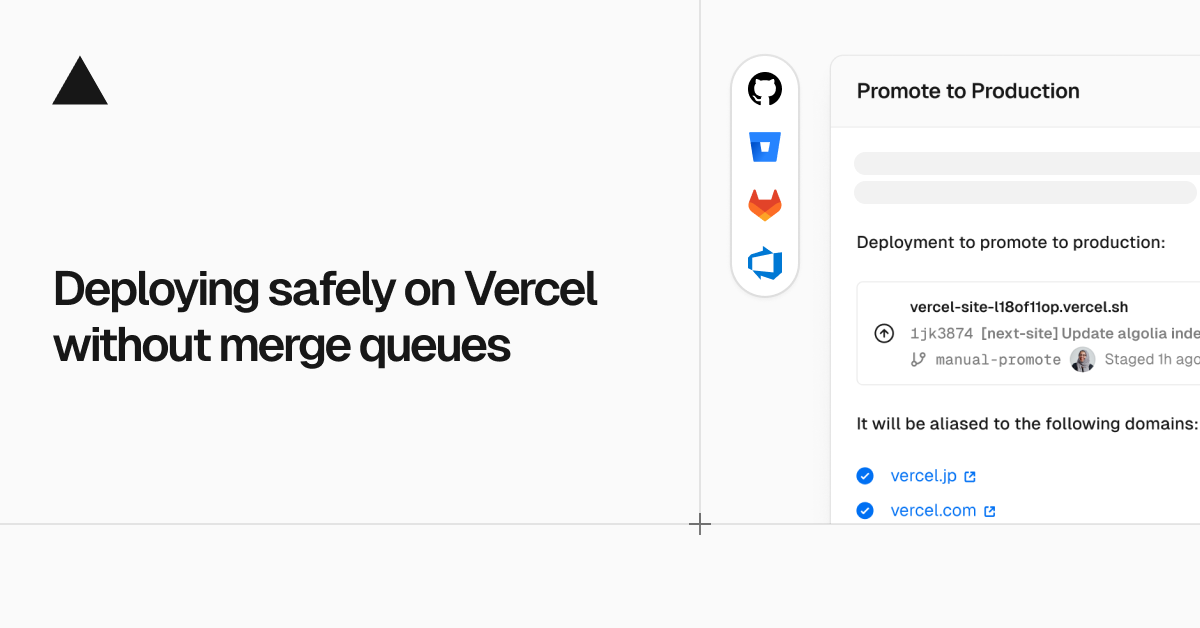
Vercel's platform supports advanced deployment strategies like blue-green deployments by leveraging immutable deployments, serverless architecture, Skew Protection, Edge Config, and Middleware. This allows for safe, cost-efficient rollouts with minimal infrastructure overhead and granular control over traffic allocation and user experience. The platform also enables innovative strategies like multicolor and shadow rollouts. Skew Protection ensures that clients that loaded the form with the old field name talk to servers with the exact same version which respectively know how to handle that field name. This mechanism is enabled by encoding the deployment ID in response HTML for hard navigations, and routing subsequent requests based on that ID.

2 posts · 2023–2024

Timeline

20232026
Feature trailQuiet since 2024

Infrastructure Pricing and Usage Metrics

Vercel is updating its infrastructure pricing to be more granular and aligned with industry standards. This includes reducing prices for bandwidth and functions, introducing new primitives for easier optimization, and enabling customers to pay exactly for what they use in granular increments. The Hobby tier remains free. These changes aim to provide better cost control and transparency for customers. The Usage overview provides a dedicated dashboard for Teams to visualize resource usage across Networking, Functions, and Build categories, offering insights into bandwidth, cache hit rates, function invocations, errors, timeouts, throttled events, build queue times, and build durations. It also provides automated insights and recommendations to optimize usage and performance.

1 post · 2021–2024

Timeline

20212026
Feature trailQuiet since 2024

Deployment Promotion Controls

Vercel's platform supports advanced deployment strategies like blue-green deployments by leveraging immutable deployments, serverless architecture, Skew Protection, Edge Config, and Middleware. This allows for safe, cost-efficient rollouts with minimal infrastructure overhead and granular control over traffic allocation and user experience. The platform also enables innovative strategies like multicolor and shadow rollouts. Skew Protection ensures that clients that loaded the form with the old f. Deployment protection offers flexible ways to make Preview Deployments private and accessible with Vercel Authentication or Shareable Links. Advanced Deployment Protection provides header secrets for programmatic access (e.g., E2E testing), password protection, and the ability to protect Production Deployments.

3 posts · 2022–2024

Timeline

20222026
Feature trailQuiet since 2024

Deployment Promotion Controls

Vercel's platform supports advanced deployment strategies like blue-green deployments by leveraging immutable deployments, serverless architecture, Skew Protection, Edge Config, and Middleware. This allows for safe, cost-efficient rollouts with minimal infrastructure overhead and granular control over traffic allocation and user experience. The platform also enables innovative strategies like multicolor and shadow rollouts. Skew Protection ensures that clients that loaded the form with the old f

1 post · 2024

Timeline

20242026
Feature trailQuiet since 2024

PCI Compliance for E-commerce

Vercel provides guidance on achieving PCI compliance for e-commerce by leveraging iframes for secure payment processing. This approach isolates sensitive payment data from Vercel's environment, directly transmitting it to the payment processor. This significantly reduces the scope of PCI DSS compliance for customers and enhances overall security by ensuring Vercel never processes or stores cardholder data. The post outlines selecting a compliant payment provider and provides pseudo-code for embedding payment forms.

1 post · 2024

Timeline

20242026
Feature trailQuiet since 2023

Code Health and Ownership Platform

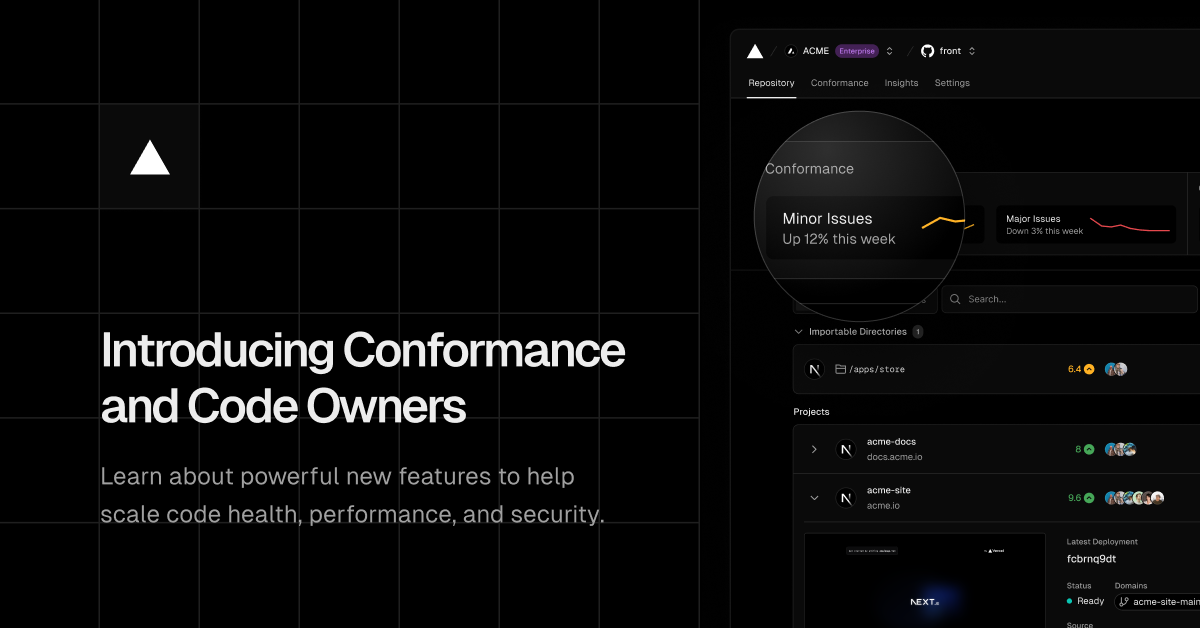
Vercel's Developer Experience Platform now includes Conformance for automated static analysis to detect and prevent performance, security, and code quality issues early in the development lifecycle and prevent them from ever reaching production. Code Owners provides framework-defined ownership for smart reviewer assignments and escalation protocols. A reimagined dashboard offers a unified view of project health, Conformance scores, and team responsibilities, enabling better tracking of technical debt and proactive issue resolution. These features are available in early private beta for Enterprises and can be used with Vercel regardless of where applications are hosted.

2 posts · 2023

Timeline

20232026
Feature trailQuiet since 2023

CSRF Protection

Vercel provides guidance on preventing CSRF attacks through anti-CSRF tokens, SameSite cookie attributes, Referer header checks, and the proper use of HTTP methods (GET for retrieval, POST for state changes). This ensures robust security for web applications by mitigating unauthorized actions performed on behalf of authenticated users. The SameSite attribute dictates when and how cookies are sent in cross-site requests, with options for Strict, Lax, and None, where None requires the Secure attribute.

3 posts · 2023

Timeline

20232026
Feature trailQuiet since 2023

Package Import Optimization

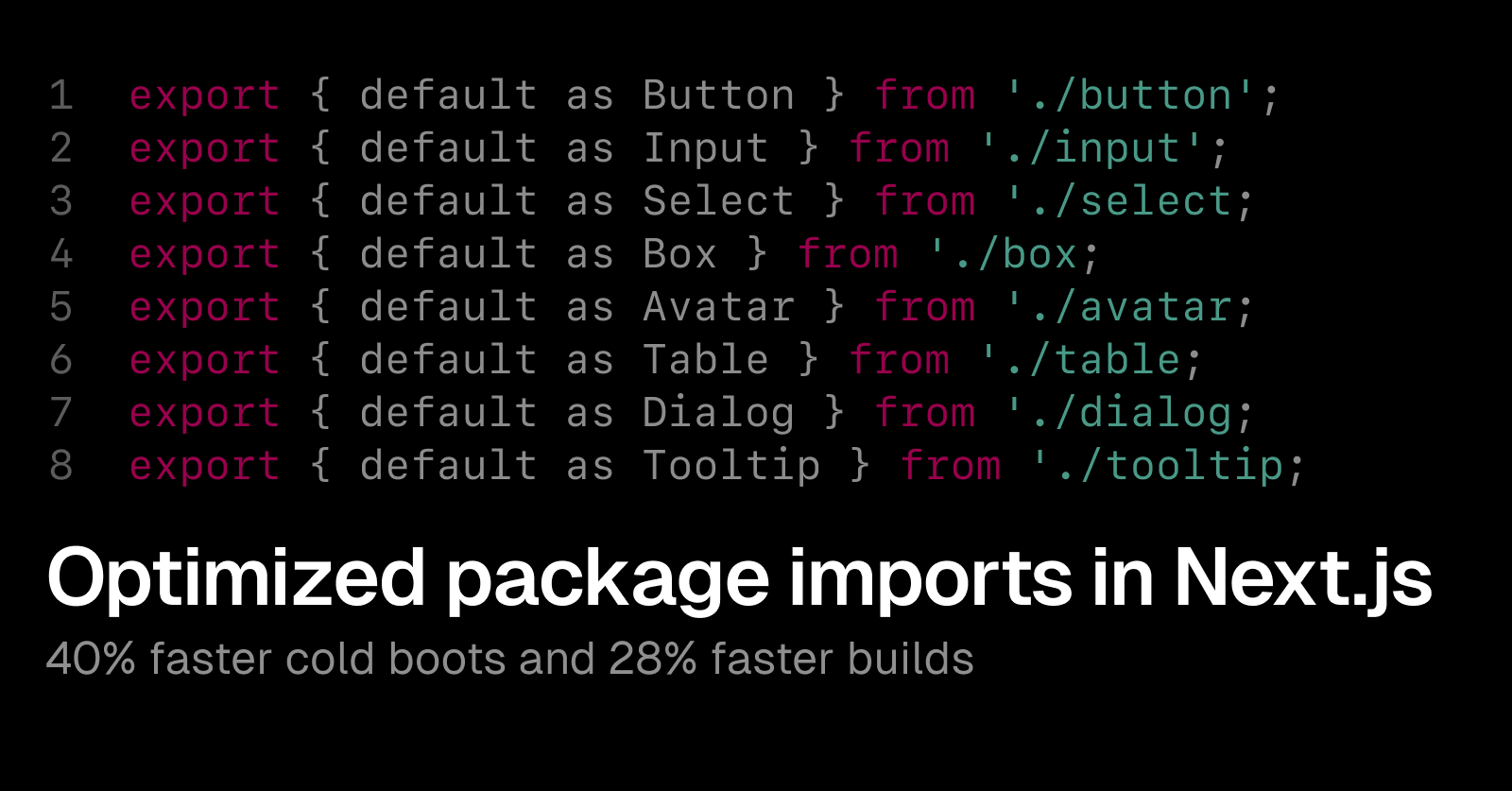
Vercel's Next.js has introduced `optimizePackageImports` to automatically optimize package imports, addressing performance issues caused by barrel files. This feature analyzes package entry points to directly import modules, bypassing the overhead of barrel files. It offers significant improvements in local development speed, production build times, and faster cold starts in serverless environments. The system also handles recursive barrel files and is pre-configured for common libraries, with potential for automatic opt-in in the future.

1 post · 2023

Timeline

20232026
Feature trailQuiet since 2023

Image Format Optimization

Vercel's platform provides comprehensive guidance and tooling for optimizing image formats on the web. This includes understanding compression algorithms (lossy vs. lossless), pixel density and resolution, bit depth, chroma subsampling (e.g., 4:4:4, 4:2:2), alpha channels for transparency, and metadata handling (including privacy concerns with EXIF data). The platform supports various image formats like JPEG, PNG, WebP, and AVIF, detailing their specific use cases and technical trade-offs. This post details how to build a performant image gallery site using the Next.js Image component and Cloudinary, focusing on fetching images at different sizes for various display contexts (grid, modal, individual routes) and generating blur placeholders for optimal UX. It also covers using the `next/image` component with properties like `placeholder`, `blurDataURL`, `width`, `height`, `loading`, and `sizes` for performance optimization.

4 posts · 2022–2023

Timeline

20222026
Feature trailQuiet since 2023

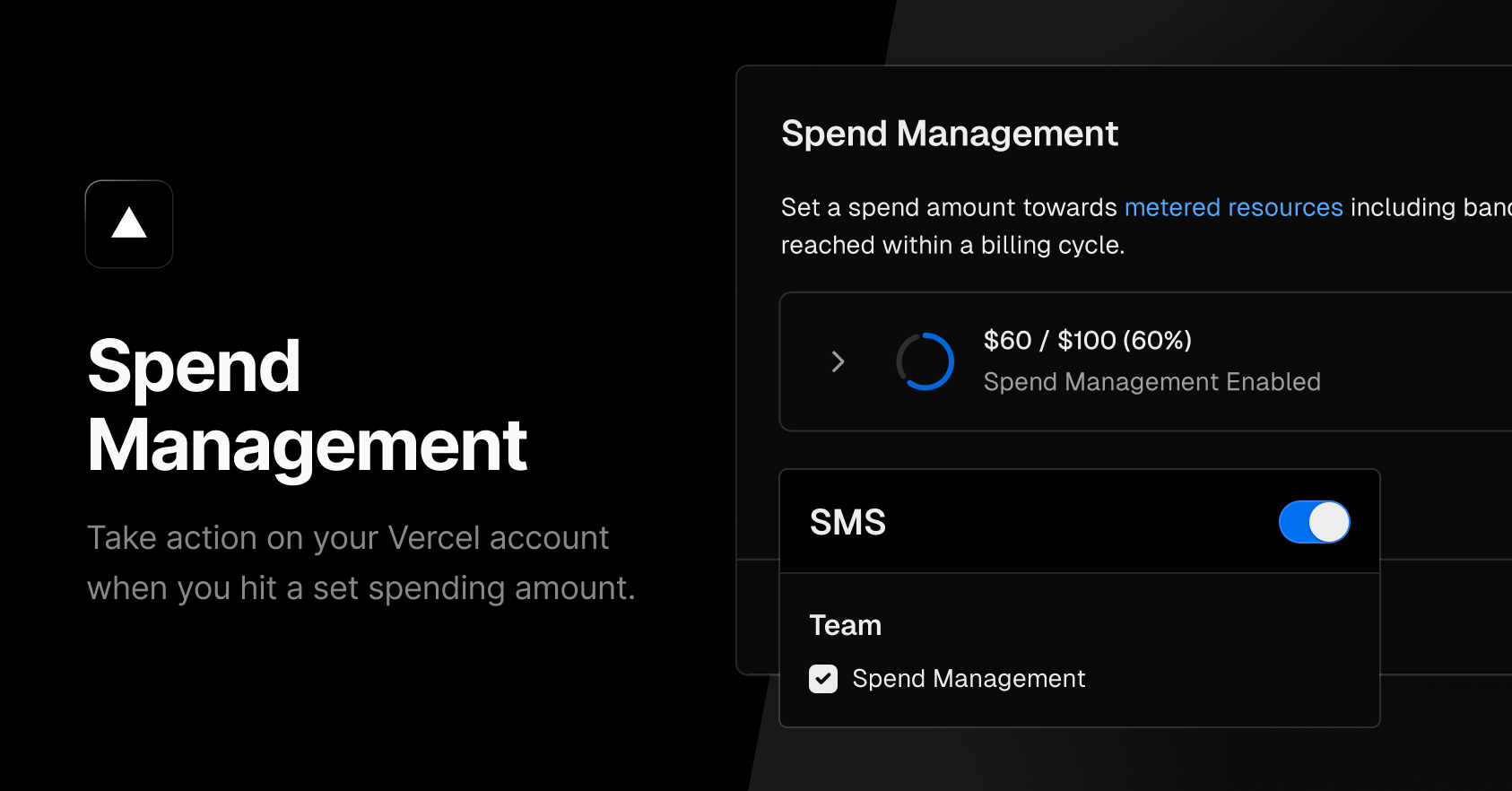
Spend Management and Usage Controls

Vercel's platform now offers comprehensive spend management features, including real-time usage alerts via email, web, and SMS, flexible webhooks for automated actions, and automatic project pausing when defined spend thresholds are met. This provides users with greater control over their infrastructure costs and prevents unexpected bills. Additionally, Vercel Functions now support longer execution durations (up to 5 minutes) for computationally heavy tasks like AI workloads, with safer default timeouts to mitigate uncontrolled usage.

1 post · 2023

Timeline

20232026
Feature trailQuiet since 2023

Web Font Optimization

Vercel's platform provides comprehensive guidance and tooling for optimizing web font loading and rendering. This includes leveraging `font-display` CSS properties, `size-adjust` and other font-face descriptors for layout shift prevention, and resource hints like `preconnect` and `preload` to reduce download times. The `next/font` module automates these optimizations by downloading fonts at build time, serving them locally, and automatically preloading them. This ensures minimal layout shift and improved Core Web Vitals. The platform also supports custom fonts without compromising performance.

3 posts · 2023

Timeline

20232026
Feature trailQuiet since 2023

React Tweet Embeds

react-tweet provides a performant way to embed tweets in React applications, significantly reducing client-side JavaScript compared to native embeds and supporting React Server Components. It reverse-engineers Twitter's Embed API for data fetching and rendering, eliminating the need for iframes and improving user experience by preventing layout shifts and ensuring instant visibility.

1 post · 2023

Timeline

20232026
Feature trailQuiet since 2023

DNS Record Management UI

Vercel's platform offers a Web UI and API for managing DNS records, simplifying custom domain configuration and programmatic assignment. This is integrated with Vercel Postgres for data storage and leverages the Edge Network for performance. This enables customers like Dub to efficiently manage thousands of custom domains for their users, handling reverse proxies and SSL certificates cost-effectively. The Platforms Starter Kit further simplifies multi-tenant application development by providing.

5 posts · 2019–2023

Timeline

20192026
Feature trailQuiet since 2023

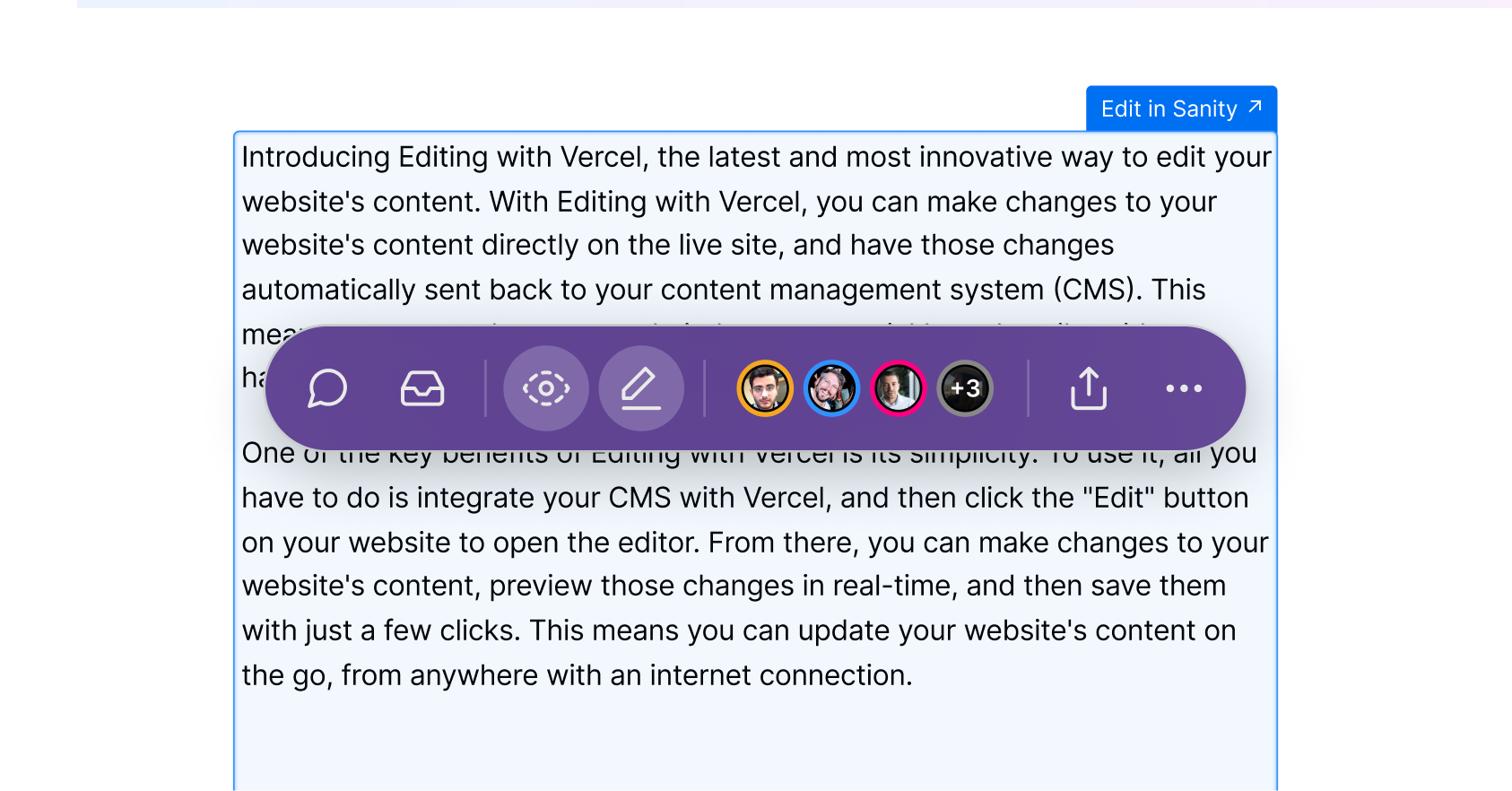
Visual Editing for Headless CMS

Vercel's Visual Editing feature, integrated with headless CMS platforms like Sanity and Builder.io, allows for direct click-to-edit content on preview deployments. This enables seamless side-by-side editing of Vercel Preview Deployments and the CMS interface, supporting Markdown, MDX, and JSON content. The integration enhances marketer productivity by providing a real-time editing experience similar to tools like Notion or Webflow, while maintaining developer benefits of headless CMS and Git-backed content. Vercel is working on an open specification for content source-mapping to enable any CMS, e-commerce system, or content source to support Visual Editing.

2 posts · 2023

Timeline

20232026
Feature trailQuiet since 2023

Svelte Framework Evolution

Vercel's platform continues to evolve its support for Svelte and SvelteKit, optimizing for new framework versions and enhancing performance. This includes deep collaboration with Svelte maintainers, integration with the Build Output API for features like Incremental Static Regeneration (ISR), streaming serverless function responses, dynamic image optimization, and Skew Protection. Recent improvements include enhanced toolbar support, improved analytics, and integrated feature flagging. Framework

3 posts · 2021–2023

Timeline

20212026
Feature trailQuiet since 2023

Interactive Product Tour

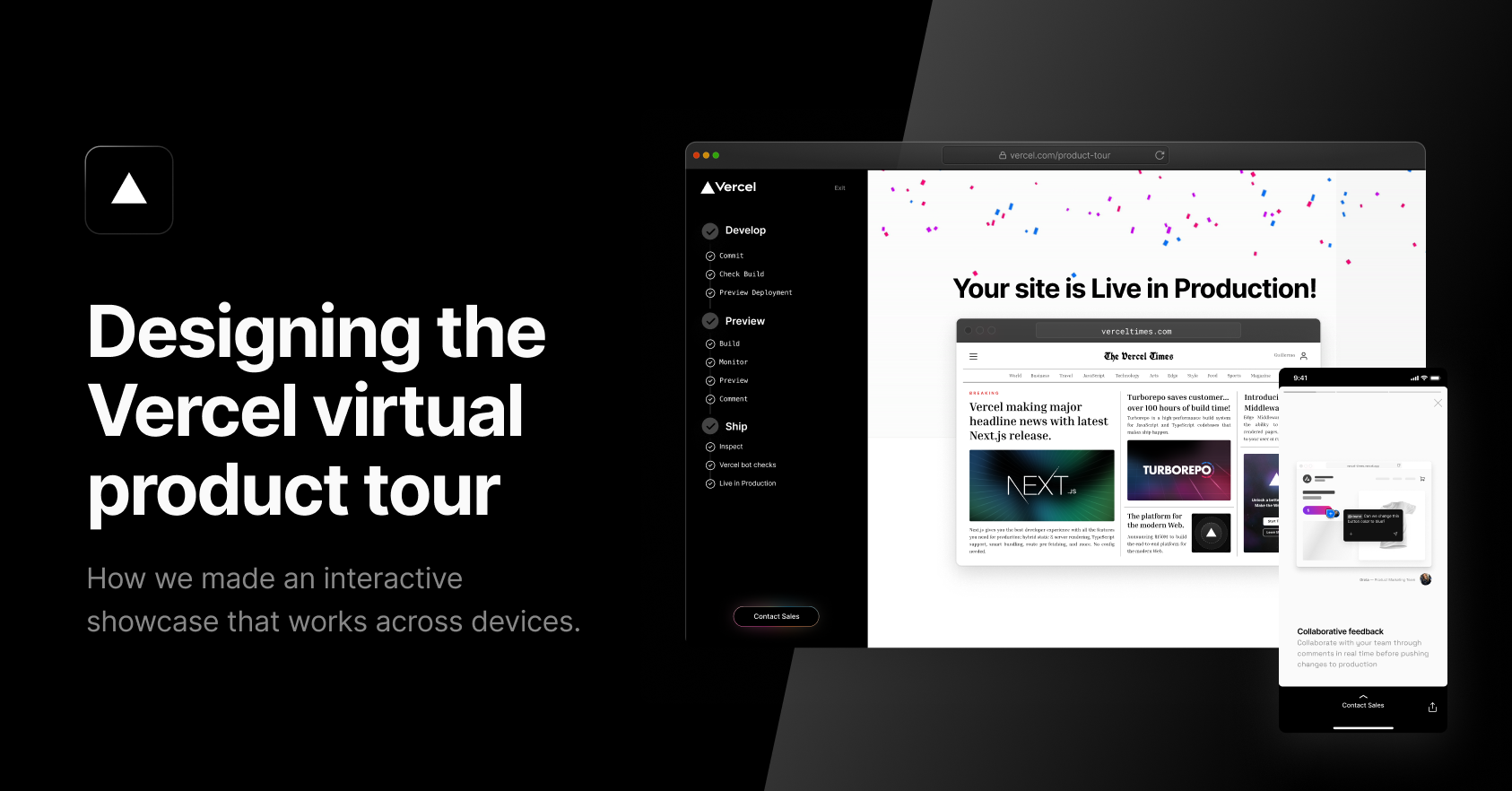
Vercel has developed an interactive virtual product tour to provide prospective users with a no-commitment experience of the Vercel platform. This tour breaks down complex product information into digestible, interactive slides, highlighting key features and backend functionalities. It offers personalized experiences for logged-in users and a mobile-friendly, social media-like card-based interface. Accessibility was a core consideration, with ARIA attributes and keyboard navigation implemented.

1 post · 2023

Timeline

20232026
Feature trailQuiet since 2023

Vercel Web Analytics

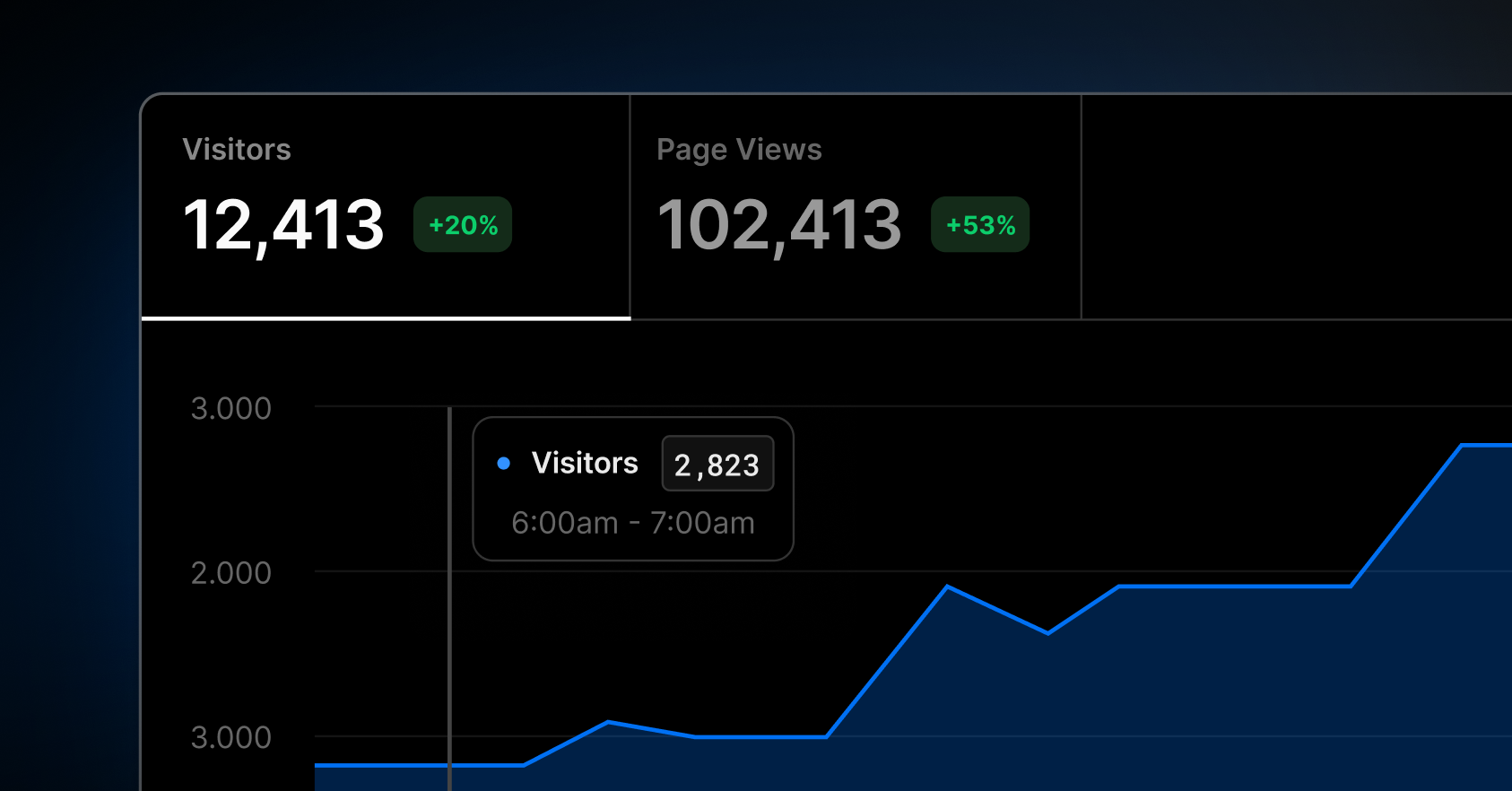
Vercel Web Analytics provides first-party, privacy-friendly tracking for page views, traffic analytics, and custom events. It uses a hash-based user identification method that discards data after 24 hours, eliminating the need for cookies and third-party scripts. The system is designed for minimal impact on page loading speed, being significantly smaller than Google Analytics. It integrates seamlessly with frameworks like Next.js, React, SvelteKit, Nuxt, and Remix via an `Analytics` component. Recent expansion includes support for Gatsby projects, enabling Real Experience Score (RES) collection and Core Web Vitals reporting with zero configuration.

4 posts · 2020–2023

Timeline

20202026
Feature trailQuiet since 2023

Cron Jobs

Vercel Cron Jobs provide a mechanism to schedule and automate tasks within Vercel Functions. This feature allows users to define specific execution times using cron expressions, enabling automated updates to third-party APIs, service monitoring, data backups, and metric collection. The initial release supports configuration via `vercel.json` and is being explored for native integration in frameworks like Next.js and SvelteKit. Limits and pricing are defined for different plans, with beta access being free.

1 post · 2023

Timeline

20232026
Feature trailQuiet since 2023

Vercel Comments for Preview Deployments

Vercel Comments enables teams to streamline feedback loops on preview deployments, allowing stakeholders to comment directly on UI elements and interactions. This feature was used to gather community feedback for the Next.js 13 documentation, resulting in a higher quality output. The system supports public commenting and provides context for product owners, leading to faster iterations and improved issue resolution. It integrates with Slack for synchronized discussions and can be configured with.

3 posts · 2022–2023

Timeline

20222026
Feature trailQuiet since 2022

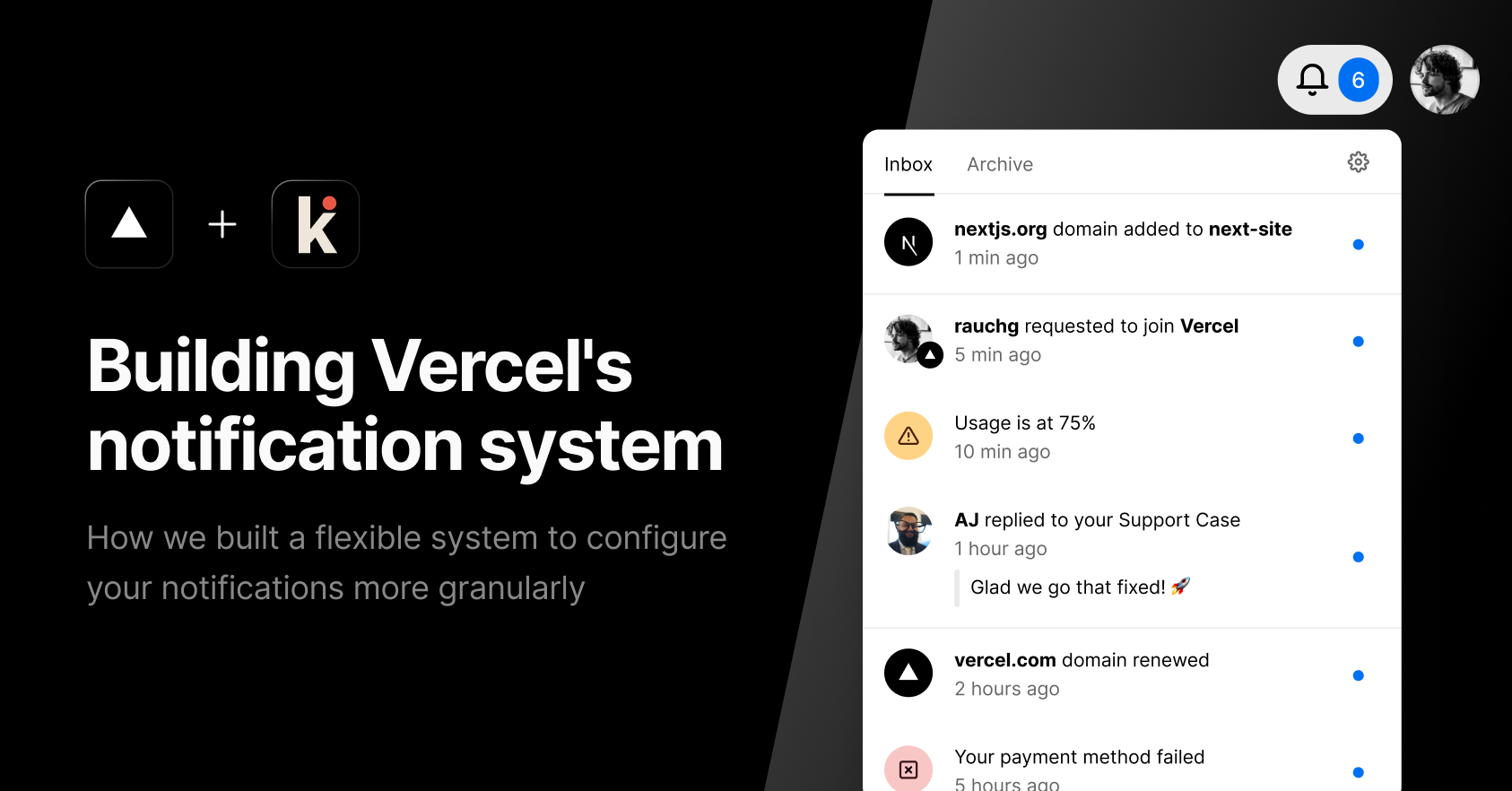
Notification System

Vercel's notification system, powered by Knock, now provides real-time, per-user in-app feeds, customizable multi-channel notifications (email, in-app), and batching for noisy events like domain misconfigurations. The system is observable through the Knock dashboard, enabling debugging and performance evaluation. New notification types include deployment failures and batched domain misconfiguration notifications. The platform supports dynamic updates to notification preferences without redeploying infrastructure.

1 post · 2022

Timeline

20222026
Feature trailQuiet since 2022

Framework Authentication Libraries

Auth.js is expanding beyond Next.js to support a wider range of frontend frameworks, starting with SvelteKit. This involves a new `@auth/core` library and framework-specific packages like `@auth/sveltekit` to provide a unified authentication solution across the web.

1 post · 2022

Timeline

20222026
Feature trailQuiet since 2022

Deployment Cancellation

Vercel's platform supports advanced deployment strategies, including the ability to cancel ongoing deployments. This feature allows users to prevent unnecessary builds and queued deployments by providing a 'Cancel' button on the dashboard. For teams requiring higher throughput, the 'Concurrent Builds' setting can be increased to manage multiple deployments simultaneously. Auto Job Cancellation ensures that for a given branch, only the latest commit's job is built, canceling previous jobs in the queue to expedite the deployment of the most recent changes.

2 posts · 2018–2022

Timeline

20182026
Feature trailQuiet since 2022

Web Accessibility Best Practices

Vercel provides guidance and features to improve web accessibility, including best practices for interactive element target sizes, semantic HTML, descriptive alternative text, informative input error messages, and reducing motion. This aims to make web applications usable by a wider audience, including users with disabilities.

1 post · 2022

Timeline

20222026
Feature trailQuiet since 2021

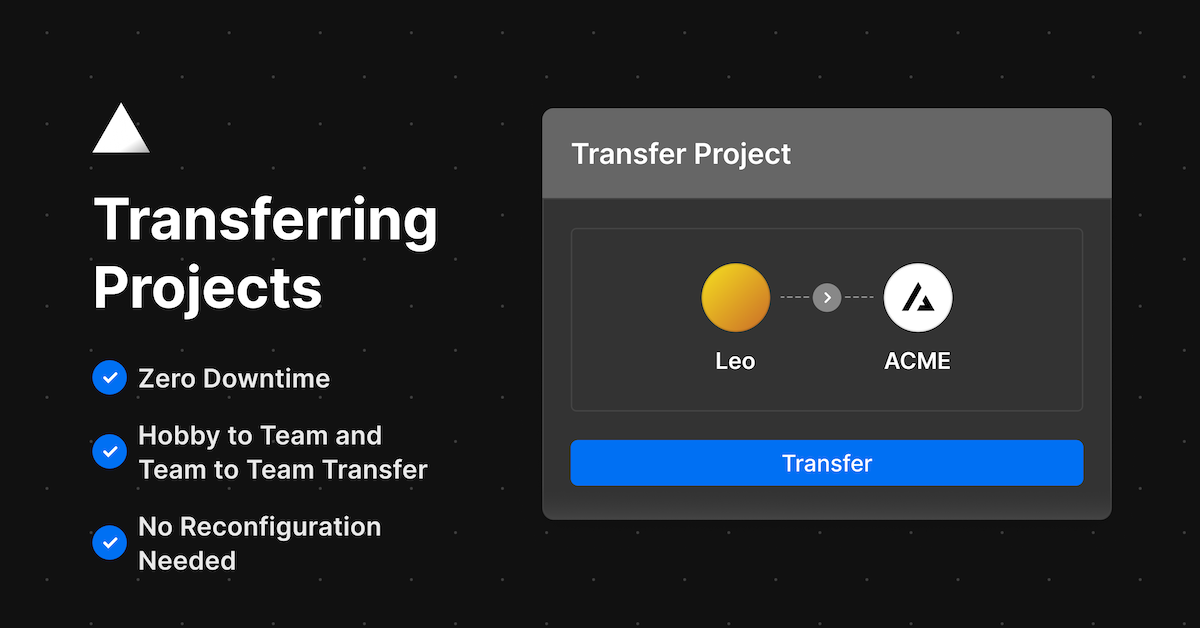
Project Transfer

Vercel's platform supports transferring projects between accounts and plans without downtime, preserving deployment settings and dependencies. This allows seamless upgrades from Hobby to Team plans and transfers between Teams, eliminating the need for redeployments.

1 post · 2021

Timeline

20212026
Feature trailQuiet since 2020

Project and Git Integration Enhancements

Vercel's platform allows for advanced project configuration and management, including improved Git repository importing with root directory specification, framework selection, and build command customization. Project settings can be fully adjusted post-deployment. The Vercel CLI also facilitates on-the-fly configuration during project setup and subsequent deployments. This enables deployment of non-JavaScript projects and projects located in subdirectories. Branch Domains allow assigning custom domains to specific branches, and the Deploy Summary integration provides automated previews of changed pages directly within pull and merge requests, including screenshots, direct links, deployment URLs, and commit SHAs. Persistent URLs for previews ensure that shared links remain valid even with subsequent commits, which is particularly useful for projects with login systems. This integration streamlines the code review process by providing immediate visual feedback on changes.

8 posts · 2019–2020

Timeline

20192026
Feature trailQuiet since 2020

Function Configuration

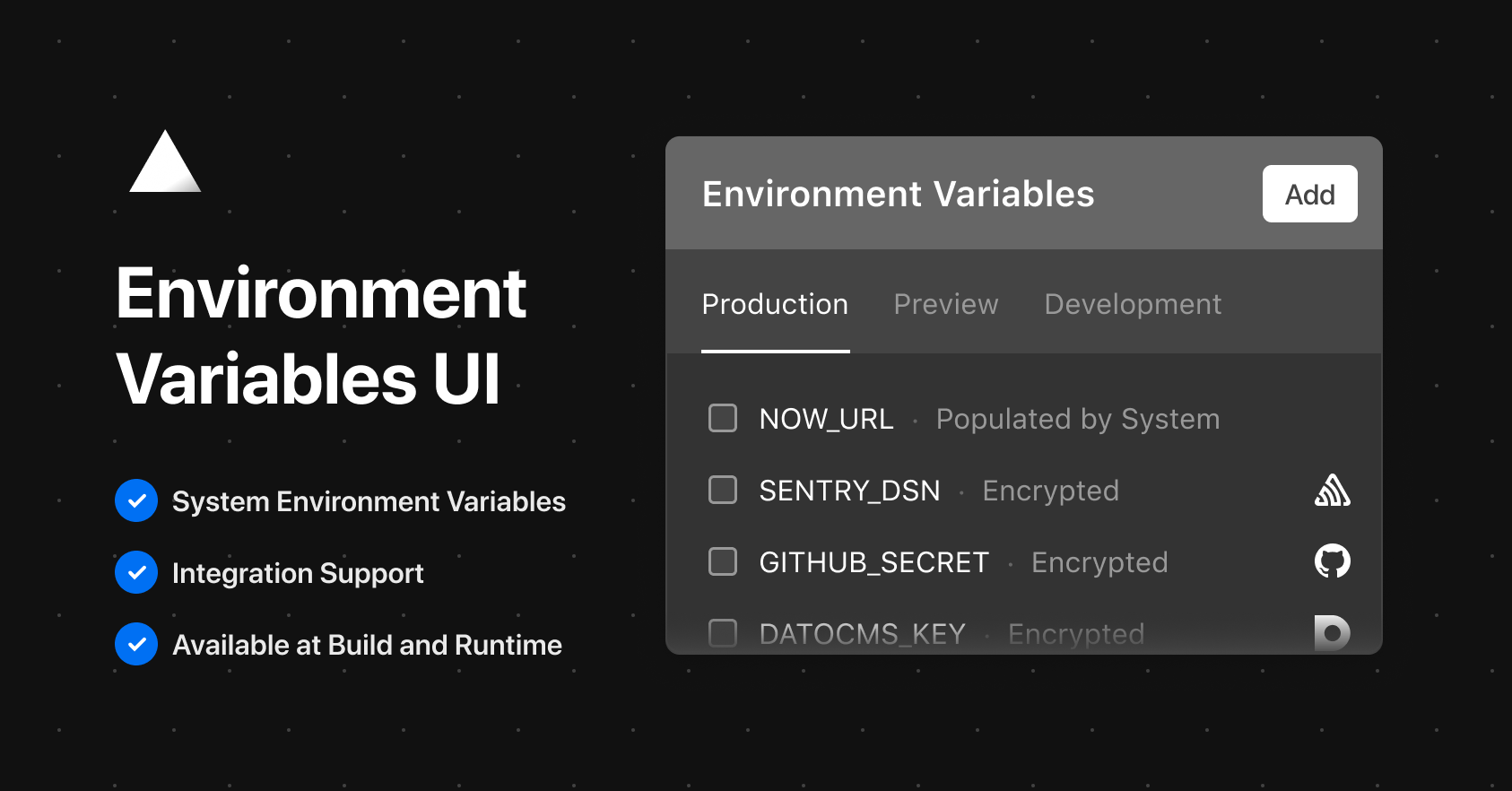
Vercel's platform allows configuring environment variables for Production, Preview, and Development environments directly through the Dashboard. The Vercel CLI provides commands like `vercel env pull` to download Development Environment Variables locally into a `.env` file, and `vercel env add`/`remove` for command-line management. System environment variables provided by the platform are also configurable.

3 posts · 2019–2020

Timeline

20192026
Feature trailQuiet since 2019

Deploy Hooks

Vercel Deploy Hooks allow triggering deployments based on any external event via POST requests. This enables automated rebuilds and deployments triggered by CMS updates, cron jobs, or other system events. The system includes debounced builds for reliability, straightforward hook revocation, and clear identification of hook-triggered deployments in the event timeline.

1 post · 2019

Timeline

20192026
Feature trailQuiet since 2019

Local Development Environment

Vercel CLI provides a unified, single-command local development experience that emulates the production environment. This tool supports hot-reloading for frontend frameworks and serverless functions, simplifying the workflow for various languages and static site generators.

1 post · 2019

Timeline

20192026
Feature trailQuiet since 2019

Automatic SSL Certificates

Vercel automatically issues and renews free wildcard SSL certificates for all deployed applications, leveraging Let's Encrypt's ACME protocol for both HTTP and DNS challenges. This eliminates manual SSL configuration for developers, ensuring all sites are HTTPS-enabled by default.

1 post · 2019

Timeline

20192026