Blogs
GitLab logo

GitLab

Engineering blog · about.gitlab.com/blog

1.4Kposts4this week0watchers

Feature trails

142
Feature trailActive

AI-Assisted Features

GitLab Duo Agent Platform is evolving to provide comprehensive cost control for agentic software engineering. New capabilities include matching models to tasks using GitLab-managed open-weight models (GLM 5.3, Kimi K3, MiniMax M3) for cost efficiency, reducing agent retries through GitLab Orbit which provides lifecycle context via a unified graph of code, work items, and deployments, and enabling detailed cost attribution with Duo Agent Platform Impact Analytics and the GitLab Credits dashboard. Credit and usage controls allow setting caps at subscription, group, or user levels to manage spend and prevent overages. The platform aims to provide a governed software factory architecture for agentic software engineering.

91 posts · 2018–2026

Timeline

20182026
Feature trailActive

Git Core Improvements and Contributions

GitLab actively contributes to the core Git project, focusing on performance enhancements, new features, and improved reliability. This includes developing and upstreaming new commands like `git-replay` for efficient in-memory rebasing, optimizing commit-graph operations for faster history traversal, and preparing Git for a more robust and scalable ref backend with the 'reftable' format. Additionally, GitLab has developed its own solution, GitLab Shell, to replace Gitolite, addressing issues with large binary file handling and improving the Git protocol's scalability for agentic workloads through a horizontally scalable backend and pluggable object storage interface.

56 posts · 2014–2026

Timeline

…20172026
Feature trailActive

Security Control Framework

GitLab's DevSecOps platform offers multiple container scanning approaches to detect vulnerabilities throughout the application lifecycle. Pipeline-based scanning uses Trivy to analyze images during CI/CD, with options for preconfigured merge requests or manual configuration. Container Scanning for Registry automatically scans 'latest' tagged images pushed to the registry. Multi-Container Scanning enables parallel scanning of multiple images within a single pipeline. Continuous Vulnerability Scan. The organization security dashboard provides a consolidated view of risk across all top-level groups and scanners, calculating a risk score based on vulnerability severity, age, KEV, and EPSS. It includes charts for vulnerabilities over time, by age, severity, and CWE, and supports third-party SARIF reports. The feature is in beta for GitLab.com Ultimate users and requires Organizations (Beta) to be enabled, Owner role access, active Advanced Search and Vulnerability Management, and completed security scans.

73 posts · 2018–2026

Timeline

20182026

Feature trailActive

AI-Assisted Features in DevSecOps

GitLab Duo is being integrated into the DevSecOps workflow to assist with code generation, testing, and security analysis. This post details how to use GitLab Duo to generate AI code, automatically create unit tests, identify vulnerabilities using Duo Chat, and deploy test reports using GitLab Pages. It also demonstrates integrating SAST scanning to detect security flaws in AI-generated code, enhancing the reliability and security of the development process. The platform is evolving to provide m

181 posts · 2018–2026

Timeline

20182026

Feature trailActive

Container Virtual Registry

GitLab Container Registry is evolving to support a Container Virtual Registry, which acts as a single endpoint to pull from multiple upstream container sources with built-in caching. This feature aims to reduce operational overhead, improve pipeline reliability, and centralize image management for organizations using multiple registries. It supports upstream registries with long-lived token authentication and pull-through caching, with future plans to include cloud provider registries requiring

22 posts · 2016–2026

Timeline

…20172026
Feature trailActive

Performance Optimization

GitLab CI/CD pipelines offer fine-grained permissions for job tokens, moving from Beta to General Availability. This enhancement allows maintainers to implement granular access controls for job tokens to API resources, adhering to the principle of least privilege. The initial release supports permissions for repositories, deployments, environments, jobs, packages, pipelines, releases, secure files, and Terraform state. This feature aims to reduce the attack surface, eliminate reliance on lon. This post details implementing continuous deployment with GitLab, focusing on artifact management strategies (versioning, retention, registry access), environment strategy, and deployment targets. It provides a step-by-step example for containerizing a simple HTML application, setting up a CI/CD pipeline with Docker, publishing to the GitLab Container Registry, and deploying to a virtual machine using SSH authentication. The pipeline includes stages for publishing, staging, and production deployments, with environment configuration for tracking.

70 posts · 2015–2026

Timeline

…20172026
Feature trailActive

On-Premises Deployment Considerations

GitLab 19.0 introduces significant changes to its deployment and dependency management for self-managed instances. Key updates include the replacement of NGINX Ingress with Gateway API and Envoy Gateway as the default networking component, and the removal of bundled PostgreSQL, Redis, and MinIO from the Helm chart. Support for PostgreSQL 16 is dropped in favor of PostgreSQL 17 as the minimum requirement. Additionally, support for Ubuntu 20.04 and Redis 6 is discontinued. The `heroku/builder:24` image replaces `heroku/builder:22` in Auto DevOps, and bundled Mattermost is removed from the Linux package. Support for SUSE distributions is also discontinued. These changes necessitate proactive migration and configuration updates for self-managed deployments to ensure compatibility and continued support.

45 posts · 2015–2026

Timeline

…20172026
Feature trailActive

DevOps Platform Total Cost of Ownership Modeling

GitLab is evolving its approach to help customers understand and manage the Total Cost of Ownership (TCO) of their DevOps platform. This includes providing detailed breakdowns of cost categories such as platform access, CI/CD consumption, AI usage, runner infrastructure, security and compliance tools, additional tools, support and services, internal operations, and migration/change costs. The goal is to enable transparency for stakeholders, identify cost drivers, and facilitate informed decision-making. This post details a worksheet for estimating annual TCO, emphasizing the importance of modeling cost drivers independently and considering the hidden costs of tool sprawl. It also provides best practices for reducing platform TCO, such as right-sizing licenses, eliminating unnecessary CI/CD work, and building flexibility into AI spend.

2 posts · 2019–2026

Timeline

20192026
Feature trailActive

Community Growth and Contribution Milestones

GitLab has improved its open source community growth and contribution milestones by developing and implementing a semi-automated onboarding solution. This solution leverages GitLab's own tools, including issue templates, scheduled pipelines, webhooks, GLQL, and project mirroring, to streamline the contributor journey. Key enhancements include personalized onboarding issues, standardized responses via comment templates, immediate pipeline triggers for access requests, automated nudges, and the integration of new features like Scala language support for Orbit and GitLab Duo, instance-level enforcement for Secret Push Protection, configurable merge train pipeline limits, supported-platform details for container image indexes, and improved screen reader context for documentation pages. The platform also introduced new predefined variables (`CI_TRACEPARENT`, `CI_TRACESTATE`) for W3C Trace Context in CI/CD jobs, enabling better correlation across pipelines and distributed systems. The User Applications REST API and Token Information API have been enhanced for programmatic management of OAuth applications and SCIM tokens, respectively, improving automation around token inventory and governance.

5 posts · 2022–2026

Timeline

20222026
Feature trailActive

Custom Compliance Frameworks

GitLab's DevSecOps platform integrates with HackerOne to streamline vulnerability management. Security researchers' findings are automatically converted into GitLab issues, enabling development teams to address them within their existing workflow. This bi-directional sync improves alignment between development and security teams, accelerates remediation, and enhances security visibility. GitLab also offers built-in security scanning tools like SAST, DAST, and dependency scanning, which can be in

40 posts · 2019–2026

Timeline

20192026
Feature trailActive

GitLab CI and Distributed Builds

GitLab CI/CD is continuously evolving to enhance automation, security, and efficiency in software delivery. This includes best practices for pipeline implementation, advanced strategies like AI-assisted pipeline generation, and migration guides. The focus remains on enabling teams to develop and deliver software in an agile, automated, and efficient manner, with a strong emphasis on security and compliance throughout the pipeline.

287 posts · 2013–2026

Timeline

…20172026
Feature trailActive

AI Data Usage and Privacy Controls

GitLab Duo Agent Platform enhances DataOps by automating dbt model generation, including source and workspace models, complete with configurations, tests, and documentation. This significantly reduces manual effort and time for data engineers. The platform is exploring direct integrations with data platforms like Snowflake via Model Context Protocol (MCP) to further automate data structure understanding and model generation. Quality validation is integrated through CI pipelines and AI-generated test queries.

7 posts · 2021–2026

Timeline

20212026
Feature trailActive

Node.js Sandboxing Security

GitLab's DevSecOps platform offers a suite of security testing tools including SAST, secret detection, DAST, dependency scanning, container scanning, license management, and code quality analysis. These tools integrate into CI/CD pipelines and provide inline feedback within merge requests, with consolidated reports available via security dashboards. Future enhancements include IAST, fuzzing, an auto-remediation feature, and an expanded vulnerability database. The platform is evolving to support more advanced security research and tooling, including the discovery and analysis of critical sandbox escape vulnerabilities in widely used libraries like vm2. This involves leveraging AI tools for vulnerability detection and providing detailed guidance on mitigation and best practices for sandboxing.

1 post · 2026

Timeline

Feature trailActive

GitLab Workhorse

GitLab Workhorse has evolved from a small Go program addressing Git clone timeouts into a critical component handling a significant portion of HTTP requests to GitLab. It now manages Git HTTP requests, download zip buttons, Git LFS, CI build artifacts, and acts as a smart proxy for all HTTP traffic, simplifying NGINX configurations and improving performance for various features. This includes replacing Gitolite with GitLab Shell for managing Git repositories and SSH authorized keys, reducing complexity. Bundle URI is introduced to offload Git clone load from Gitaly servers by allowing Git to pre-download bundled repositories from object storage before calling Gitaly for remaining objects.

14 posts · 2013–2026

Timeline

…20172026
Feature trailActive

Large Binary Versioning

GitLab now supports Git LFS for versioning large binary files, building upon previous support for Git Annex. The implementation is based on a forked and adapted Git LFS reference server. This post details a tool, 'Git Much Faster,' that benchmarks and optimizes Git clone operations for large repositories, achieving significant reductions in clone times (up to 93%) and disk space usage (up to 98%) through techniques like disabling compression, increasing HTTP post buffers, shallow clones, partial clones with blob filtering, and sparse checkout. It also compares these custom optimizations against Git's Scalar tool, demonstrating superior performance. The optimizations reduce load on the end-to-end stack, including Gitaly Cluster. Use cases span embedded development, enterprise monorepos, media-heavy projects, and CI/CD pipelines. The tool provides Terraform infrastructure for AWS deployment for production-grade testing.

12 posts · 2015–2026

Timeline

…20172026
Feature trailActive

UI Navigation and Layout Redesign

GitLab is evolving its UI navigation and layout to improve usability and screen real estate. This includes neutralizing actions and controls, enhancing instance theming, updating the neutral palette, and introducing a new bloom-style glow visual element for GitLab Duo interactions. The goal is to create a more intuitive and efficient user experience, preparing for future intelligent, self-surfacing UI elements. This iteration focused on the continuous deployment area, enhancing the environment list view with immediate visibility of critical deployment information, improving deploy keys filtering with a dedicated search field, and streamlining Kubernetes agent registration and status visibility. Additional usability enhancements include improved Kubernetes pod search, better Flux status visibility with a 'stopped' badge, clearer release information for deployments, streamlined environment search, and enhanced error message display for Flux details.

34 posts · 2015–2026

Timeline

…20172026
Feature trailActive

UI Navigation and Layout Redesign

GitLab has undergone significant UI navigation and layout redesigns to improve usability and screen real estate. This includes neutralizing actions and controls, enhancing instance theming, updating the neutral palette, and introducing a new bloom-style glow visual element for GitLab Duo interactions. The goal is to create a more intuitive and efficient user experience, preparing for future intelligent, self-surfacing UI elements.

1 post · 2015–2026

Timeline

…20172026
Feature trailActive

AWS CodeStar Connections Integration

GitLab integrates with AWS CodeStar Connections, enabling native integration with various AWS services like CodePipeline, CodeBuild, SageMaker MLOps Projects, and CodeDeploy. This integration acts as a utility layer, simplifying the process for other AWS services to connect with GitLab. This enhances the experience for co-customers using both GitLab and AWS together. This post introduces OIDC modules for secure authentication between GitLab CI and Google Cloud, leveraging Terraform and CI templates.

4 posts · 2023–2026

Timeline

20232026
Feature trailActive

Terraform Security and Supply Chain

GitLab CI/CD is evolving to support OCI images as the source of truth for GitOps deployments, moving beyond traditional Git repositories. This enhances delivery control, security through signing and verification, and simplifies manifest management. The platform integrates with Flux CD and Sigstore Cosign, allowing Kubernetes manifests to be pushed and signed as OCI artifacts in GitLab's Container Registry. This enables automated deployments with features like approvals and deploy freezes, and provides a more robust alternative to cloning entire Git repositories for deployments.

7 posts · 2019–2026

Timeline

20192026
Feature trailActive

Threat Modeling Framework

GitLab is establishing and iterating on a formal threat modeling process for its products, including the Kubernetes Agent. This process has evolved from initial security assessments to a dedicated activity with structured templates and dedicated repositories. The goal is to identify and mitigate security risks early in the development lifecycle, with plans for broader adoption across engineering teams and public sharing of threat models. The User Attestation Module (UAM) has been introduced as a

5 posts · 2020–2026

Timeline

20202026
Feature trailActive

GitLab Secrets Manager

GitLab is developing a native secrets manager to simplify secret management across the DevSecOps platform. The initial release will focus on CI workflows, with plans to expand to all GitLab workflows. It will support an open-source secrets manager (OpenBao) and integrate with existing security capabilities like secret detection, access token management, compliance audit logging, and secured artifacts. The goal is to reduce complexity, lower risk, and provide a centralized, cloud-agnostic solution, while continuing to support third-party integrations.

17 posts · 2018–2026

Timeline

20182026

Feature trailActive

Code Review Workflow

GitLab is enhancing its code review process by integrating automated reviewer suggestions directly into merge requests using a machine learning algorithm that analyzes the changes in an MR and a project's contribution graph. This evolution moves away from a separate Slack-based tool, addressing workflow friction and availability issues. The goal is to ensure more even distribution of reviews, prevent knowledge silos, and improve the efficiency of the review process by making it an integral part of the workflow. This post introduces GitLab Duo with Amazon Q, an agentic AI solution that performs comprehensive code reviews, analyzes code changes, and provides actionable feedback on bug detection, readability, syntax errors, and adherence to coding standards.

30 posts · 2015–2026

Timeline

…20172026
Feature trailActive

Browser-based DAST Analyzer

GitLab DAST continues to evolve, with this post detailing its comprehensive capabilities, including runtime vulnerability detection, seamless CI/CD integration for shift-left security, and compliance assurance. It elaborates on passive vs. active scanning methodologies and provides detailed guidance on authentication configuration for achieving complete security coverage. The post also highlights the Tanuki Shop demo application as a practical example of DAST implementation within CI/CD pipelines.

13 posts · 2019–2026

Timeline

20192026
Feature trailActive

DevSecOps Platform Evolution

GitLab's DevSecOps platform continues to evolve, integrating security throughout the software development lifecycle. This includes addressing the complexities of software supply chain security beyond traditional dependency scanning, encompassing source, build, artifact, deployment, and tool security. The platform is also adapting to the emerging risks introduced by AI, such as model supply chain attacks and insecure AI-generated code. Key efforts focus on bridging the gap between developer velocity and security, with recent advancements including secure package publishing with signing and attestation using Sigstore's Cosign, and automated vulnerability scanning.

9 posts · 2018–2026

Timeline

20182026
Feature trailActive

FIPS Package Dependency Management

GitLab enhances its DevSecOps platform with AI/ML capabilities, including the introduction of GPU-enabled runners on GitLab.com. These runners accelerate ModelOps and HPC workloads, such as training and deploying large language models (LLMs). The post details how to use these runners, including selecting appropriate Docker images with NVIDIA CUDA drivers and verifying GPU functionality. It provides examples for Python model training and scientific simulations, and a more advanced example of AI-assisted development. Additionally, FIPS packages are evolving to use distribution-provided curl and OpenSSL for improved security and maintainability, shifting responsibility for curl security updates to the customer.

28 posts · 2019–2026

Timeline

20192026
Feature trailActive

CI/CD Carbon Measurement

GitLab CI/CD is enhanced to integrate carbon measurement tools like Eco CI and Carmen. These tools provide visibility into the energy consumption and carbon emissions of CI/CD jobs and infrastructure components. This enables engineers to identify resource-intensive jobs, track emissions trends, and make data-driven decisions to reduce their environmental impact. The integration aims to make carbon footprint a measurable aspect of DevOps practices, aligning with growing sustainability expectations and regulations.

1 post · 2026

Timeline

Feature trailActive

Log Management and Observability

GitLab's observability capability is open-sourced and relies on open APIs like Prometheus and OpenTelemetry. It is built into the GitLab DevOps platform to help users use the capability right away within their native workflow. The vision is to make every GitLab project observable by default, with features that are easy to operate without specialized, expert skills. Teams can connect the dots between ever-changing systems and their impact on user experience. This post introduces Distributed Tracing, which allows engineers to identify the source of application performance issues by analyzing the timing of each operation and any errors as they occur. Traces are composed of spans, representing individual operations, and are particularly valuable for microservices architectures. Data is collected using OpenTelemetry, ingested and retained at scale with ClickHouse and Kubernetes, and analyzed through an advanced user interface including a Trace Explorer with filtering, error highlighting, RED metrics, and a timeline view. GitLab engineers are using Distributed Tracing to debug issues in the GitLab Agent for Kubernetes and optimize build pipeline duration by identifying performance bottlenecks.

38 posts · 2014–2026

Timeline

…20172026
Feature trailActive

GitLab.com Pricing and Monetization Strategy

GitLab is evolving its seat control features to provide more predictable costs and prevent unexpected overages. Recent improvements to restricted access enhance its integration with identity providers (SAML, SCIM, LDAP, OIDC), allowing users to be provisioned with a non-billable Minimal Access role when no paid seats are available. Dormant users are now placed in a pending approval state instead of being silently reactivated, preventing silent overages. Clearer warnings, banners, and notifications are provided to administrators and group owners.

13 posts · 2014–2026

Timeline

…20172026
Feature trailActive

Bug Triage and Reporting

GitLab has established a structured approach to handling bugs, differentiating between security, regression, and feature bugs. This system aims to prioritize fixes based on severity and impact, encouraging community contributions for identification and resolution. The process involves clear channels for reporting different bug types, from direct contact for security vulnerabilities to the issue tracker and feedback channels for other bugs. This framework is crucial for maintaining the stability and reliability of the platform.

36 posts · 2014–2026

Timeline

…20172026
Feature trailActive

Issue Tracking and Merge Request Workflow Integration

GitLab's Agile planning capabilities are enhanced to support SAFe ceremonies by mapping SAFe concepts (Epic, Capability, Feature, User Story, Task, Team, Sprint, PI) to GitLab's work item hierarchy (Epics, Issues, Tasks) and organizational structure (Groups, Subgroups, Projects). This allows for end-to-end traceability from strategy to execution within a single DevSecOps platform. PI Planning is supported through Roadmap and Epic boards, Refinement via Epic boards and drawer views, Sprint Planni. The new epic experience introduces assignees, health status, time tracking, ancestry view, condensed descriptions, and custom colors for epics. It is built on a unified Work Items framework for consistency across epics, issues, and tasks, and future plans include templates, custom fields, configurable statuses, project-level epics, cloning, moving between groups/projects, and milestones.

65 posts · 2015–2026

Timeline

…20172026
Feature trailActive

GitLab Installation and Updates

GitLab's installation and update processes are continuously refined to support a wider range of hardware and operating system configurations. This includes efforts to enable official support for ARM64 architectures and provide optimized installation methods for platforms like Raspberry Pi OS, even when official support is still in development. The omnibus-gitlab package is the primary method for installation. This post details a migration of the package hosting system for `packages.gitlab.com` to extend the Omnibus package signing key expiration to 2025, ensuring continued integrity checks for package distribution.

47 posts · 2014–2026

Timeline

…20172026
Feature trailActive

GitLab Serverless

GitLab is decomposing its monolithic PostgreSQL database into independent databases, starting with the separation of CI-related data. This involved extensive planning, proof-of-concept work, and the development of tools and documentation to manage cross-database dependencies, such as cross-join detection, cross-database transaction detection, and loose foreign keys. The project leveraged Rails' multi-database support and addressed challenges like mirroring data. This post details a major version of this decomposition, specifically the general availability of Gitaly on Kubernetes, allowing for a fully Kubernetes-native GitLab deployment and consolidation of infrastructure by moving Gitaly into the cluster. This eliminates the need to maintain and monitor a separate VM fleet alongside Kubernetes nodes.

2 posts · 2018–2026

Timeline

20182026

Feature trailActive

High Availability

GitLab Geo is evolving its replication framework to enable teams across GitLab to add new data types with reduced duplication and effort. This includes a new Replicator class and Replicator strategy concept for blobs and Git repositories, and a more flexible event system. The goal is to minimize lag time for Geo support, increase awareness in other teams, and influence the planning of new features to be Geo-friendly from the start. Initial implementation focused on replicating new Package files. GitLab now backs its 99.9% availability commitment with service credits for Ultimate customers on GitLab.com and GitLab Dedicated. When monthly availability falls below this threshold, eligible customers receive credits toward future invoices. This commitment ensures your DevSecOps workflows have the reliability they need.

17 posts · 2013–2026

Timeline

…20172026
Feature trailActive

SAML Single Sign-On (SSO) Integration

GitLab continues to enhance its authentication and authorization capabilities, with a significant focus on integrating with enterprise identity management systems. This includes the ongoing development and refinement of SAML (Security Assertion Markup Language) support for Single Sign-On (SSO), and the integration with SCIM for automated user provisioning and deprovisioning. This post details the practical implementation of SAML and SCIM with Google Workspace, providing step-by-step guidance on configuring group synchronization for automatic role mapping.

15 posts · 2014–2026

Timeline

…20172026
Feature trailActive

AI Data Usage and Privacy Controls

GitLab's approach to AI data usage and privacy is to not collect or train on customer data, regardless of subscription tier. This contrasts with Atlassian's new policy to collect metadata and in-app content by default for AI training, with opt-out only available for Enterprise customers. GitLab emphasizes unconditional data commitments, transparency, auditability, and separation of customer data from vendor AI training. For organizations requiring on-premises AI processing, GitLab Duo Agent Platform is available with Self-Managed deployments, allowing integration with self-hosted AI models where prompts and code never leave the customer's environment. GitLab also provides IP indemnification for Duo-generated output.

1 post · 2026

Timeline

Feature trailActive

IDE Attack Prevention

GitLab's Security Operations team has developed custom controls to detect and prevent malware campaigns that leverage IDE tasks for distribution, specifically addressing the 'Contagious Interview' threat campaign. This involves low-level detection mechanisms focusing on subprocess execution within IDEs like VS Code, aiming to protect GitLab workstations and customers from malicious code execution that can lead to infostealers, credential theft, and persistence establishment. The detection leverages custom scripts to decode malware from binary data in a fake font file, and abuses legitimate services like Vercel to host payloads. The team also identified and banned accounts used for these campaigns, and observed distinct subgroups of activity operating in parallel.

6 posts · 2021–2026

Timeline

20212026
Feature trailActive

Test Result Upload Automation

GitLab CI/CD capabilities are enhanced with automated test result uploads from pipelines to external test management platforms like QMetry, enabling end-to-end traceability, faster feedback loops, and compliance adherence. This builds upon existing CI/CD features for running tests and generating reports. The integration of Hurl allows for continuous testing of web apps and APIs directly within GitLab CI/CD jobs, enabling automated HTTP request testing, response assertion, and integration with cu

7 posts · 2018–2026

Timeline

20182026
Feature trailActive

GitLab Feature Flags

GitLab's feature flags capability, integrated with the Unleash SDK, allows for decoupling deployment from release. This tutorial demonstrates how to use the Unleash Python SDK to connect to GitLab's Unleash-compatible API for real-time control of feature flags in a Flask application. It covers setting up flags, understanding strategies (like percent rollout and user IDs), obtaining credentials, integrating the SDK, and checking flag status locally for immediate application behavior changes without network calls per check. The integration uses a project-specific Instance ID for read-only access to flag state.

4 posts · 2019–2026

Timeline

20192026
Feature trailActive

Issue and Merge Request Workflow Enhancements

GitLab's Agile planning experience is unified under a 'Work Items' framework, consolidating epics, issues, and other work item types into a single list view. This framework is designed to provide a consistent user experience, enable deeper planning capabilities like hierarchy views and consolidated boards, and allow for customizable work item types. Saved views enable users to store and reuse customized list configurations for efficient reporting and consistent team workflows. This evolution aims to provide a more powerful, flexible, and user-friendly Agile planning experience by unifying issues and epics, and paving the way for new planning object types. Tasks have been introduced as the first work item type to leverage this framework, providing valuable feedback for future iterations.

33 posts · 2014–2026

Timeline

…20172026
Feature trailActive

SSH Key Management and Authentication

GitLab has focused on simplifying user authentication and access management. This includes enhancing SSH key usage by providing screencasts to demonstrate ease of use and introducing an alternate `git+ssh` port (443) on GitLab.com to circumvent network restrictions. This post details a coordinated effort with Yubico to integrate hardware security keys (YubiKeys) for two-factor authentication, enhancing security beyond SMS or push notifications by leveraging the U2F protocol for phishing and Man-in-the-Middle attack resistance. Passkeys are now available for passwordless sign-in or as a phishing-resistant two-factor authentication (2FA) method, utilizing WebAuthn technology and public-key cryptography. They work across desktop browsers, mobile devices, and FIDO2 hardware security keys.

14 posts · 2016–2026

Timeline

…20172026
Feature trailActive

Documentation Localization Infrastructure

GitLab is evolving its approach to documentation management by adopting a comprehensive 'docs-as-code' workflow. This involves using GitLab itself for planning, creating, reviewing, editing, and publishing documentation. The process leverages GitLab issues and issue boards for planning, merge requests for collaborative feedback and review, and a review app feature for previewing changes. Automated testing is integrated into the CI/CD pipeline to ensure content quality, and the final HTML output is dynamically generated using Hugo. This infrastructure is now being extended to support localization, starting with Japanese, by integrating new folders within the existing English content structure (`doc-locale/ja-jp`). This architecture keeps translations alongside source content, enabling version control, collaborative review, and automated quality checks. An AI-assisted translation workflow with human post-editing is employed, balancing speed and quality. Technical challenges include preserving complex markdown syntax, establishing English fallback mechanisms, dynamically adjusting navigation and linking with anchor IDs, and extending CI/CD pipelines for localized content testing. A centralized translation request system orchestrates the workflow, monitors English files, routes for translation, and creates translation merge requests. Future priorities include enhancing search experience for localized users and accelerating the continuous localization workflow.

5 posts · 2016–2025

Timeline

…20172026
Feature trailActive

Project Hosting and Collaboration Alternatives

GitLab's integration management capabilities are evolving to streamline the connection of third-party applications with GitLab projects. Previously, integrations were managed only at the project level, requiring repetitive configuration for each project. The introduction of group-level integration management allows for simultaneous configuration of integrations across all projects within a group, saving significant administrative time and effort. This feature also enhances security by enabling better control over access and permissions. This post details the benefits of consolidating to a single tool for improved collaboration, security, and administrative overhead reduction, highlighting GitLab Enterprise Edition's capabilities for project sharing and permission management.

23 posts · 2014–2025

Timeline

…20172026
Feature trailActive

DevOps Platform Evolution

GitLab's DevOps platform is being extended to support mainframe development environments through a partnership with IBM. This involves providing native z/OS Runner support for CI/CD pipelines that execute directly on IBM z/OS infrastructure. The solution aims to unify source code management by replacing legacy library managers with GitLab's repository system, and integrates with IBM Developer for z/OS Enterprise Edition (IDzEE) for dependency-based builds, automated code scanning, and debugging. This enables end-to-end visibility across mainframe and distributed environments, facilitating incremental modernization and hybrid cloud strategies.

80 posts · 2014–2025

Timeline

…20172026
Feature trailActive

Kubernetes Terminology and Concepts

GitLab is migrating its GitLab.com services to Kubernetes, aiming for improved scaling, deployments, and resource utilization. This involves routing traffic to different endpoints based on workload characteristics, configuring services with the unmodified GitLab Helm chart, and managing Kubernetes configuration using Terraform and Helm within GitLab itself. Lessons learned include managing cross-AZ traffic costs, optimizing resource requests and limits for pod scaling, enhancing metrics, and integrating real-time cluster data visualization via the Watch API and WebSocket aggregation.

17 posts · 2016–2025

Timeline

…20172026
Feature trailActive

CI/CD Variables Management

GitLab CI/CD is evolving its variable management to enhance security and maintainability by introducing pipeline inputs as the preferred method for passing parameters. This shift addresses security concerns related to unrestricted pipeline variables, lack of explicit declaration, and type safety. Pipeline inputs offer explicit declaration, type safety, built-in validation, and improved security against variable injection attacks. The platform now recommends restricting pipeline variables, particularly for sensitive information, and emphasizes the use of protected and masked variables. This post details the scopes of CI/CD variables (project, group, instance) and how to define and use them, along with predefined variables and best practices for secure management.

5 posts · 2020–2025

Timeline

20202026
Feature trailCooling

Data Importers

GitLab is continuously developing and improving its data importers to ensure a seamless and reliable experience for migrating data into GitLab or between GitLab instances. The team is focused on expanding the types of objects that can be migrated and enhancing the automation of the process. Group migration is the preferred method for its efficiency and ability to import multiple groups at once, while file-based import/export remains available for air-gapped or low-connectivity environments. Jira2Lab specifically addresses large-scale Jira migrations, handling complex custom fields, workflows, and integrating CI/CD pipelines.

2 posts · 2019–2025

Timeline

20192026
Feature trailCooling

Pipeline Failure Notifications

GitLab now sends notifications when a pipeline is fixed, in addition to when it fails. This feature aims to reduce the need for developers to constantly monitor pipeline statuses, allowing them to focus on other tasks. Users can customize these notifications at the project or global level. This post introduces Distributed Tracing for enhanced observability and real-time updates for CI job statuses, significantly reducing API calls and improving user experience. The implementation of GraphQL subscriptions with WebSockets has drastically reduced API calls for CI job status updates, moving from polling to an event-driven model for instant feedback and reduced database load.

1 post · 2020–2025

Timeline

20202026
Feature trailCooling

Project and User Grouping

GitLab is evolving its organizational hierarchy features to better model team structures and enable advanced permissions management. This includes enhancing the capabilities of groups, subgroups, and projects to support strategic planning, value stream management, and cascading configurations. The inheritance model allows settings and permissions defined at higher levels to apply to lower levels, providing visibility and control across the organization. Best practices are provided for setting up organizational structures to align with Agile methodologies and optimize administrative overhead, security, and compliance. This iteration focuses on providing guidance for setting up group/subgroup/project structures for effective permissions management and strategic planning, including options for granting access at subgroup or any level, and best practices for milestones, labels, data management, and template creation.

12 posts · 2014–2025

Timeline

…20172026
Feature trailCooling

Deletion Flow Enhancements

GitLab is enhancing its deletion flow for groups and projects across all pricing tiers. This includes implementing a pending deletion state with self-service recovery, standardized status indicators, and an extended recovery window (now 30 days on GitLab.com). Future iterations will bring consistency to Admin area deletions, immediate namespace path reuse, a centralized 'Trash' interface, clear separation of delete actions (temporary vs. permanent), and bulk management capabilities for deleted items.

4 posts · 2023–2025

Timeline

20232026
Feature trailCooling

Usage Ping Configuration and Data Transmission

GitLab is enhancing its product usage data collection capabilities for Self-Managed and Dedicated instances by enabling event-level data collection. This will provide deeper insights into feature usage, identify trends, enable smarter product improvements, and offer custom insights for customers. Customers will have control over data sharing and can opt-out before collection begins. The data collected is pseudonymized and does not include source code. This builds upon existing Service Ping capabilities.

1 post · 2021–2025

Timeline

20212026
Feature trailCooling

Secure BigQuery Data Publishing with GitLab CI/CD

GitLab CI/CD is enhanced to automate and secure data exports from BigQuery to Google Cloud Storage. This involves version-controlling SQL queries, authenticating with Google Cloud via service accounts or Workload Identity Federation, executing queries, exporting results as CSV, and setting public read access on the exported files. This provides an auditable, repeatable, and secure data publishing workflow.

1 post · 2025

Timeline

20252026
Feature trailCooling

Threat Modeling Process

GitLab is establishing and iterating on a formal threat modeling process for its products, including the Kubernetes Agent. This process has evolved from initial security assessments to a dedicated activity with structured templates and dedicated repositories. The goal is to identify and mitigate security risks early in the development lifecycle, with plans for broader adoption across engineering teams and public sharing of threat models. The User Attestation Module (UAM) has been introduced as a

1 post · 2021–2025

Timeline

20212026
Feature trailCooling

Remote Development Environment Setup

GitLab is evolving its Web IDE by replacing the Monaco-based editor with one built on VS Code to provide a richer IDE experience, including support for extensions and tighter integration with the DevOps workflow. The existing Web Editor will be improved to support multi-file editing for simpler use cases. The Remote Development category is being formed to tackle the missing runtime environment for compilation and testing. This post details the integration with Gitpod, enabling users to s

1 post · 2016–2025

Timeline

…20172026
Feature trailCooling

Static Website Hosting with GitLab Pages

GitLab Pages has evolved its architecture to use API-based configuration, reducing daemon startup time from minutes to seconds. This change sources domain configuration via an internal API endpoint, caching it in memory. Future plans include transitioning from NFS to object storage and enabling Kubernetes deployment. For self-managed instances, API-based configuration can now be enabled via documentation guides. This post details how a user leveraged GitLab Pages and CI/CD to automate the deploy of review apps and versioned documentation using parallel deployments and dynamic path prefixes.

24 posts · 2016–2025

Timeline

…20172026
Feature trailCooling

Value Stream Management

GitLab's Value Stream Management (VSM) is enhanced with Scheduled Reports Generation, a CI/CD Catalog component that automates the creation and distribution of value stream reports. These reports collect metrics via the GitLab GraphQL API and are delivered as issues containing markdown comparison tables. This complements existing VSM capabilities like the Value Streams Dashboard and AI Impact Analytics, aiming to provide consistent monitoring, data-driven decision-making, and time savings for software managers.

1 post · 2016–2025

Timeline

…20172026
Feature trailCooling

Cloud Run Deployment with Auto DevOps

GitLab Auto DevOps is being enabled by default for all users, starting with gitlab.com and then for self-managed customers. This aims to ensure all users benefit from its automated build, test, and monitoring capabilities. The system will disable Auto DevOps automatically if a pipeline fails, notifying the project owner to allow for necessary configuration changes. This post details how to deploy a PHP application to Google Cloud Run using GitLab CI/CD, leveraging the Google Cloud integration for service account creation and Cloud Run deployment via merge requests.

1 post · 2017–2025

Timeline

20172026
Feature trailCooling

DORA Metrics for DevOps Performance

GitLab's Value Stream Analytics provides a unified view of the DevOps lifecycle, measuring time spent across stages from planning to monitoring. It helps identify bottlenecks and optimize the software delivery flow. The platform tracks key DevOps stages (Issue, Plan, Code, Test, Review, Staging) and integrates DORA metrics (Deployment Frequency, Lead Time for Changes, Time to Restore Service, Change Failure Rate) to assess team velocity and delivery performance. This post highlights the introduction of customizable Insights Dashboards leveraging labels for granular tracking of merge requests by squad and requirement type, enabling more precise measurement of team productivity and work distribution.

1 post · 2019–2024

Timeline

20192026
Feature trailCooling

Webhook Reliability and Self-Healing

GitLab webhooks are being enhanced with self-healing capabilities. Previously, webhooks that encountered 4xx errors would be permanently disabled after multiple failures. The new system will temporarily disable webhooks of any error type (4xx, 5xx, network, etc.) with an increasing backoff period, up to 1 day. Webhooks will be permanently disabled only after 40 successive failures. Existing permanently disabled webhooks will be migrated to this new temporary disablement state. This aims to reduce the need for manual intervention when webhooks fail and improve overall reliability. This post details how to integrate GitLab webhooks with Twilio for SMS alerts on DevSecOps platform events, demonstrating a practical application of webhook reliability for immediate incident notification.

3 posts · 2016–2024

Timeline

…20172026
Feature trailQuiet since 2024

Database Migration Debugging and Cross-Database Compatibility

GitLab is decomposing its monolithic PostgreSQL database into independent databases, starting with the separation of CI-related data. This involved extensive planning, proof-of-concept work, and the development of tools and documentation to manage cross-database dependencies, such as cross-join detection, cross-database transaction detection, and loose foreign keys. The project leveraged Rails' multi-database support and addressed challenges like mirroring data. This post details a major version of this decomposition, highlighting a specific issue encountered with MySQL during a Rails migration that worked in PostgreSQL, leading to the discovery of a bug in MySQL's index rebuilding behavior when dropping columns. The fix involved explicitly removing the index before dropping the columns. This experience led to a refinement of their migration testing strategy to include cross-database compatibility checks.

15 posts · 2014–2024

Timeline

…20172026
Feature trailQuiet since 2024

Application Architecture and Team Topology Management

GitLab's DevOps platform is adopted by organizations to consolidate toolchains, improve version control, ensure accountability, boost collaboration, establish a single source of truth, and speed up production. This includes enabling teams to work in an Agile setting, accelerating the delivery of software while maintaining high quality, and incorporating feedback from all application stakeholders. The platform's integrated approach reduces the need for multiple tools, streamlines workflows, and enables organizations to manage application architecture drift by aligning team topologies with evolving application complexities across different lifecycle phases (experimentation, production, maintenance, end-of-support). The FINE Analysis framework is used to evaluate flow, impediments, needs, and effort to guide these adjustments.

14 posts · 2015–2024

Timeline

…20172026
Feature trailQuiet since 2024

SSL/TLS Security Enhancements

GitLab has consistently focused on enhancing the security of its platform, particularly concerning SSL/TLS configurations. This includes addressing vulnerabilities and providing guidance on upgrading encryption. This post details the deprecation of TLS 1.0 and 1.1 on GitLab.com and its API by December 15, 2018, due to known security issues and PCI DSS 3.1 compliance mandates. It identifies specific client incompatibilities (Git Credential Manager for Windows, older Git on Red Hat, JGit/Java < JD). In GitLab 17.7, the version of OpenSSL for Linux packages will be updated to OpenSSL 3. This upgrade changes the types of SSL connections the GitLab server can create and receive. For self-managed users, all outbound connections from the GitLab instance will need to meet the minimum requirements of TLS 1.2 or above, along with at least 112-bit encryption for TLS certificates. Outbound connections not meeting this standard will fail. Inbound TLS connections to the GitLab server already require TLS 1.2 by default, as of GitLab 12.0.

10 posts · 2015–2024

Timeline

…20172026
Feature trailQuiet since 2024

Multi-Region AI Feature Delivery Platform

GitLab is building and deploying a multi-region platform, codenamed 'Runway', to deliver AI features like GitLab Duo with low latency and high availability. This platform leverages core GitLab capabilities such as CI/CD, environments, and deployments, along with Infrastructure as Code (IaC) and GitOps practices. The initial focus is on stateless satellite services like AI Gateway, deployed on GCP Cloud Run, with plans to support Kubernetes. The platform handles provisioning, configuration, and deployment across multiple regions to ensure global reach and low latency for AI-powered features.

1 post · 2024

Timeline

20242026
Feature trailQuiet since 2024

SHA256 Repository Support

GitLab now supports creating new projects with the SHA256 hashing algorithm, building upon backend support in Gitaly. This feature is experimental and intended for test projects.

1 post · 2024

Timeline

20242026
Feature trailQuiet since 2024

GitLab Wiki for Knowledge Management

The GitLab Wiki is available at both the Project and Group levels, allowing teams to create, organize, and share documentation directly within their GitLab instances. It supports multiple formats including Markdown, RDoc, AsciiDoc, and Org. Best practices include organizing content logically, standardizing documentation practices with templates, performing regular updates and reviews, encouraging collaboration, and linking wiki pages to issues and epics. The wiki serves as a single source of truth.

3 posts · 2024

Timeline

20242026
Feature trailQuiet since 2024

C++ Unit Testing with Catch2 and CI

This post introduces the integration of C++ unit testing using the Catch2 framework within GitLab CI/CD pipelines. It details the setup process, including project restructuring, CMake configuration, and writing basic tests. The post also touches upon leveraging GitLab Duo Chat for assistance and setting up API key management for external service integration. This capability focuses on enabling developers to implement robust unit testing for C++ applications within a CI/CD environment.

1 post · 2024

Timeline

20242026
Feature trailQuiet since 2024

Remote Development Environment Setup

GitLab is evolving its Web IDE by replacing the Monaco-based editor with one built on VS Code to provide a richer IDE experience, including support for extensions and tighter integration with the DevOps workflow. The existing Web Editor will be improved to support multi-file editing for simpler use cases. The Remote Development category is being formed to tackle the missing runtime environment for compilation and testing. This post details the integration with Gitpod, enabling users to s

1 post · 2024

Timeline

20242026
Feature trailQuiet since 2024

Git Core Improvements and Contributions

GitLab actively contributes to the core Git project, focusing on performance enhancements, new features, and improved reliability. This includes developing and upstreaming new commands like `git-replay` for efficient in-memory rebasing, optimizing commit-graph operations for faster history traversal, and preparing Git for a more robust and scalable ref backend with the 'reftable' format. Additionally, GitLab has developed its own solution, GitLab Shell, to replace Gitolite, addressing issues with synchronization, performance on large repositories, and setup complexity, leading to significant improvements in project creation time and overall stability.

2 posts · 2013–2024

Timeline

…20172026
Feature trailQuiet since 2024

Golang I/O Streams

GitLab's Gitaly, GitLab Shell, and Workhorse services, implemented in Go, efficiently handle terabytes of Git data transfer using streaming I/O. This involves composing Go's `io.Reader` and `io.Writer` interfaces to manage data chunks, stream content to HTTP responses, calculate multiple hashes simultaneously, combine multiple readers, and implement features like the Dependency Proxy by teeing data between readers and writers.

1 post · 2024

Timeline

20242026
Feature trailQuiet since 2024

Release Management and Cadence

GitLab's release management capabilities are enhanced with automated release note and changelog generation using commit trailers and the Changelog API. This allows for the creation of release artifacts, release notes, and comprehensive changelogs directly from CI/CD pipelines when a semantically versioned tag is pushed. The system leverages commit trailers like 'Changelog: added/changed/removed' to categorize changes, and the release-cli to create official releases with associated assets. The platform is evolving to include features like Deploy Freezes, allowing users to specify windows of time when deployments are not allowed for an environment, interlocking these policies within CI/CD and automation. This feature is configurable via the UI and leverages cron syntax for scheduling, with plans for group-level configuration and auditing.

20 posts · 2015–2024

Timeline

…20172026
Feature trailQuiet since 2023

API Mocking and Contract Testing Integration

GitLab is integrating with Microcks, an open-source API mocking and contract testing tool, to enhance API development workflows. This integration allows for simulating APIs based on specifications like OpenAPI and GraphQL, and validating application conformance to these specifications within CI/CD pipelines. The initial focus is on setting up GitLab as an identity provider for Microcks, with future plans to integrate Microcks with GitLab Git repositories for API artifact discovery and simulation sharing, and to embed Microcks conformance tests into GitLab CI/CD pipelines.

1 post · 2023

Timeline

20232026
Feature trailQuiet since 2023

Continuous Fuzzing for Rust

GitLab is enhancing its DevSecOps platform with continuous fuzzing capabilities for various programming languages, including Rust. This post introduces `cargo-fuzz` as a standard fuzzer for Rust, leveraging libFuzzer for coverage-guided fuzzing. It details how to build and run fuzz targets, integrate them into CI/CD pipelines for automated testing, and provides an example of finding a bug in a Rust function. The goal is to improve code quality, uncover logical bugs, and enhance security by making fuzzing more accessible within the GitLab workflow.

2 posts · 2020–2023

Timeline

20202026
Feature trailQuiet since 2023

Project Hosting Alternatives and GitLab.com's Value Proposition

GitLab.com has evolved as a robust, open-source, community-driven alternative to centralized project hosting services like GitHub and Bitbucket. This thread tracks its value proposition, emphasizing its free tier for unlimited repositories and collaborators, beautiful design, advanced contributor statistics, flexible repository grouping, powerful source code search, fine-grained permission management, integrated CI/CD, and seamless import capabilities. The platform aims to provide a superior and cost-effective solution for developers and organizations.

6 posts · 2015–2023

Timeline

…20172026
Feature trailQuiet since 2023

iOS App Publishing with CI/CD

GitLab CI/CD integrates with fastlane to automate the building, signing, and distribution of iOS applications to TestFlight. This includes configuring build environments, managing code signing using fastlane Match with GitLab Secure Files, and integrating with App Store Connect API for uploading builds. The process leverages macOS shared runners and defines CI jobs for building and releasing beta versions. This post details the process for Android code signing using Project-level Secure Files and CI variables.

3 posts · 2019–2023

Timeline

20192026
Feature trailQuiet since 2023

Protocol Fuzzer Community Edition

GitLab is integrating fuzz testing capabilities, acquired from Peach Tech and Fuzzit, into its platform. This aims to make fuzz testing more accessible by embedding it within the existing GitLab workflow, presenting results inline with other CI/CD outputs. The offering will include both coverage-guided and behavioral fuzz testing methods. Initially, it will support web API fuzzing (behavioral) and Go applications (coverage-guided), with plans to expand to other languages and use cases, including automated instrumented fuzzing with AFL.

7 posts · 2019–2023

Timeline

20192026
Feature trailQuiet since 2023

Data Visualization Library Unification

GitLab is unifying its charting libraries to improve development velocity and onboarding. The platform has chosen ECharts for its robust and flexible chart types, good performance, and growing ecosystem. ECharts has been integrated into the Monitor, Secure, and Manage stages, increasing the rate of new chart type development. This post details the addition of Product Analytics capabilities to the platform, leveraging Snowplow, ClickHouse, and Cube.dev for instrumentation, data storage, and data visualization.

1 post · 2019–2023

Timeline

20192026
Feature trailQuiet since 2023

Python Twitter API Integration

GitLab CI/CD pipelines are used to automate the execution of Python scripts for interacting with external APIs, such as the Twitter API. This enables the creation of automated bots for tasks like posting tweets, analyzing data, and performing sentiment analysis. The process involves securely storing API credentials as CI/CD variables and scheduling pipelines for regular execution. This capability extends to various external API integrations.

2 posts · 2022–2023

Timeline

20222026
Feature trailQuiet since 2023

Code Metrics and Analysis

GitLab is enhancing its code management intelligence by developing tools for code counting and analysis. This includes a reusable CI/CD library extension that leverages the SCC tool for fast code counting across repositories and groups. Additionally, an innovation in MR complexity metrics extension is being explored to estimate change and risk in merge requests, aiding in pre-triaging and SLA adherence for deployments. The development of these tools is influenced by GitLab's remote-first culture and collaborative coffee chats.

1 post · 2023

Timeline

20232026
Feature trailQuiet since 2023

GitLab Integrations Framework

GitLab's integration capabilities are being expanded through a four-pronged approach: using GitLab to deploy to external platforms or host runners, hosting GitLab Server on external platforms, integrating with the development cycle via APIs and webhooks to display outputs in merge requests, and deep application integration requiring architectural understanding. The GitLab VS Code extension is being developed to bring merge request review functions. Sentry's integration with GitLab has been enhanced.

17 posts · 2016–2023

Timeline

…20172026
Feature trailQuiet since 2023

Python GitLab API Automation

This post introduces the python-gitlab library for automating DevSecOps workflows. It covers basic usage, configuration, managing API objects, and provides practical use cases for both read and write actions, including CI/CD integration for release and changelog generation, and pipeline report summaries. It also touches on development tips and performance optimizations.

1 post · 2023

Timeline

20232026
Feature trailQuiet since 2023

Typeface System and UI Consistency

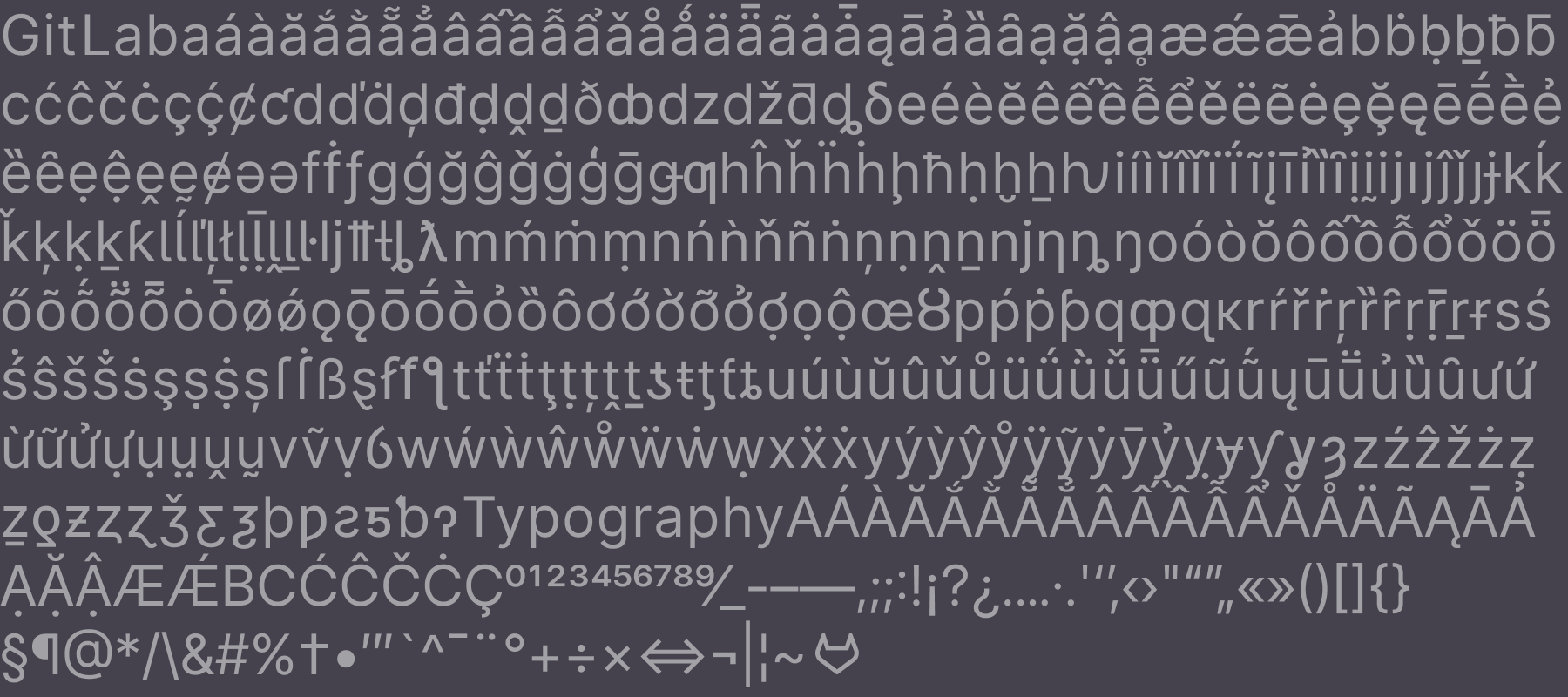
GitLab has introduced new default typefaces, GitLab Sans (Inter) and JetBrains Mono, to enhance UI consistency, readability, and brand continuity. This change aims to improve user experience by providing more control over typography, reducing inconsistencies across platforms and browsers, and enabling finer tuning of visual weight and hierarchy. The new typefaces are open source and packaged for easier consumption across GitLab properties and design tooling. This post details the specific iteration on type scales and updating design resources in Figma.

2 posts · 2021–2023

Timeline

20212026
Feature trailQuiet since 2022

SLSA Compliance and Attestation

GitLab enhances its DevSecOps platform to support Supply chain Levels for Software Artifacts (SLSA) compliance. The platform currently supports SLSA Levels 1 and 2 by enabling the generation of artifact metadata directly within the GitLab Runner. This post details the introduction of automated compliance attestation in Release 15.1, where GitLab Runner can generate and produce attestation metadata for all build artifacts by setting the RUNNER_GENERATE_ARTIFACTS_METADATA environment variable. This capability tracks the ongoing efforts to ensure secure software supply chains.

1 post · 2022

Timeline

20222026
Feature trailQuiet since 2022

Redis Latency Diagnosis and Mitigation

GitLab is continuously optimizing platform performance and reliability. This includes implementing rate limiting for unauthenticated users of the Projects List API to mitigate server load and prevent abuse. Additionally, security measures are being enhanced to combat increased volumes of password attacks against the OAuth API endpoint, with recommendations for users to enable two-factor authentication and leverage features like Restrict Group Access by IP Address and Git Abuse Rate Limiting. New efforts focus on diagnosing and mitigating Redis latency spikes through detailed analysis of eviction bursts and CPU saturation, aiming to ensure Redis performance and reliability.

1 post · 2020–2022

Timeline

20202026
Feature trailQuiet since 2022

Iterative Development and Cadence

GitLab emphasizes iterative development, breaking down work into the smallest possible changes (MVCs) to accelerate value delivery, reduce risk, and enable faster learning. This approach is applied to both regular development and experiments, with a focus on shipping early and often to gather feedback and make evidence-based decisions. The MR Rate is used as a key performance indicator to measure engineering productivity, with strategies to increase it including improving iteration, setting KPIs

2 posts · 2017–2022

Timeline

20172026
Feature trailQuiet since 2022

Microservices Architecture and Migration Strategies

GitLab is adopted by organizations to consolidate toolchains, improve version control, ensure accountability, boost collaboration, establish a single source of truth, and speed up production. This includes enabling teams to work in an Agile setting, accelerating the delivery of software while maintaining high quality, and incorporating feedback from all application stakeholders. The platform's integrated approach reduces the need for multiple tools, streamlines workflows, and enables organizations to manage microservices architectures effectively, including independent deployment, diverse technology stacks, and improved system-wide stability. It also addresses the drawbacks of microservices such as increased latency, debugging complexity, and infrastructure overhead by providing integrated CI/CD, issue tracking, and group-level management features.

5 posts · 2016–2022

Timeline

…20172026
Feature trailQuiet since 2022

TLS Security and Configuration

GitLab Pages now supports custom domains with TLS certificates obtained via Let's Encrypt, enhancing security and user trust by enabling HTTPS for static websites. This involves configuring DNS, obtaining certificates manually through Let's Encrypt's ACME challenge, and uploading the certificate and key to GitLab Pages settings. This post details how to use Cloudflare certificates with GitLab Pages, requiring the concatenation of the Cloudflare Origin CA certificate with the user's certificate.

6 posts · 2015–2022

Timeline

…20172026
Feature trailQuiet since 2022

API Security Vulnerability Research

GitLab has evolved its API security by deprecating and removing older API versions (v3) in favor of newer, more secure versions (v4). This ensures that integrations are using the latest security standards and features, reducing potential vulnerabilities and improving overall API robustness. The process involves clear communication and documentation for users to upgrade their integrations, minimizing downtime and ensuring a smooth transition to more secure API endpoints. This integration with Pos

2 posts · 2018–2022

Timeline

20182026
Feature trailQuiet since 2022

Database Architecture and Specialization

GitLab is decomposing its monolithic PostgreSQL database into separate 'main' and 'ci' clusters to improve scalability and reliability. This involves splitting CI-related data into its own cluster, allowing for independent tuning and increasing database capacity. The process includes phased rollouts, extensive testing, and the development of tools to manage multi-database environments. This decomposition is planned for self-managed instances in the future. This post discusses the architectural c

4 posts · 2016–2022

Timeline

…20172026
Feature trailQuiet since 2022

Open Core Development Philosophy

GitLab is evolving its open core development philosophy by open-sourcing eighteen features across various stages of the DevOps lifecycle. This move aims to empower the community, align the business model more accurately with the buyer-based open core model, and make it easier for individual contributors to access a wider range of functionalities. The open-sourced features span Plan, Create, Verify, Package, Release, Configure, and Protect stages, including functionalities like related issues, ex. This post details how enterprises can leverage open source workflow practices like visibility, forking, pull/merge requests, testing, CI, documentation, and issue tracking, often enabled by distributed version control and modern tooling. GitLab's introduction of an 'internal' project visibility level allows employees to reuse code, fork it, and contribute back, keeping code secure while benefiting from open source workflows.

5 posts · 2014–2022

Timeline

…20172026
Feature trailQuiet since 2022

Ruby Ecosystem Support and Contributions

GitLab actively supports and contributes to the Ruby ecosystem, recognizing its importance for developers and companies using Ruby. This includes becoming a member of Ruby Together to fund critical infrastructure like Bundler and RubyGems.org, and exploring further contributions to community projects like RubyBench.org. This initiative aims to ensure the stability, performance, and continued development of essential Ruby tools and services, benefiting the entire community. The platform also leverages the Ruby on Rails framework for building complex applications, benefiting from its opinionated structure, extensive gem ecosystem, and best practices that guide development towards high quality and consistency. Challenges with Ruby's performance in production are addressed by rewriting critical components in Go and optimizing memory usage through multithreading.

4 posts · 2018–2022

Timeline

20182026

Feature trailQuiet since 2022

Domain Specific Language Framework

GitLab has developed Lingo, a micro language framework in Go for building Domain Specific Languages (DSLs). Lingo is designed to be simple, flexible, and composable, allowing developers to easily integrate custom types and functions without modifying the core parser or processor. It uses S-expressions as its foundation and is implemented in approximately 3K lines of pure Go code. Lingo aims to simplify the creation and evolution of embeddable DSLs for specific use cases, such as data generation.

1 post · 2022

Timeline

20222026
Feature trailQuiet since 2022

Operating System Package Support

GitLab is expanding its support for operating system distributions, with a focus on providing distro-specific packages for Amazon Linux 2. This includes support for both x86 and ARM architectures, ensuring compatibility and optimized performance for users on AWS infrastructure. The transition from a workaround using EL7 packages to native Amazon Linux 2 packages is being managed to minimize disruption for existing users and automation.

1 post · 2022

Timeline

20222026
Feature trailQuiet since 2022

Release Cadence and Philosophy

GitLab has evolved its release cadence to a monthly cycle, emphasizing iterative development and predictable value delivery. This approach forces smaller feature increments, improves quality control, and positively impacts team morale by allowing engineers to see their work in production quickly. The company has also developed robust release processes and buffers to manage challenges and stress associated with tight deadlines. This post details the features released throughout 2016, including Is

6 posts · 2015–2022

Timeline

…20172026
Feature trailQuiet since 2021

CI/CD Minute Quotas and Abuse Prevention

GitLab.com is extending CI/CD minute usage quotas to public projects not part of GitLab open source programs to prevent abuse, such as cryptocurrency mining, which negatively impacts performance and availability of shared runners. This change aims to ensure reliable service for all users by limiting excessive consumption of free pipeline minutes. Users will be notified upon reaching their quota and can upgrade their plan or purchase additional minutes. Self-managed users and members of GitLab's open source programs are unaffected.

6 posts · 2020–2021

Timeline

20202026
Feature trailQuiet since 2021

User-centric GitLab Navigation

GitLab is exploring user-centric navigation patterns beyond the traditional project-centric model. This includes developing standalone applications like GitDock to test new ideas and gather learnings for improving the main GitLab start page and other navigation features. The goal is to provide a more personalized and efficient way for users to access relevant information and activities.

1 post · 2021

Timeline

20212026
Feature trailQuiet since 2021

Markdown Rendering and Flavored Markdown

GitLab's Markdown rendering has evolved to align with established specifications, requiring two spaces at the end of a line for a newline. The Web IDE and Web Editor now include a real-time, side-by-side preview panel for Markdown content, allowing users to see changes as they are made without context switching.

5 posts · 2014–2021

Timeline

…20172026
Feature trailQuiet since 2021

Markdown Rendering Behavior

GitLab has evolved its Markdown rendering to align with the CommonMark specification, ensuring consistent rendering across the platform. This involved a phased migration from RedCarpet to CommonMark, first for new content and then for repository and wiki files. The process included driving upstream changes to libraries like cmark-gfm and commonmarker to address specific rendering behaviors and bugs. The goal is to provide a more predictable and reliable user experience for all Markdown content. This post details the change to require two spaces at the end of a line for a newline, aligning with the Markdown specification and applying this behavior to descriptions and comments in issues and merge requests.

2 posts · 2014–2021

Timeline

…20172026
Feature trailQuiet since 2021

Spamcheck Anti-Abuse Engine

GitLab is introducing Spamcheck, a new data-driven anti-spam engine designed to improve resilience to spam and abuse. Spamcheck has been enabled for all projects on GitLab.com and will be included in the 14.6 release for self-managed customers. The engine was developed by the Security Automation team in partnership with Trust and Safety, Create, and Plan Engineering teams. It leverages a testbed for analysis and prototyping, and is built with a loosely coupled architecture. Deployment is iterative.

1 post · 2019–2021

Timeline

20192026
Feature trailQuiet since 2021

Graviton2 Performance and Cost Optimization

GitLab is evolving its infrastructure strategy to leverage Arm-based Graviton2 processors for both the GitLab application and GitLab Runners. This initiative aims to provide significant cost savings and performance improvements for self-managed GitLab deployments, particularly for customers with high CI/CD compute usage. The focus is on benchmarking and validating the performance and cost-effectiveness of Graviton2 instances compared to traditional x86 instances, enabling customers to optimize their infrastructure. This post details the delivery of official support for 32-bit and 64-bit Arm-based GitLab runners in binary, rpm/deb packaging, and Docker image format, making them available in the 12.6, 12.9, and 13.0 releases respectively.

1 post · 2020–2021

Timeline

20202026
Feature trailQuiet since 2021

Client-side Code Protection

GitLab is enhancing its DevSecOps platform with client-side code protection capabilities, integrating with third-party tools like Jscrambler to provide runtime protection, obfuscation, and anti-tampering measures for JavaScript-based applications. This aims to secure proprietary code, prevent bypasses of app restrictions, and mitigate data exfiltration attacks.

1 post · 2021

Timeline

20212026
Feature trailQuiet since 2021

Application Server Migration (Unicorn to Puma)

GitLab has successfully migrated its application servers from the single-threaded Unicorn to the multi-threaded Puma web server. This migration aimed to address memory growth issues and improve scalability by reducing the number of processes and memory overhead. Puma's multi-threaded model allows for better utilization of CPU and memory, leading to significant memory reduction. The implementation involved extensive testing, tuning of worker/thread configurations, and addressing thread-safety issues. The post also details the use of `unicorn-worker-killer` to manage memory leaks in long-running Unicorn workers by periodically restarting them when memory thresholds are exceeded, ensuring stability and preventing outages.

2 posts · 2015–2021

Timeline

…20172026
Feature trailQuiet since 2021

JSON Linting and CI/CD Integration

GitLab CI/CD is enhanced to automate and secure data exports from BigQuery to Google Cloud Storage. This involves version-controlling SQL queries, authenticating with Google Cloud via service accounts or Workload Identity Federation, executing queries, exporting results as CSV, and setting public read access on the exported files. This provides an auditable, repeatable, and secure data publishing workflow.

1 post · 2021

Timeline

20212026
Feature trailQuiet since 2021

5 Minute Production App

GitLab is developing a '5 Minute Production App' template that leverages Infrastructure as Code (Terraform) and GitLab CI/CD to automate the provisioning of cloud resources (PostgreSQL, Redis, S3) and deployment of web applications. This aims to simplify the process of getting a production-ready application online, contrasting with the manual CLI-driven approach of platforms like Heroku. The template supports managed stateful services and integrates with GitLab's DevSecOps features.

1 post · 2020–2021

Timeline

20202026
Feature trailQuiet since 2021

Proxy Environment Variable Standardization

This feature thread tracks the evolution and standardization of proxy environment variables, specifically focusing on the inconsistencies and challenges associated with `http_proxy`, `https_proxy`, and `no_proxy` across different programming languages and tools. It aims to document the historical development, current implementations, and the impact of these variations on system behavior and troubleshooting.

1 post · 2021

Timeline

20212026
Feature trailQuiet since 2021

Middleman Callback Discovery

This post details the process of discovering Middleman lifecycle callbacks by reading the open-source codebase when documentation is insufficient. It lists 15 available callbacks and provides a step-by-step guide on how to find them within the Middleman repository. The author intends to contribute this information back to the Middleman documentation.

1 post · 2021

Timeline

20212026
Feature trailQuiet since 2020

Edge Computing and 5G Impact on Development

This post introduces the emerging impact of edge computing and 5G on software development. It highlights the need for developers to understand networking, hardware architectures, and the challenges of distributed systems as processing power moves closer to the end-user. The discussion also touches upon the implications for mobile application development and the increasing importance of hardware considerations in system design. The concept of self-healing code and microservices is also briefly mentioned as future trends.

1 post · 2020

Timeline

20202026
Feature trailQuiet since 2020

Package Management

GitLab introduced a repository for composer packages in version 13.3, allowing users to store and manage private and public composer packages within their GitLab instance. This feature enables the creation of packages via `.gitlab-ci.yml` templates, automatically generating packages when Git tags are created or commits are pushed to branches. Migration of existing packages is supported via manual `curl` commands or a community-provided script. Future improvements include enhanced GUI details on packages and support for Conan packages. This post details the integration of Conan, a C/C++ package manager, allowing users to set GitLab as a remote registry for their packages, enabling them to upload and install packages directly from GitLab's registry. This allows for code and generated packages to live in the same place, simplifying management and enabling automatic building and consumption of packages via CI pipelines. Future iterations will include a UI for Conan packages and project/group level support.

2 posts · 2020

Timeline

20202026
Feature trailQuiet since 2020

GitLab Runner AWS Fargate Executor with CodeBuild Integration

GitLab Runner's AWS Fargate executor is enhanced to support container building by integrating with AWS CodeBuild. This addresses the limitation of Fargate not supporting privileged containers (required for Docker-in-Docker) by offloading the container build process to CodeBuild. The solution involves configuring GitLab Runner on Fargate to trigger CodeBuild jobs, which then build the container image using a provided buildspec.yml and Dockerfile. This enables building container images within CI/C

1 post · 2020

Timeline

20202026
Feature trailQuiet since 2020

Meltano Data Platform

Meltano is an open-source ELT tool that allows users to build and manage data integration and transformation pipelines. It supports both CLI and GUI interfaces, with a focus on providing a user-friendly experience for data teams. The tool adheres to Singer specifications for taps and targets, and aims to be the glue between various data components. Future development includes support for PII removal and enhanced CLI user experience. The team is also actively seeking frontend contributors and dogfooding the platform for internal data analytics.

3 posts · 2018–2020

Timeline

20182026
Feature trailQuiet since 2020

Dotfiles Management

This post introduces the concept and benefits of using dotfiles for managing personal development environment configurations. It details how to use a Git repository to store and automate the setup of shell configurations (ZSH with OhMyZSH), Git settings, Vim configurations, and the installation of common software via Homebrew. It also touches on automating trackpad and keyboard settings on macOS. The post encourages forking the repository to create personalized setups.

1 post · 2020

Timeline

20202026
Feature trailQuiet since 2020

Incident Management

GitLab Incident Management provides a centralized view for capturing all incident-related data, facilitating team communication through integrations with Slack and Zoom, embedding metrics from Kubernetes and Grafana, and offering an alert endpoint for various sources. It automates incident creation from alerts and can automatically close issues upon recovery. The system aims to shorten MTTR by reducing context switching and streamlining collaboration between development and incident response teams.

1 post · 2020

Timeline

20202026
Feature trailQuiet since 2020

Self-Managed Billing and Seat Management

GitLab is evolving its self-managed billing to provide more transparent and prorated charges for user growth. The introduction of Seat Link automates the daily counting of users in connected instances, eliminating the need for manual true-ups and providing prorated quarterly charges. This aims to simplify the renewal process and prevent surprises for customers. Future iterations will focus on further enhancing billing transparency and automation.

1 post · 2020

Timeline

20202026
Feature trailQuiet since 2020

Accessibility Testing

GitLab is introducing continuous accessibility testing to help developers improve the accessibility of their software. The initial release in 12.8 includes an Accessibility template for CI/CD pipelines that runs scans on merge requests and generates an HTML report based on WCAG20 standards. Future iterations will focus on scanning only changed pages, displaying issues in the merge request view, and displaying the full report within GitLab.

1 post · 2020

Timeline

20202026
Feature trailQuiet since 2020

Google Cloud Security Research and Tooling

This post details the Red Team's research into Google Cloud Platform (GCP) security, focusing on post-exploitation tactics for attackers who have gained an initial foothold on a Linux VM. It covers reconnaissance, privilege escalation, lateral movement, and data exfiltration within GCP environments. The post also introduces several open-source tools developed by the team to aid in this research and defense: gcp_firewall_enum, gcp_enum, and gcp_misc. The research aims to inform defenders about potential attacker methodologies and vulnerabilities in GCP configurations.

1 post · 2020

Timeline

20202026
Feature trailQuiet since 2020

Screenshot Compression Automation

This post details a method for automating screenshot compression using pngquant and zopflipng on macOS, significantly reducing file sizes for easier sharing and faster uploads/downloads. It covers color quantization and DEFLATE compression techniques, along with automation via Hazel and Automator.

1 post · 2020

Timeline

20202026
Feature trailQuiet since 2020

Error Tracking

GitLab's error tracking feature is evolving from a minimal integration with Sentry to a more robust product. The current iteration focuses on enabling users to create GitLab issues directly from Sentry errors, pre-filled with relevant details. This is part of a larger strategy to improve error correlation, resolution, and triaging within the GitLab platform, moving towards a fully realized error tracking capability. This post details the integration of Sentry's release and commit tracking with GitLab, allowing for faster bug identification and resolution through suspect commits and enhanced release overviews.

1 post · 2019–2020

Timeline

20192026
Feature trailQuiet since 2020

GitLab ChatOps

GitLab ChatOps functionality is being open-sourced to encourage wider adoption and community contributions. The feature allows users to run commands from chat platforms like Slack and Mattermost, enabling collaborative troubleshooting and operational tasks. Future enhancements aim to integrate monitoring, queryability, RBAC permissions, zero-config setup, and consistency across the organization, leveraging GitLab's single application for the DevOps lifecycle.

2 posts · 2018–2020

Timeline

20182026

Feature trailQuiet since 2019

Productivity and Time Management

This post introduces concepts of 'Deep Work' and the 'E-factor' to improve individual productivity by focusing on uninterrupted work time. It details personal strategies for time management, routine optimization, and minimizing distractions like Slack and email. The goal is to increase the amount of focused, high-value work performed daily.

1 post · 2019

Timeline

20192026
Feature trailQuiet since 2019

Open-sourcing Mobile Apps

GitLab has open-sourced the Gitter mobile apps (Android and iOS), detailing the technical process of removing secrets, managing configurations, and making the projects public. This effort aims to foster community contributions to the Gitter mobile platforms.

2 posts · 2019

Timeline

20192026
Feature trailQuiet since 2019

Multi-Cloud CI/CD Strategy

GitLab's CI/CD capabilities are designed to be cloud-agnostic, enabling organizations to implement consistent DevOps workflows across multiple cloud providers. This approach aims to provide workflow portability, flexibility, resilience, and improved negotiation leverage with cloud vendors, preventing vendor lock-in. Unlike cloud-provider-specific solutions like GitHub Actions, GitLab CI/CD offers a truly independent platform for managing deployments across any cloud environment.

1 post · 2019

Timeline

20192026
Feature trailQuiet since 2019

Namespace Storage Statistics Tracking

GitLab is evolving its approach to managing storage space on large instances by implementing a performant method to track and update namespace statistics. This includes storing aggregated statistics in a new ActiveRecord model and refreshing them asynchronously via Sidekiq jobs to avoid impacting critical database transactions. The goal is to enable easier viewing and management of storage consumed by groups and users, paving the way for storage and limits management for groups.

1 post · 2019

Timeline

20192026
Feature trailQuiet since 2019

Zero Trust Networking

GitLab is implementing Zero Trust Networking (ZTN) to enhance security by shifting access control from the perimeter to individual users, devices, and assets. The approach focuses on positive identification of users and devices, real-time authorization, geo-location identification, automated process access control, and comprehensive logging. The company acknowledges challenges in implementing ZTN across diverse environments, including its remote workforce, multi-cloud infrastructure, and customer environments.

1 post · 2019

Timeline

20192026
Feature trailQuiet since 2019

Filesystem Corruption and Outage Debugging

GitLab has experienced and debugged filesystem corruption issues on NFS servers hosting Git repositories, leading to outages. The investigation involved analyzing kernel logs, understanding filesystem error messages, and considering recovery options. This led to the identification and resolution of a specific bug in the Linux v4.0 NFS client related to file handle staleness during renames, which was patched and backported to stable kernel versions. The experience highlights the collaborative nature of debugging complex system failures.

2 posts · 2015–2019

Timeline

…20172026
Feature trailQuiet since 2019

Git Hooks

GitLab Enterprise Edition offers a user-friendly interface for custom project-specific Git Hooks, allowing for rules on pushes such as enforcing commit message formats and preventing tag deletion. This post details a coordinated effort with Bitbucket and GitHub to educate users on secure best practices following a Git ransomware incident, emphasizing the importance of multi-factor authentication, strong passwords, and secure handling of personal access tokens and `.git` directories.

3 posts · 2014–2019

Timeline

…20172026
Feature trailQuiet since 2019

Donation Platform

The Donatinator is an open-source donation solution designed for small non-profits and charities. It aims to provide a free and accessible way to accept one-off donations and monthly subscriptions online. Key features include support for both single and recurring donations, basic Markdown page creation, and multi-user administration with reporting. The project is guided by principles of being open source, runnable on free hosting tiers, and minimizing costs to only credit card processing fees.

1 post · 2019

Timeline

20192026
Feature trailQuiet since 2019

Incoming Email Functionality

GitLab has evolved its incoming email functionality to support a wider range of email servers, including Microsoft Exchange and Google Groups, by adding support for catch-all email mailboxes. This enhances features like replying to notification emails, creating new issues and merge requests via email, and the Service Desk functionality. The domain for these services has been updated from @gitlab.com to @incoming.gitlab.com to prevent abuse.

1 post · 2018–2019

Timeline

20182026
Feature trailQuiet since 2018

Multi-Cloud Control Plane

Crossplane aims to simplify multi-cloud strategy by introducing workload resource abstractions on top of existing managed services and cloud offerings to enable workload portability across cloud providers. This aims to provide a universal API for cloud computing and a control plane for smart controllers that can work across clouds, enabling a separation of concerns between developers and administrators.

1 post · 2018

Timeline

20182026

Feature trailQuiet since 2018

Unicode Emoji Rendering

GitLab has evolved its emoji rendering capabilities by switching from image-based emoji to native Unicode emoji. This transition involved developing a robust system for detecting Unicode emoji support across various operating systems and browsers, implementing fallbacks to image-based emoji for unsupported environments, and addressing platform-specific rendering inconsistencies. The goal is to reduce image loading, improve performance of the emoji reaction selector, and ensure a consistent emoji experience.

1 post · 2018

Timeline

20182026

Feature trailQuiet since 2017

Browser Testing Frameworks

GitLab transitioned its frontend and RSpec feature tests from PhantomJS to headless Chrome. This involved updating the Karma test runner for frontend tests and switching Capybara's driver from Poltergeist to Selenium/ChromeDriver for backend feature tests. The migration addressed limitations of PhantomJS, such as its outdated rendering engine and JavaScript support, and improved test accuracy and debugging capabilities. Challenges included adapting to Selenium's API differences, such as handling JavaScript modals and element visibility, and refactoring tests that relied on Poltergeist-specific methods like `.trigger('click')`. The new setup allows for running tests in a real, modern browser environment, improving test representativeness and reducing technical debt.

1 post · 2017

Timeline

20172026

Feature trailQuiet since 2017

Integration with Research Tools and Platforms

GitLab is expanding its integration capabilities to support diverse professional workflows, particularly within the research community. This initiative aims to connect GitLab with specialized platforms like the Open Science Framework (OSF) to enhance research efficiency, reproducibility, and collaboration. This post details the initial grant program to sponsor developers for building this integration.

1 post · 2017

Timeline

20172026

Feature trailQuiet since 2017

Vue.js Adoption and Architecture

GitLab is adopting Vue.js for new frontend applications, moving away from CoffeeScript and jQuery. The architecture involves small Vue applications with a main component, a service for data retrieval, and a store for state management. A mediator pattern is used to share state and avoid duplicate network calls in more complex scenarios. Future plans include standardizing component structure, creating reusable components, implementing a linter, and exploring Vuex. This post details the integration of Vue.js for its simplicity, ease of use, and ability to reduce code complexity compared to jQuery.

1 post · 2016–2017

Timeline

…20172026

Feature trailQuiet since 2017

GitLab Release Cadence and Iterative Development

GitLab has evolved its release cadence to a monthly cycle, emphasizing iterative development and predictable value delivery. This approach forces smaller feature increments, improves quality control, and positively impacts team morale by allowing engineers to see their work in production quickly. The company has also developed robust release processes and buffers to manage challenges and stress associated with tight deadlines. This post details the features released throughout 2016, including Issue Boards, Cycle Analytics, Build Artifacts, File Finder, Elasticsearch integration, Todos, GitLab Geo, Custom Domains for GitLab Pages, Confidential Issues, Label Subscriptions, License Templates, Due Dates, Cherry Picking, Pipelines, GitLab Container Registry, .gitignore templates, File Locking, Environments, Priority Labels, Redesigned Navigation, Universal Two Factor (U2F), Wildcard Branch Protection, Manual Actions for CI, Merge Conflict Resolution, and Merge Request Discussion Resolution.

1 post · 2017

Timeline

20172026
Feature trailQuiet since 2016

Time Tracking

GitLab is adding Time Tracking to GitLab Enterprise Edition, allowing teams to stack project estimates against time spent. This feature is accessible via slash commands (`/spend`, `/estimate`) within issues and merge requests, providing a distraction-free way to manage time within the same tool used for the software development lifecycle. It will be free while in beta and for all users on GitLab.com.

1 post · 2016

Timeline

…20172026

Feature trailQuiet since 2016

Markdown-based Presentations

GitPitch enables developers to create, share, and present slideshow presentations entirely using Markdown files within their GitLab repositories. This eliminates the need for external presentation tools and integrates presentation content directly into the development workflow, allowing for versioning, branching for different audiences, and easy sharing via a public URL.

1 post · 2016

Timeline

…20172026

Feature trailQuiet since 2016

Issue Label Notifications

GitLab allows users to subscribe to specific labels on issues and merge requests, ensuring they receive notifications for items tagged with those labels, regardless of their project notification level. This helps users cut through noise and focus on relevant work.

1 post · 2016

Timeline

…20172026

Feature trailQuiet since 2015

Customizable Login and Appearance

GitLab Enterprise Edition allows for customization of the login page, including the company logo, title, and description, to provide a branded experience for users. This feature is accessible through the admin area's Appearance settings. Additionally, user preferences have been introduced to customize the UI layout (fluid or fixed width) and the default dashboard view (Projects, Starred Projects, Projects' Activity, or Starred Projects' Activity). Users can also choose between viewing the project's Readme or Activity by default.

2 posts · 2015

Timeline

…20172026

Feature trailQuiet since 2015

On-Premises Chat Integration

GitLab is integrating an open-source, on-premises chat application, Mattermost, into its Omnibus packages. This provides an alternative to Slack for organizations requiring on-premises solutions. The integration includes automatic OAuth configuration with GitLab and aims to simplify setup and management. Future plans include enhanced posting from GitLab and CI to Mattermost.

1 post · 2015

Timeline

…20172026
Feature trailQuiet since 2015

Remote Work Culture and Operations

GitLab has established and refined its fully remote work culture, emphasizing asynchronous communication, flexible work hours, and robust social connection mechanisms. This includes daily morning meetings for coordination and team bonding, a preference for GitLab issues and Slack for communication, and regular individual check-ins with leadership to ensure employee happiness. The company also fosters in-person meetups and virtual social events, particularly around releases, to maintain team cohesion. This post details their lightweight, self-organizing workflow for incoming issues, working and prioritizing, and managing overflow, all while adhering to Agile principles and fostering openness, independence, and responsibility.

1 post · 2015

Timeline

…20172026
Feature trailQuiet since 2015

Version Check Functionality

GitLab has introduced a version check functionality to identify and alert users of outdated installations. This feature aims to improve security, user experience, and reduce the creation of duplicate issues by making users aware of available updates. The system works by loading a small image from a version check server, which indicates the update status (up-to-date, out-of-date, or critical security update). The request includes the GitLab version and server hostname (via HTTP referer) to gather information about usage, with an opt-out option available.

1 post · 2015

Timeline

…20172026
Feature trailQuiet since 2015

On-Premises Deployment Considerations

This feature thread tracks the evolution of GitLab's deployment options, specifically addressing the considerations and benefits of on-premises deployments in contrast to SaaS offerings. It covers aspects like security, integration capabilities, control, performance, flexibility, and data retrieval, highlighting why on-premises remains a viable and often preferred choice for certain organizations.

1 post · 2015

Timeline

…20172026
Feature trailQuiet since 2014

Bug Triage and Reporting

GitLab has established a structured approach to handling bugs, differentiating between security, regression, and feature bugs. This system aims to prioritize fixes based on severity and impact, encouraging community contributions for identification and resolution. The process involves clear channels for reporting different bug types, from direct contact for security vulnerabilities to the issue tracker and feedback channels for other bugs. This framework is crucial for maintaining the stability and reliability of the GitLab platform.

1 post · 2014

Timeline

…20172026