Blogs›Ably Feature Trails
Ably Feature Trails
See how major capabilities shipped, upgraded, and evolved across Ably's engineering blog.
Publishing pulse
2026–2026 · peak 2026
15 posts mapped
Feature trails
4by last update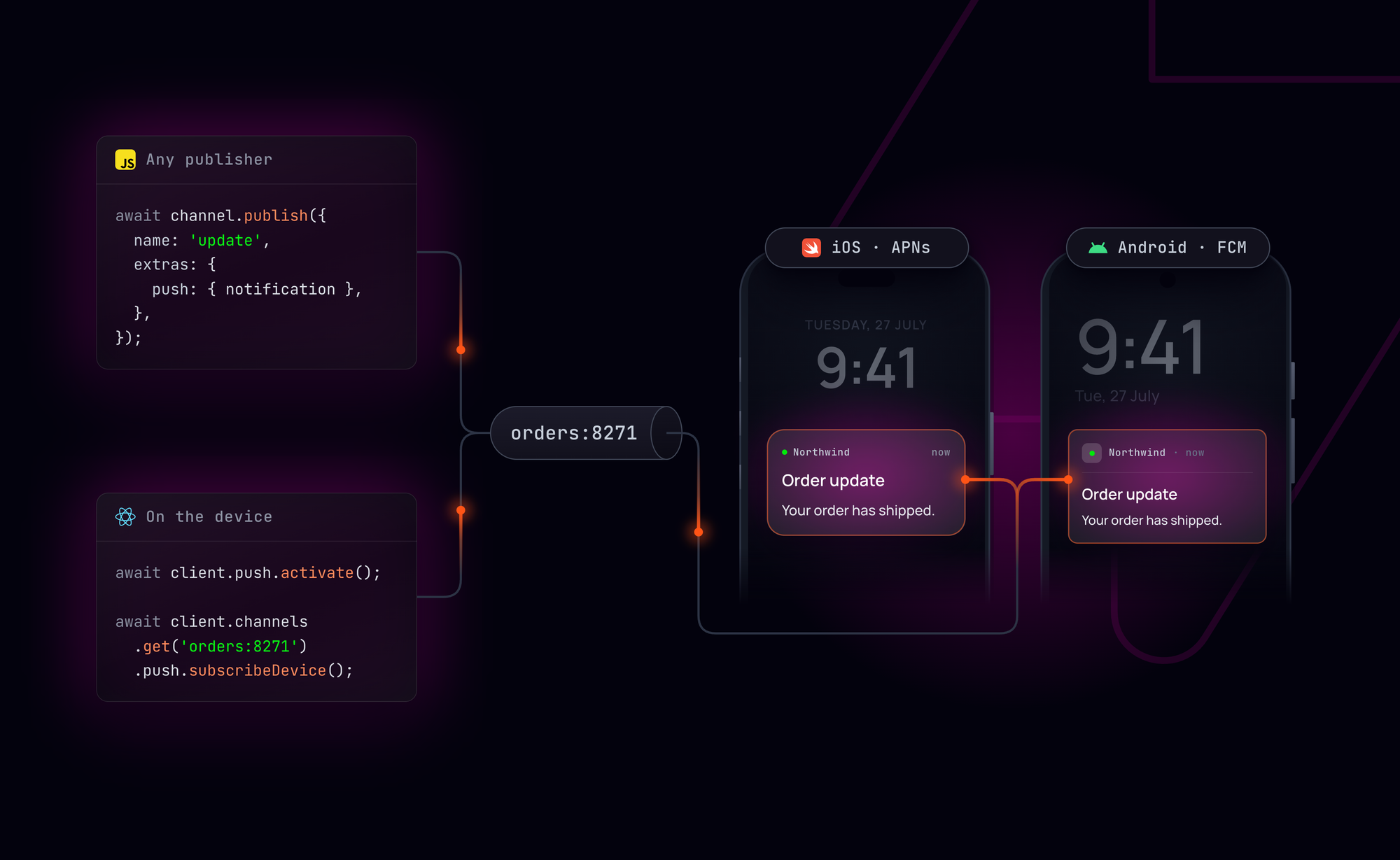
React Native Push Notifications
Ably now supports React Native push notifications through a new plugin for the JavaScript SDK. This allows React Native devices to activate themselves as push targets, subscribe to channels, and receive messages via FCM (Android) and APNs (iOS). The plugin integrates with existing storage and token acquisition mechanisms, such as `@react-native-firebase/messaging`, and enables device-side activation for persistent registration across app restarts. This extends Ably's push notification capabilities to the React Native ecosystem, allowing developers to reach users with notifications when their app is closed.
Timeline
AI Transport Durable Execution
AI Transport now supports durable execution frameworks like Temporal and Vercel WDK, enabling agents to run reliably across process restarts and network disruptions. This is achieved through a new 'Steps' concept, which provides stable IDs for publishable units of output, ensuring idempotency during retries. Clients continue to receive a seamless, consistent stream regardless of the underlying execution durability. This post introduces 'steering', allowing clients to redirect an agent mid-run by enabling the delivery model for AI responses, which requires resumable streams, guaranteed ordering, and delivery across device switches, contrasting with the older signaling model. Fin migrated from their in-house Nexus system to Ably AI Transport to handle these new requirements, achieving 99.9999% delivery reliability, 18M+ peak concurrent connections, and an 80% drop in HTTP GET requests.
Timeline
Terraform Configuration Generation
tfgen is a new tool developed by Ably to configure Terraform stacks using plain Go. It was created as a replacement for HashiCorp's CDKTF after its development was sunset. tfgen aims to provide a simpler and more flexible way to generate Terraform-compatible JSON, allowing engineers to leverage their existing Go expertise for infrastructure as code. The tool emphasizes direct configuration and validation through Terraform's own tooling, removing the need for generated types and build steps. It also supports AI-assisted migration and has been open-sourced to benefit the community.
Timeline
Message Annotations for Realtime Interactions
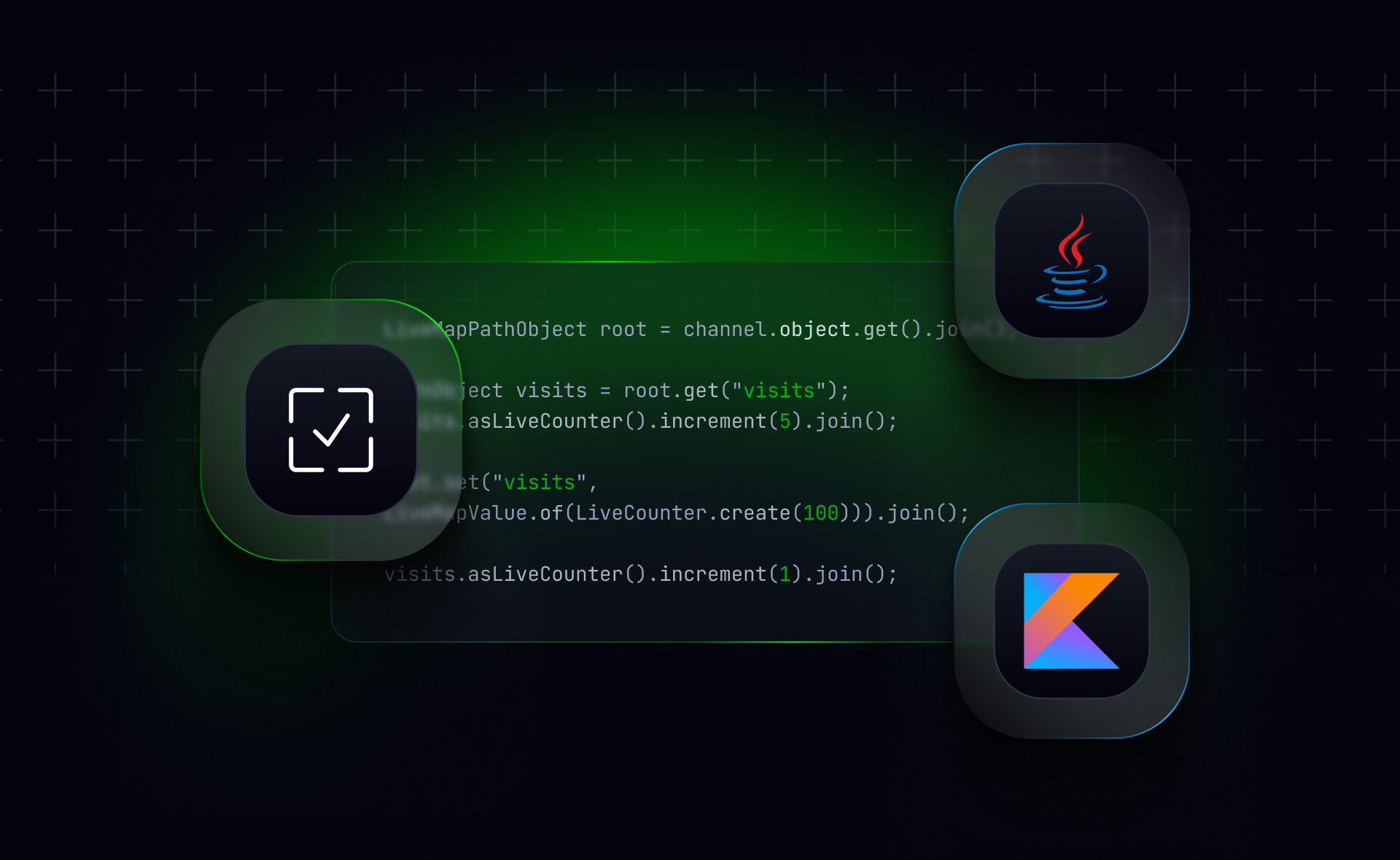
Message annotations provide a flexible mechanism for attaching metadata to messages, enabling features like reactions, flags, read receipts, and votes. They support various aggregation types (unique, distinct, multiple, total, flag) and can be used to deliver aggregated summaries or individual events. This enables building complex realtime interactions with fine-grained access control and efficient data handling, such as live voting systems where each client has a single vote enforced by the 'unique' aggregation. The introduction of the Java Path API for LiveObjects further enhances shared state management by allowing developers to reference locations within an object tree rather than specific object instances, simplifying conflict resolution, reconnection handling, and state recovery for Java applications.
Timeline